Support our educational content for free when you buy through links on our site. Learn more
9 Key Components & Technologies Powering Modern Robot Wrestling (2026) 🤖


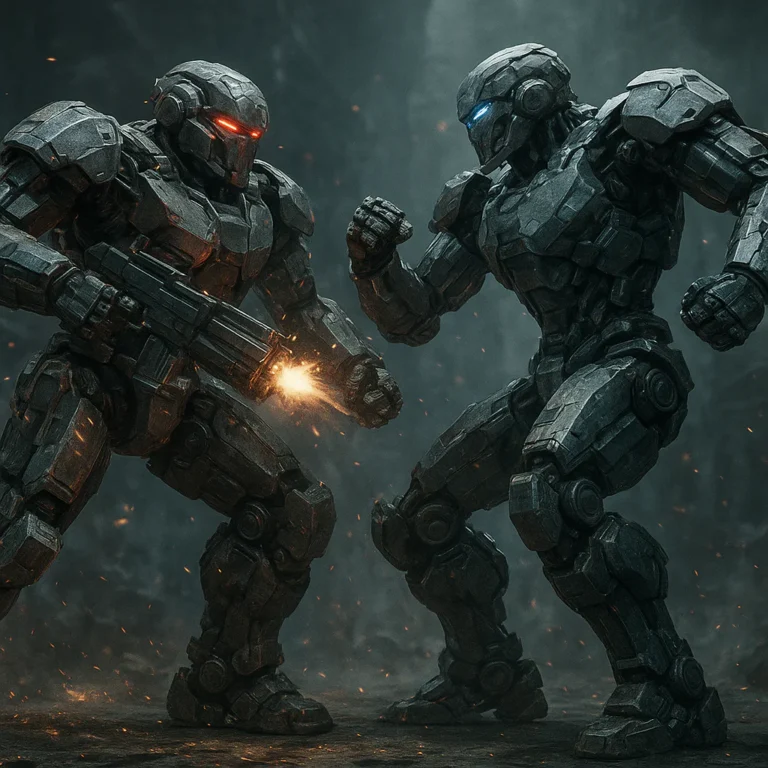
Step into the electrifying world of robot wrestling, where cutting-edge engineering meets adrenaline-pumping combat! Ever wondered what makes these mechanical gladiators
spin, flip, and crush their opponents with such precision and power? From ultra-tough armor materials to AI-driven control systems, modern robot wrestling designs are a symphony of innovation and brute force.In this article, we’ll unpack the 9 essential components and technologies that transform simple machines into arena champions. Curious how legendary bots like Bite Force and Minotaur combine weaponry, sensors, and power systems to dominate? Or how AI is starting to give robots a sixth sense in battle? Stick around — we’ll reveal insider secrets, expert tips, and even step-by-step design insights to get you building your own champion.
Key Takeaways
- Structural materials like AR500 steel and titanium provide the perfect balance of strength and weight for durable robot frames.
- Brushless DC motors and high-torque servos deliver the muscle behind devastating weapons and precise grappling.
- Advanced control systems, including microcontrollers and emerging AI, enable faster reaction times and smarter strategies.
- Power management with high-discharge LiPo batteries and efficient cooling is critical for sustained performance.
- Sensors such as gyroscopes, accelerometers, and impact detectors give robots reflexes and battlefield awareness.
- Robust communication protocols (2.4 GHz spread spectrum) ensure seamless control without signal loss or lag.
- Weaponry ranges from spinners and flippers to crushers, with innovative defensive countermeasures evolving constantly.
- Simulation tools like CAD and physics engines help designers optimize every detail before the first weld.
- Safety standards and failsafe mechanisms protect builders, operators, and spectators alike in this high-energy sport.
Ready to dive deeper? Keep reading to discover how these technologies come together in the ultimate robot wrestling machines!
Table of Contents
- ⚡️ Quick Tips and Facts About Robot Wrestling Designs
- 🤖 The Evolution of Robot Wrestling: From Clunky Bots to High-Tech Gladiators
- 🔧 1. Structural Components: The Skeleton of a Robot Wrestler
- ⚙️ 2. Actuation Technologies: Muscles Behind the Moves
- 🧠 3. Control Systems and AI: The Brainpower of Modern Bots
- 🔋 4. Power Sources and Energy Management
- 🎯 5. Sensors and Feedback Mechanisms: Eyes and Reflexes
- 🔗 6. Communication Technologies: Staying Connected in the Arena
- 🛠️ 7. Weaponry and Defensive Systems: Tools of the Trade
- 💡 8. Software and Simulation Tools for Robot Wrestling Design
- 🧩 9. Building Your Own Robot Wrestler: Step-by-Step Design Insights
- regulations-in-robot-combat”>🛡️ Safety Standards and Regulations in Robot Combat
- 🎥 Highlight Reel: Iconic Robot Wrestling Designs and Their Technologies
- 📚 Recommended Resources and Communities for Robot Wrestling Enthusiasts
- 📞 Contact the Robot Wrestling™ Expert Team
- 🏁 Conclusion: The Future of Robot Wrestling Technologies
- 🔗 Recommended Links for Deep Dives and Gear
- 📖 Reference Links and Further Reading
⚡️ Quick Tips and Facts About Robot Wrestling Designs
Before we dive into the nuts and bolts of these mechanical monsters, here’s a “cheat sheet” for every aspiring engineer and armchair fan:
- Weight is Everything: In the Robot Design world, every gram counts. Robots range from 75g “Fleaweights” to 250lb “Heavyweights” seen in major Competitions.
- Material Science: AR500 Steel (the stuff used in shooting targets) and Grade 5 Titanium are the gold standards for armor.
- The Power of Brushless: Modern bots have ditched old brushed motors for Brushless DC (BLDC) motors, which offer a much higher power-to-weight ratio.
- The “Radio” Reality: Most modern bots use 2.4 GHz Spread Spectrum technology to prevent interference—no more “my neighbor’s garage door opener killed my bot” excuses!
- Safety First: Every professional bot must have a “Removable Link” or “Kill Switch” that physically disconnects the battery. ❌ Never work on a bot while it’s “hot”!
- Fun Fact: Some of the most advanced tech in robot wrestling actually trickles down from DARPA’s innovation timeline, including autonomous navigation and advanced composite materials.
If you’re looking to see these technologies in action, check out our guide on the Top 7 Most Popular Robot Wrestling Leagues & Tournaments Worldwide (2026) 🤖, where the world’s most advanced machines go head-to-head.
🤖 The Evolution of Robot Wrestling: From Clunky Bots to High-Tech Gladiators
We remember the “good old days” of the late 90s. Back then, a “combat robot” was often just a DeWALT drill strapped to a piece of plywood with some RC car wheels. It was glorious, but it was primitive.
As Opinion Pieces on our site often highlight, the transition from “hobbyist toys” to “engineered athletes” happened when we started stealing tech from the aerospace and medical industries. According to DARPA, disruptive impact is often unveiled decades later, and we see this in the way Atlas-style hydraulics and BigDog-inspired stability have influenced how modern wrestlers maintain their footing in the arena.
Today, we aren’t just building machines; we are building cybernetic wrestlers. The question is: Can a machine truly have the “intuition” of a human wrestler? We’ll explore how AI is trying to bridge that gap later in this article. 🧠
🔧 1. Structural Components: The Skeleton of a Robot Wrestler
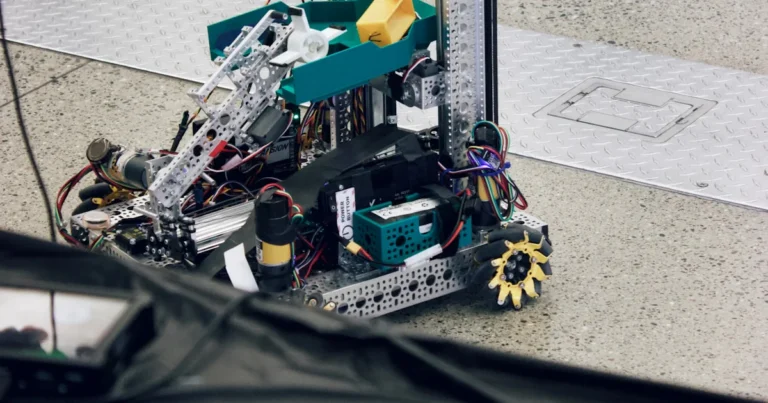
The chassis is the literal backbone of your bot. If it flexes, your gears grind. If it cracks, you’re scrap metal.
Chassis Materials and Frame Design
We’ve seen everything from 3D-printed plastics to welded maraging steel. For heavy hitters, 6061-T6 Aluminum is the “workhorse” because it’s easy to machine and offers great strength-to-weight. However, if you want to be elite, you look at 7075 Aluminum or Titanium.
Armor and Impact Resistance
Armor isn’t just about being “hard.” It’s about energy management.
- Ablative Armor: Materials like UHMW (Ultra-High-Molecular-Weight Polyethylene) are used because they “give” and absorb impact rather than shattering.
- Hardened Steel: AR500 is the king of preventing “spinners” from biting into your vitals.
| Material | Strength | Weight | Cost | Best Use |
|---|---|---|---|---|
| AR500 Steel | ⭐⭐⭐⭐⭐ | ❌ Heavy | Low | Outer Armor |
| Titanium (Gr 5) | ⭐⭐⭐⭐ | ✅ Light | ❌ High | Structural Frames |
| UHMW Plastic | ⭐⭐ | ✅ Ultralight | Low | Shock Absorption |
| Carbon Fiber | ⭐⭐⭐ | ✅ Ultralight | ❌ High | Internal Brackets |
⚙️ 2. Actuation Technologies: Muscles Behind the Moves
How does a robot “wrestle”? It needs torque—and lots of it.
Electric Motors vs. Hydraulic Systems
While the da Vinci Surgical System uses micro-actuators for precision, robot wrestlers use “brute force” actuators.
- Brushless DC (BLDC): Brands like Maxon Motor or Castle Creations provide the insane RPM needed for weapons.
- Hydraulics: Rarely used in smaller classes due to weight, but in “Super Heavyweights,” they provide the crushing force that can snap a 1-inch steel plate like a cracker.
Servo and Stepper Motors in Precision Control
For “grappler” bots that need to grab and hold, high-torque servos from Hitec are essential. These allow for the “fine motor skills” required to find a chink in the opponent’s armor.
🧠 3. Control Systems and AI: The Brainpower of Modern Bots
Here is where we resolve that “intuition” question. While most bots are still remote-controlled (RC), the “Ghost in the Machine” is arriving.
Microcontrollers and Embedded Systems
The Arduino and Raspberry Pi are the entry-level brains. However, pro-tier designers use Teensy or custom STM32 boards for lightning-fast processing.
Machine Learning and Autonomous Decision Making
Taking a cue from DARPA’s ACE program (which achieved autonomous dogfighting in F-16s), some robot wrestlers are now using OpenCV and TensorFlow to “see” the opponent.
✅ Benefit: Faster reaction times than a human pilot.
❌ Drawback: AI can be “fooled” by arena debris or weird lighting.
🔋 4. Power Sources and Energy Management
You can have the biggest motor in the world, but if your battery “sags,” you’re a sitting duck.
Battery Technologies: LiPo, Li-ion, and Beyond
Lithium Polymer (LiPo) batteries are the industry standard. Brands like MaxAmps provide the high “C-rating” (discharge rate) needed to dump massive amounts of energy into a weapon motor in seconds.
Energy Efficiency and Heat Dissipation
Heat is the enemy. We use Thermal Paste and Aluminum Heat Sinks to keep Electronic Speed Controllers (ESCs) from melting. As noted in the ICECool research by DARPA, microfluidic cooling is the future, but for now, we stick to high-airflow fans.
🎯 5. Sensors and Feedback Mechanisms: Eyes and Reflexes
A robot without sensors is just a blind bull.
- Gyroscopes: Essential for “Invertible” bots to know which way is up.
- LIDAR: Used in autonomous classes to map the arena in real-time.
- Current Sensors: These tell the driver if a motor is about to burn out, allowing them to “back off” before the magic smoke escapes.
🔗 6. Communication Technologies: Staying Connected in the Arena
If you lose signal for even 0.5 seconds, you’re likely going to end up in the “Great Scrap Heap in the Sky.”
Radio Frequency (RF) Controls
We exclusively recommend 2.4GHz AFHDS (Automatic Frequency Hopping Digital System). Brands like FrSky and Spektrum are the gold standard here.
Wireless Protocols and Latency Challenges
In the medical world, 5G is targeting 1ms latency for remote surgery. In robot wrestling, we strive for similar speeds. Any “lag” between your thumb and the bot’s wheels results in a missed opportunity to flip your opponent.
🛠️ 7. Weaponry and Defensive Systems: Tools of the Trade
This is why we’re all here, right? The carnage! 💥
Spinners, Flippers, and Crushers
- Vertical Spinners: Use gyroscopic forces to stay stable while delivering upward hits.
- Pneumatic Flippers: Use CO2 tanks to launch opponents 6 feet into the air.
- Crushers: Use massive gear reduction to exert tons of force.
Shielding and Countermeasures
“Active” defense is the new trend. Some bots use “Wedgelets”—tiny, hinged pieces of metal that scrape the floor to get under an opponent. If you lose the “ground game,” you lose the match.
💡 8. Software and Simulation Tools for Robot Wrestling Design
Don’t just start cutting metal! You need a plan.
CAD and 3D Modeling Software
SolidWorks and Autodesk Fusion 360 are the bread and butter of Robot Design. They allow you to calculate the Center of Gravity (CoG) before you spend a dime on materials.
Physics Engines and Battle Simulators
We often use ANSYS for Finite Element Analysis (FEA). This simulates a 200mph impact to see if your frame will shatter. It’s better to have a “virtual” explosion than a real one in the pits!
🧩 9. Building Your Own Robot Wrestler: Step-by-Step Design Insights
Ready to build? Here is the “Robot Wrestling™” approved workflow:
- Define Your Weight Class: Start with a 1lb “Antweight.” It’s cheaper and less likely to take off your finger.
- Select Your Weapon: Will you be a “Pusher,” a “Spinner,” or a “Grappler”?
- CAD Layout: Place your heavy components (batteries, motors) as low as possible.
- Prototype: Use cardboard or 3D-printed PLA to check fitment.
- The “BaneBots” Test: We highly recommend the BaneBots P60 Gearbox for beginners.
Product Spotlight: BaneBots P60 Gearbox
| Feature | Rating (1-10) | Notes |
|---|---|---|
| Durability | ⭐⭐⭐⭐⭐⭐⭐⭐⭐ | Can take a beating. |
| Ease of Use | ⭐⭐⭐⭐⭐⭐⭐⭐ | Great documentation. |
| Weight | ⭐⭐⭐⭐⭐⭐ | A bit chunky for smaller bots. |
| Versatility | ⭐⭐⭐⭐⭐⭐⭐⭐⭐⭐ | Fits many motor types. |
Our Take: The P60 is a legend in the pits. It’s the “AK-47” of robot gearboxes—reliable, rugged, and reasonably priced.
🛡️ Safety Standards and Regulations in Robot Combat
As the Instructables guide emphasizes, “Safety is critical during construction and testing.”
- Weapon Locks: A physical pin that prevents a blade from spinning while you’re carrying the bot.
- Failsafes: Your receiver must be programmed to shut off all motors if it loses signal.
- The Lexan Box: Never test a weapon-equipped bot outside of a 1/2 inch thick Polycarbonate (Lexan) enclosure. We’ve seen “shrapnel” go through plywood like butter.
🎥 Highlight Reel: Iconic Robot Wrestling Designs and Their Technologies
Who could forget the Famous Matches involving bots like Bite Force or Minotaur?
- Bite Force: Mastered the “Vertical Spinner + Wedge” combo.
- Minotaur: Showcased the power of a high-mass “Drum Spinner” that sounds like a jet engine.
These bots aren’t just lucky; they are the pinnacle of the technologies we’ve discussed. They use S7 Tool Steel for their weapons and custom-wound brushless motors that push the limits of physics.
📚 Recommended Resources and Communities for Robot Wrestling Enthusiasts
Don’t go it alone! The community is the best part of this sport.
- The Builders Database: The place to find Event Announcements.
- Reddit r/BattleBots: A hub for technical discussion and “armchair engineering.”
- RioBotz Combot Tutorial: The “Bible” of robot combat, written by Marco Antonio Meggiolaro.
📞 Contact the Robot Wrestling™ Expert Team
Have a specific question about your motor timing or ESC settings? Want us to review your CAD files?
Reach out to us via our Contact Page or join the discussion on our social channels. We live for this stuff! 🛠️🔥
Conclusion: The Future of Robot Wrestling Technologies

After our deep dive into the key components and technologies powering modern robot wrestling designs, one thing is crystal clear: robot wrestling is no longer just a hobby; it’s a high-stakes engineering sport where innovation meets raw mechanical power. From the rugged chassis materials like AR500 steel and titanium to the lightning-fast brushless motors and cutting-edge AI algorithms, every element is meticulously crafted to dominate the arena.
We also explored the legendary BaneBots P60 Gearbox, a true workhorse in the pits. Its durability, versatility, and ease of use make it a top choice for builders at all levels. While it’s a bit bulky for the smallest classes, its proven track record earns our confident recommendation as a foundational component for serious competitors.
Remember the question we teased earlier: Can a robot truly have the intuition of a human wrestler? Thanks to advances in AI and machine learning, bots are beginning to anticipate moves, react faster, and even strategize autonomously. While not perfect yet, the gap is closing fast, and the future promises even more thrilling battles where man and machine blur.
So whether you’re a seasoned builder or a curious fan, understanding these technologies will give you a front-row seat to the evolution of robot wrestling. Ready to build your own champion? The arena awaits! 🏆🤖
Recommended Links for Deep Dives and Gear
👉 Shop the essential components and tools mentioned in this article:
- BaneBots P60 Gearbox on Amazon
- Maxon Brushless DC Motors
- Castle Creations Brushless Motors
- Hitec High Torque Servos
- FrSky 2.4GHz Radio Systems
- Spektrum RC Transmitters
- Arduino Uno Microcontroller
- Raspberry Pi 4 Model B
- Autodesk Fusion 360 CAD Software
- SolidWorks CAD Software
- “Robot Builder’s Bonanza” by Gordon McComb — a classic guide for robot enthusiasts.
- “BattleBots: The Official Guide” — insights from the pros.
Frequently Asked Questions (FAQ)

How do power sources affect the design of competitive wrestling robots?
Power sources dictate everything from weight distribution to runtime and motor performance. Most competitive bots use Lithium Polymer (LiPo) batteries because of their high energy density and discharge rates, enabling rapid bursts of power for weapons and mobility. However, LiPo batteries require careful handling due to fire risks. Designers must balance battery size with weight limits imposed by competition rules, often positioning batteries low to maintain stability.
What safety features are essential in robot wrestling robots?
Safety is paramount. Essential features include:
- Removable Battery Link: Physically disconnects power during transport or maintenance.
- Weapon Safety Locks: Prevent accidental activation of spinning or pneumatic weapons.
- Failsafe Radio Systems: Automatically cut power if signal is lost.
- Polycarbonate (Lexan) Safety Shields: Used during testing to contain debris.
- Emergency Kill Switches: Easily accessible to operators and event staff.
These measures protect builders, operators, and spectators alike.
How is remote control technology integrated into robot wrestling designs?
Modern bots use 2.4 GHz Spread Spectrum radio systems (e.g., FrSky, Spektrum) that minimize interference and provide low latency control. Transmitters send proportional signals to Electronic Speed Controllers (ESCs), which regulate motor speed and direction. Advanced setups may include telemetry feedback, allowing drivers to monitor battery voltage, motor temperature, and signal strength in real-time.
Which motors and actuators are best for robot wrestling robots?
Brushless DC (BLDC) motors dominate for their high power-to-weight ratio and efficiency. Brands like Maxon and Castle Creations are favorites for weapon and drive motors. For precise movements, especially in grappler bots, high-torque servo motors from Hitec or Futaba provide the necessary control. Hydraulic actuators are rare but can be found in heavyweight bots requiring extreme force.
What role does AI play in modern robot wrestling strategies?
AI is emerging as a game-changer. Using computer vision and machine learning frameworks like TensorFlow and OpenCV, some bots can autonomously detect opponents, predict movements, and execute complex maneuvers faster than human reflexes. While full autonomy is still experimental, AI-assisted control is becoming more common, enhancing reaction times and tactical decisions.
How do sensors enhance performance in robot wrestling competitions?
Sensors provide critical feedback:
- Gyroscopes and Accelerometers: Help maintain balance and detect flips.
- Current and Voltage Sensors: Monitor motor load to prevent damage.
- Proximity Sensors and LIDAR: Enable autonomous navigation and opponent tracking.
- Impact Sensors: Detect hits to trigger defensive responses.
Together, these sensors transform a robot from a simple machine into a responsive competitor.
What materials are commonly used in building competitive robot wrestlers?
Common materials include:
- AR500 Steel: For durable, impact-resistant armor.
- Titanium (Grade 5): Lightweight structural frames.
- 6061 and 7075 Aluminum: Balance strength and machinability.
- UHMW Polyethylene: Shock absorption panels.
- Carbon Fiber: Lightweight internal supports where cost permits.
Material choice balances weight, strength, and cost.
How do control systems coordinate complex maneuvers in robot battles?
Control systems integrate inputs from the driver’s transmitter, sensors, and onboard processors to command motors and actuators. Electronic Speed Controllers (ESCs) modulate power to motors based on PWM signals. Advanced bots use microcontrollers (Arduino, STM32) to process sensor data and execute pre-programmed or AI-driven maneuvers, coordinating weapon activation with movement for maximum effect.
What safety technologies are implemented in the official Robot Wrestling League?
The official Robot Wrestling League mandates:
- Kill Switches and Battery Disconnects
- Weapon Safety Pins
- Mandatory Pre-Match Safety Inspections
- Use of Polycarbonate Safety Barriers
- Failsafe Radio Systems
These protocols ensure fair play and protect everyone involved.
Reference Links and Further Reading
- DARPA Innovation Timeline: https://www.darpa.mil/about/innovation-timeline
- NIH Article on Robotics in Healthcare: https://pmc.ncbi.nlm.nih.gov/articles/PMC11520245/
- Instructables: How to Design and Build a Combat Robot : 11 Steps (with Pictures): https://www.instructables.com/How-to-design-and-build-a-combat-robot/
- Maxon Motors Official Site: https://www.maxongroup.com/
- Castle Creations Motors: https://castlecreations.com/
- Hitec Servos on Amazon: https://www.amazon.com/s?k=Hitec+high+torque+servo
- FrSky Radio Systems on Amazon: https://www.amazon.com/s?k=FrSky+Transmitter
- Spektrum RC Transmitters: https://www.spektrumrc.com/Products/Default.aspx
- BaneBots Gearboxes: https://banebots.com/
- Arduino Uno: https://www.arduino.cc/en/Main/ArduinoBoardUno
- Raspberry Pi: https://www.raspberrypi.org/products/raspberry-pi-4-model-b/
- Autodesk Fusion 360: https://www.autodesk.com/products/fusion-360/overview
- SolidWorks: https://www.solidworks.com/
- Robot Wrestling™ Official Site: https://www.robotwrestling.org/
Ready to build your own champion? Dive into our Robot Design category for more expert tips and join the next Competition to test your mettle!