Support our educational content for free when you buy through links on our site. Learn more
Top 15 Most Popular Robot Wrestling Designs and Why They Dominate (2026) 🤖

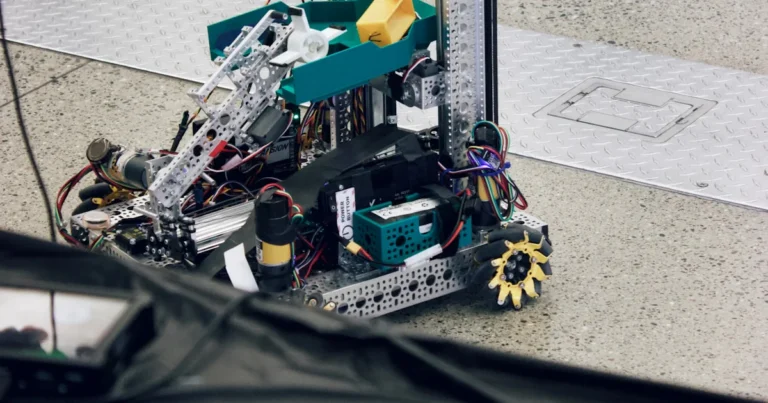
When it comes to robot wrestling, the arena is a battlefield of steel, strategy, and sheer mechanical might. But have you ever wondered which robot designs consistently steal the show and why they’re so effective? From the humble wedge bots that bulldoze their way to victory, to the high-speed spinners that deliver devastating blows, each design tells a story of engineering brilliance and tactical mastery.
We’ve been in the trenches with the Robot Wrestling™ team—designers, engineers, and hardcore fans alike—to break down the most popular robot wrestling designs that have shaped the sport. Along the way, we’ll reveal surprising insights like why some of the simplest bots still reign supreme despite the rise of complex hybrids and AI-assisted machines. Curious about which legendary bots changed the game or how material choices can make or break your build? Stick around—there’s plenty to unpack.
Key Takeaways
- Wedge bots and vertical spinners dominate due to their balance of control, durability, and destructive power.
- Low ground clearance and weight distribution are crucial design features for effective wrestling robots.
- Material choice matters: AR500 steel and 7075 aluminum are industry favorites for armor and frames.
- Hybrid designs offer versatility but require expert driving and maintenance.
- Simplicity often trumps complexity in high-pressure matches, emphasizing reliability and driver skill.
Ready to build your own champion? Dive deeper into the design secrets and strategies that make these robots unstoppable!
Table of Contents
- ⚡️ Quick Tips and Facts About Popular Robot Wrestling Designs
- 🤖 The Evolution of Robot Wrestling: A Design Perspective
- 1. Top 15 Most Popular Robot Designs for Wrestling and Their Effectiveness
- 1.1 Wedge Bots: The Ultimate Pushers
- 1.2 Spinner Bots: The High-Speed Hitters
- 1.3 Flipper Bots: The Crowd-Pleasers
- 1.4 Lifter Bots: The Heavy Lifters
- 1.5 Drum and Vertical Spinner Hybrids
- 1.6 Hammer Bots: The Smashers
- 1.7 Claw and Grabber Bots: The Tactical Grapplers
- 1.8 Hybrid Designs: Combining Strengths
- 🔧 Key Design Features That Make Robot Wrestlers Effective
- ⚙️ Materials and Build Techniques for Durable Wrestling Robots
- 🎯 Strategy and Maneuverability: Why Design Matters in Robot Wrestling
- 🛠️ Building Your Own Wrestling Robot: Expert Tips and Common Pitfalls
- 🤼♂️ Legendary Robot Wrestling Designs That Changed the Game
- 📊 Comparing Popular Robot Designs: Pros, Cons, and Effectiveness
- 💡 Innovations and Future Trends in Robot Wrestling Design
- 🏆 How Design Influences Winning in Robot Wrestling Competitions
- 📚 Recommended Links for Robot Wrestling Enthusiasts
- ❓ Frequently Asked Questions About Robot Wrestling Designs
- 🔗 Reference Links and Further Reading
⚡️ Quick Tips and Facts About Popular Robot Wrestling Designs
Before we dive into the grease and gears, let’s look at the fast facts every aspiring engineer needs to know. Understanding the 8 Key Components & Technologies in Modern Robot Wrestling is your first step toward the podium.
- Ground Clearance is King: If you can’t get under them, you can’t control them. Most winning designs prioritize a “low-to-the-ground” profile.
- The “Rock-Paper-Scissors” Rule: Generally, Wedges beat Spinners, Spinners beat Flippers, and Flippers beat Wedges.
- Reliability Over Flash: As the experts at Unofficial Robot Wars point out, “Robots that are simple and tough tend to last longer and perform more reliably.”
- Weight Distribution: 50-60% of your weight should ideally be over your drive wheels for maximum traction.
- Battery Tech: Modern builds almost exclusively use LiPo (Lithium Polymer) batteries for their incredible power-to-weight ratio.
- Materials: AR500 steel is the gold standard for armor, while 7075 Aluminum is preferred for structural frames due to its strength.
🤖 The Evolution of Robot Wrestling: A Design Perspective
We’ve come a long way from the days of remote-controlled lawnmowers clanking around in a basement. In the early days of Robot Design, the goal was simply to survive. You’d see boxes on wheels with a hardware-store drill strapped to the front. But as Competitions like Battlebots and Robot Wars evolved, so did the physics of destruction.
We remember the first time we saw a high-kinetic energy spinner—it didn’t just dent the opponent; it vaporized the chassis. This shifted the meta from “who can push harder” to “who can deliver the most Joules of energy without exploding themselves.” Today, robot wrestling is a high-stakes game of engineering where every gram of weight is accounted for. But here’s a question to chew on: If destructive power is at an all-time high, why are the simplest designs still winning championships? We’ll reveal the secret sauce of the “boring” winners later on.
1. Top 15 Most Popular Robot Designs for Wrestling and Their Effectiveness
When we look at the Famous Matches in history, certain silhouettes keep appearing in the winner’s circle. Here is our breakdown of the most effective archetypes.
Design Effectiveness Rating Table
| Design Type | Destructive Power | Control/Handling | Durability | Ease of Build | Overall Rating |
|---|---|---|---|---|---|
| Vertical Spinner | 10/10 | 7/10 | 7/10 | 5/10 | 9/10 |
| Wedge/Pusher | 2/10 | 10/10 | 10/10 | 9/10 | 8/10 |
| 4-Bar Flipper | 6/10 | 8/10 | 7/10 | 4/10 | 7/10 |
| Horizontal Spinner | 10/10 | 5/10 | 6/10 | 6/10 | 7.5/10 |
| Drum Spinner | 9/10 | 8/10 | 8/10 | 6/10 | 8.5/10 |
1.1 Wedge Bots: The Ultimate Pushers
The “Brick” or “Wedge” is the most fundamental design. According to Instructables, “Wedges are simple, effective, and versatile for controlling opponents.” By utilizing a low-angle incline, these bots turn an opponent’s forward momentum against them, lifting their wheels off the ground and negating their traction.
- Effectiveness: High. They win by “out-driving” the opponent and pushing them into arena hazards.
- Key Brand: Many builders use FingerTech Robotics for small-scale wedge components.
1.2 Spinner Bots: The High-Speed Hitters
Spinners come in two main flavors: Horizontal (like the legendary Tombstone) and Vertical (like Bite Force). Horizontal spinners aim to rip off wheels and side armor, while vertical spinners use the floor as a brace to launch opponents into the stratosphere.
- Check PRICE on:
- Battlebots Toys: Amazon | Walmart
- FingerTech Spinners: FingerTech Official
1.3 Flipper Bots: The Crowd-Pleasers
Flippers use high-pressure pneumatics or powerful electric motors to actuate a lever. The goal? An “OOTA” (Out of the Arena) victory. In our Opinion Pieces, we often argue that flippers require the highest driver skill.
1.4 Lifter Bots: The Heavy Lifters
Unlike flippers, lifters move slowly and deliberately. They grab or get under an opponent and carry them to a hazard. They are the “wrestlers” in the truest sense of the word.
1.5 Drum and Vertical Spinner Hybrids
Think of Minotaur. These bots use a heavy, spinning drum. They are more compact than a disc spinner and often more durable because the “weapon” acts as its own armor.
1.6 Hammer Bots: The Smashers
Using a top-down attack, hammer bots like Shatter! aim for the thin top armor of an opponent. While visually stunning, they are notoriously difficult to time correctly.
1.7 Claw and Grabber Bots: The Tactical Grapplers
These bots, like Quantum, use hydraulic crushers to pierce armor. They are effective because once they grab you, the match is essentially over.
1.8 Hybrid Designs: Combining Strengths
If we were only allowed to pick one robot from the entire UK series run that was our personal favorite, it would hands down have to be Big Nipper. It’s a masterclass in hybrid design, featuring both a powerful pincer/lifter and a vertical spinning disc. This versatility allows it to adapt to any opponent—a core tenet of successful Robot Design.
🔧 Key Design Features That Make Robot Wrestlers Effective
What separates a champion from a pile of scrap metal? It’s not just the weapon; it’s the engineering nuances.
- Invertibility: Can your robot drive upside down? If not, one flip and you’re a turtle on its back.
- SRIMECH (Self-Righting Mechanism): If you aren’t invertible, you need a dedicated arm to flip yourself back over.
- Modular Armor: The ability to swap a heavy wedge for a “spinner-killer” plate between rounds is vital.
- Shock Mounting: We’ve seen $5,000 robots die because a single wire jiggled loose. Using rubber shock mounts for electronics is non-negotiable.
⚙️ Materials and Build Techniques for Durable Wrestling Robots
You can’t build a heavyweight contender out of plywood. You need materials that can withstand forces equivalent to a car crash every five seconds.
- AR500 Steel: Used in shooting targets, this is the go-to for spinner teeth and wedges.
- Titanium (Grade 5): Incredible strength-to-weight ratio, but it’s a nightmare to machine and sparks like crazy when hit.
- UHMW (Ultra-High-Molecular-Weight Polyethylene): This plastic is “slippery” and elastic. It’s great for internal structures because it absorbs impact rather than shattering.
- Fasteners: Never use “big box” store bolts. We recommend McMaster-Carr for Grade 8 or higher hardware.
Step-by-Step Material Selection:
- Identify the Frame: Use 6061-T6 Aluminum for the skeleton.
- Select Armor: Use 3/16″ AR500 for the front and 1/8″ Titanium for the sides.
- Internal Mounts: Use 3D printed TPU or machined UHMW to cradle the battery.
🎯 Strategy and Maneuverability: Why Design Matters in Robot Wrestling
A robot is only as good as its driver, but a bad design can make even a pro look like a novice. Maneuverability is often the deciding factor in Event Announcements where technical wins are common.
- Two-Wheel Drive (2WD): Offers a tighter turning radius and is easier to program.
- Four-Wheel Drive (4WD): Provides much better traction for pushing matches.
- Mecanum/Omni Wheels: Allow for “strafing” (moving sideways), but they are fragile and have poor traction in a wrestling “push.”
🛠️ Building Your Own Wrestling Robot: Expert Tips and Common Pitfalls
We’ve spent countless nights in the workshop, and we’ve made every mistake in the book so you don’t have to.
The “Golden Rules” of Building:
- ✅ Do: Use a high-quality radio system like the Spektrum DX5. Interference is the silent killer of robots.
- ❌ Don’t: Over-complicate the weapon. If it takes 10 seconds to spin up, a wedge bot will have already pushed you into the wall.
- ✅ Do: Practice driving! Set up some soda cans and weave through them until it becomes second nature.
- ❌ Don’t: Skimp on the Speed Controllers (ESCs). Cheap ones will literally catch fire under the load of a stalled motor.
👉 Shop Essential Components on:
- BaneBots Motors: BaneBots Official
- MaxAmps Batteries: MaxAmps Official
- VEX Robotics Parts: Amazon | VEX Official
🤼♂️ Legendary Robot Wrestling Designs That Changed the Game
To understand the future, you must look at the legends. These robots defined the “meta” of their eras.
- Biohazard (The Low-Profile King): This bot was so low that almost nothing could get under it. It dominated the early 2000s with a simple lifting arm.
- Razer (The Piercer): Proved that hydraulics could be a viable weapon, crushing through 4mm of titanium like it was paper.
- Tombstone (The Kinetic Beast): Ray Billings’ creation proved that “the best defense is a terrifying offense.”
📊 Comparing Popular Robot Designs: Pros, Cons, and Effectiveness
| Design | Best Against | Weak Against | Why It Works |
|---|---|---|---|
| Vertical Spinner | Horizontal Spinners | High-Ground Clearance Wedges | Uses gyroscopic force to stay stable while launching opponents. |
| Full-Body Spinner | Anything with exposed wheels | Heavy Wedges (Box-rushing) | 360-degree defense and offense; very hard to approach. |
| Crusher | Slow, bulky tanks | Fast, agile spinners | High-pressure localized damage can snipe internal components. |
| Pusher/Wedge | High-center-of-gravity bots | Flippers | Pure reliability and control; wins on “aggression” points. |
💡 Innovations and Future Trends in Robot Wrestling Design
The next frontier is Brushless Motor Technology. While traditionally used in drones, the power density of brushless motors is now being harnessed for drive trains and weapons, allowing for smaller, faster, and more lethal robots. We are also seeing the rise of AI-assisted driving, where sensors help the robot automatically “aim” its weapon at the opponent’s weakest point.
But remember that question from earlier? Why do simple designs still win? It’s because in the chaos of the arena, complexity is a liability. A simple wedge with a world-class driver will beat a “Swiss Army Knife” robot 9 times out of 10.
🏆 How Design Influences Winning in Robot Wrestling Competitions
In the end, winning isn’t just about having the biggest hammer. It’s about Total System Integration. Your design must balance:
- Weight: Every ounce spent on a bigger motor is an ounce taken away from armor.
- Power: Can your batteries sustain a 3-minute fight at full throttle?
- Geometry: Does your shape naturally deflect hits, or does it “catch” them?
As the community at Unofficial Robot Wars says, “Choosing the right design depends on your strategy and the specific rules of the competition.” Whether you’re building a 150g Fairyweight or a 250lb Heavyweight, the physics remain the same: stay low, hit hard, and never stop moving.
Conclusion
After tearing through the gears and circuits of the most popular robot wrestling designs, one truth stands clear: simplicity combined with strategic engineering wins the day. Whether it’s the humble wedge bot bulldozing opponents with relentless control or the kinetic fury of a vertical spinner like Tombstone, the best designs balance offense, defense, and maneuverability.
Remember that question we teased earlier—why do simple designs still dominate despite the rise of complex hybrids and AI-assisted bots? The answer lies in reliability and driver skill. Complex mechanisms can fail under pressure, but a well-built wedge or spinner with a skilled operator will almost always outlast a flashy but fragile design.
If you’re building your own wrestling robot, focus on low ground clearance, durable materials like AR500 steel and 7075 aluminum, and modular design so you can adapt between matches. Don’t skimp on quality components like motors and ESCs, and always practice driving.
In short, whether you’re a rookie or a seasoned builder, the most popular robot designs remain popular for a reason—they work. So, get your toolbox ready, and may your robot reign supreme in the arena!
Recommended Links
👉 Shop Essential Robot Wrestling Components and Brands:
- BaneBots Motors: BaneBots Official Website | Amazon BaneBots Search
- FingerTech Robotics Parts: FingerTech Official | Amazon FingerTech Search
- MaxAmps Batteries: MaxAmps Official
- Spektrum Radio Systems: Spektrum DX5 on Amazon
- VEX Robotics Components: VEX Robotics Official | Amazon VEX Search
- McMaster-Carr Fasteners: McMaster-Carr Website
Recommended Books for Robot Builders:
- Robot Builder’s Bonanza by Gordon McComb — Amazon Link
- Make: Combat Robots by Mark Setrakian — Amazon Link
- How to Design and Build a Combat Robot: 11 Steps (with Pictures) — Instructables Guide
FAQ
How do control systems and AI improve robot wrestling strategies?
Modern control systems, especially those using 2.4 GHz radio frequencies like the Spektrum DX5, provide reliable, interference-resistant communication between driver and robot. AI integration is emerging, offering target tracking, weapon timing, and autonomous maneuvering. However, AI is still supplementary; driver skill remains paramount. The future points to semi-autonomous robots that can assist drivers in real-time tactical decisions.
What role does weight distribution play in robot wrestling effectiveness?
Weight distribution directly affects traction and stability. Ideally, 50-60% of the robot’s weight should be over the drive wheels to maximize pushing power and prevent flipping. Poor distribution can lead to loss of control or vulnerability to flips. Balanced weight also helps in maintaining maneuverability during high-impact collisions.
How do weapon systems influence the effectiveness of wrestling robots?
Weapons define a robot’s offensive capability. Spinners deliver high kinetic energy, causing structural damage, while flippers and lifters control positioning by tossing or lifting opponents. The choice depends on your strategy: aggressive damage dealers or control specialists. Weapon reliability and speed of deployment are equally critical.
Which robot designs have won the most matches in the Official Robot Wrestling League?
Historically, wedge-shaped bots and vertical spinners have dominated. Wedges excel in control and durability, while vertical spinners like Bite Force combine offense with crowd-pleasing flips. Hybrid designs that combine lifting and spinning capabilities have also seen success, but simplicity and reliability remain key.
What materials are commonly used in building durable robot wrestlers?
AR500 steel is favored for armor due to its hardness and impact resistance. 7075 aluminum is popular for frames because of its strength-to-weight ratio. UHMW plastic is used internally for shock absorption. High-end builds may incorporate titanium for critical armor sections, though it is expensive and difficult to machine.
How do different robot shapes impact their performance in wrestling matches?
Shape affects stability, maneuverability, and attack angles. Low-profile wedges get under opponents easily, while full-body spinners use their shape for 360-degree offense and defense. Tall bots risk being flipped, while compact bots can be more agile. Designers must balance these factors based on their strategy.
What features make a robot design successful in robot wrestling competitions?
Successful designs feature:
- Low ground clearance for control
- Self-righting mechanisms to recover from flips
- Modular armor for quick repairs
- Reliable, high-torque motors
- Balanced weight distribution
- Effective weapon deployment speed
What types of robot designs dominate the Robot Wrestling League competitions?
The league sees dominance from wedge bots, vertical and horizontal spinners, and hybrid flipper-spinner designs. The meta shifts with rule changes, but these archetypes consistently perform well due to their balance of offense, defense, and reliability.
How do robot design features impact performance in robot wrestling battles?
Features like drive train type (2WD vs 4WD) influence traction and turning radius. Weapon placement affects attack angles and recoil management. Armor thickness impacts durability but adds weight. Designers must optimize these features to suit their fighting style and opponent types.
How do weight and size influence the effectiveness of wrestling robots?
Weight classes dictate design constraints. Heavier robots can carry bigger weapons and armor but may sacrifice speed. Smaller robots are more agile but have less destructive power. Effective designs maximize the power-to-weight ratio within their class limits.
What role does mobility play in the success of robot wrestling designs?
Mobility allows robots to control the arena, avoid attacks, and position for strikes. High maneuverability can compensate for weaker weapons by outsmarting opponents. However, mobility must be balanced with durability and power.
How do teams strategize robot designs for better performance in robot battles?
Teams analyze opponent tendencies, arena hazards, and rules to tailor designs. Some prioritize defense and control (wedges), others offense and damage (spinners), while hybrids aim for versatility. Iterative testing and driver feedback refine these strategies.
Reference Links and Further Reading
- How to Design and Build a Combat Robot: 11 Steps (with Pictures)
- Unofficial Robot Wars Facebook Group
- BaneBots Official Website
- FingerTech Robotics Official
- McMaster-Carr Industrial Supply
- BattleBots Official Site
- Robot Fighting League
- Robot Events Database
- Builder’s Database
Ready to build your champion? Dive into the Robot Design archives and start your journey today!