Support our educational content for free when you buy through links on our site. Learn more
Can Anyone Enter the Robot Wrestling League? 🤖

Can anyone build and enter a robot into the Robot Wrestling League? You can get started, but entry depends on the specific event’s rules, eligibility requirements, and safety inspection. We couldn’t verify a public official rulebook or entry portal for a league under that exact name, so confirm the organizer and current requirements before spending time or money on a build.
The best first move isn’t ordering a motor or sketching a battle-ready spinner. It’s finding the event’s rulebook and asking what robots are allowed. A robot that’s legal at one competition may be turned away at another—and the arena is a rough place to discover you built for the wrong rules.
Our builders have seen how one overlooked detail, like an insecure battery or a failsafe that doesn’t stop the drive, can derail an otherwise promising robot. Start with a clear ruleset, learn with a club or experienced team, and build up from a design you can test and repair.
Key Takeaways
- You can learn to build a combat robot without an engineering degree, but each event sets its own age, team, and experience requirements.
- Verify the league and its official rulebook first. We couldn’t confirm public entry rules for an organization using the exact name “Robot Wrestling League.”
- Plan around the event’s weight limits, allowed weapons, battery rules, and safety inspection. Rules from BattleBots or another competition may not apply.
- Start simple, test carefully, and get experienced help. A reliable robot with working failsafes is a better first entry than an ambitious build that isn’t safe or competition-ready.
- BattleBots is a separate competition. Its official build guide explains how to apply to that show, but applying does not guarantee selection.
Table of Contents
- ⚡️ Quick Tips and Facts
- 🤼 What Is the Robot Wrestling League?
- How Robot Wrestling Differs From BattleBots and Other Robot Combat
- The League’s Format, Events, and Competition Levels
- 🛠️ Can Anyone Build and Enter a Robot?
- Who Can Compete: Age, Experience, and Team Requirements
- Do You Need to Build Your Own Robot?
- Are Schools, Clubs, Families, and First-Time Builders Welcome?
- 📜 Robot Wrestling League Rules and Entry Requirements
- Robot Weight Classes and Size Limits
- Allowed and Prohibited Weapons, Materials, and Power Systems
- Safety Inspections, Fail-Safes, and Radio Controls
- How Matches Are Judged and Won
- 🔧 How to Build a Competition-Ready Wrestling Robot
- Choose a Weight Class and Robot Design
- Select Motors, Batteries, Drive, and Control Electronics
- Build for Durability, Grip, and Easy Repairs
- Budget, Tools, and Workshop Safety
- 🚀 How to Enter the Robot Wrestling League
- 1. Find an Official League Event and Read Its Rulebook
- 2. Register Your Team and Submit Robot Details
- 3. Pass Technical Inspection and Safety Checks
- 4. Prepare for Weigh-In, Practice, and Match Day
- 🧰 What to Bring to a Robot Wrestling Event
- 🏆 Training, Match Strategy, and Common Build Mistakes
- ❓ Frequently Asked Questions About Entering a Robot
- Can I Enter Without an Engineering Background?
- Can I Compete With a Kit or a Rebuilt Robot?
- Can I Enter More Than One Robot or Team?
- What If My Robot Fails Inspection or Breaks Before a Match?
- How Do I Find the Official Rules, Registration, and Event Calendar?
- ✅ Quick Tips for New Robot Builders
- Conclusion
- Recommended Links
- Reference Links
⚡️ Quick Tips and Facts
Short answer: you can get involved in robot combat, but we can’t verify a single organization called the “Robot Wrestling League” with published, official entry rules. The name is used in different contexts, and an invitation to join the hobby is not the same as an official competition rulebook. Before you build around a league name, confirm the specific event, organizer, rules, and registration details.
For comparison, BattleBots’ build guide describes applying to BattleBots—a separate competition—and says acceptance is not guaranteed. It recommends gaining experience in smaller events and learning the rules before investing in a heavyweight robot.
| At a glance What you should know | |
|---|---|
| Can anyone get started? | Most people can learn the skills, but age limits, supervision, eligibility, and event rules depend on the organizer. |
| Can anyone enter? | Not automatically. Registration, rule compliance, safety checks, and sometimes organizer selection apply. |
| Is “Robot Wrestling League” a verified organization with public rules? | We could not verify a current official rulebook or entry portal under that exact name. Ask whoever mentioned the league for its official event page and rules. |
| Best first step | Attend a local combat-robot event, contact its organizers, and choose a robot class from the current event rulebook. |
| Safest beginner path | Start with a small, non-weaponized or low-energy design where permitted; test in a controlled space and get experienced help. |
| Essential safety point | Spinning weapons, batteries, and powered machinery can cause serious injury. Follow event rules and recognized battery and workshop safety guidance. |
In the first relevant guide on match outcomes, we explain how robot wrestling matches are scored and won 🤖. You can also browse our robot wrestling competitions and event announcements to find current opportunities—but confirm event details directly with each organizer.
One tempting shortcut is to build first and ask questions later. That can leave you with a brilliant machine that is too heavy, unsafe, or simply ineligible. We’ll work out a more reliable route below.
🤼 What Is the Robot Wrestling League?
“Robot wrestling” can describe a kind of match, a local event, a media project, or an organized league. Those are not automatically the same thing. A name appearing in a social post or video does not, by itself, establish who runs the league, what rules apply, or whether entries are open.
A Facebook post from CHAMP Makerspace encourages people interested in electronics, metalworking, and BattleBots-style combat to explore robot combat. That is useful as a community invitation, but it does not provide verified Robot Wrestling League eligibility rules, robot specifications, or an entry procedure.
Likewise, a video about the “Rec” robot-fighting league presents robot combat as an emerging sport and highlights the pilots’ role in the spectacle. Its punchy line, “We fight robots. Real steel and real life,” captures the appeal, but video footage is not a substitute for official competition documents. You can revisit the video’s perspective at the featured video.
How Robot Wrestling Differs From BattleBots and Other Robot Combat
Robot combat covers many formats. One event may emphasize pushing and control; another may allow active weapons and judge damage; a televised championship may have a formal application and selection process. Rules are event-specific—not universal.
| Competition or activity | What can be confirmed | What not to assume |
|---|---|---|
| Robot Wrestling League | The name appears in social and video contexts, but we could not verify a public, official rulebook or entry portal under that exact name. | That all events using the name share rules, weight classes, or open entry. |
| BattleBots | The official build page explains applying and preparing for the TV competition. | That BattleBots application rules apply to another league. |
| Local combat-robot events | Organizers publish event-specific rules, classes, and registration information. | That a robot legal at one event is legal at another. |
| School or makerspace projects | Great ways to learn design and teamwork, sometimes with non-combat or limited-contact robots. | That a classroom robot is ready for a combat arena. |
BattleBots describes wanting bots that “KICKS BOT,” with strong visual identity and a compelling team, while also directing applicants to its rules and application process. That is helpful advice for that show, not proof of entry requirements for an independent “Robot Wrestling League.” The distinction matters: trust the organizer’s current rulebook over a fan post, old video, or a rule sheet from another event.
For more context on the sport’s evolution, see our history of robot wrestling.
The League’s Format, Events, and Competition Levels
Before choosing a design, find out what “league” means in the specific event you want to enter. Ask whether it is a recurring competition, a one-off exhibition, a filmed production, a school event, or a club-run tournament.
Get clear answers to these questions:
- Who is the organizer, and where is the official event page?
- Is registration open to individuals, teams, students, or invited competitors?
- Are there separate weight classes, age divisions, or experience levels?
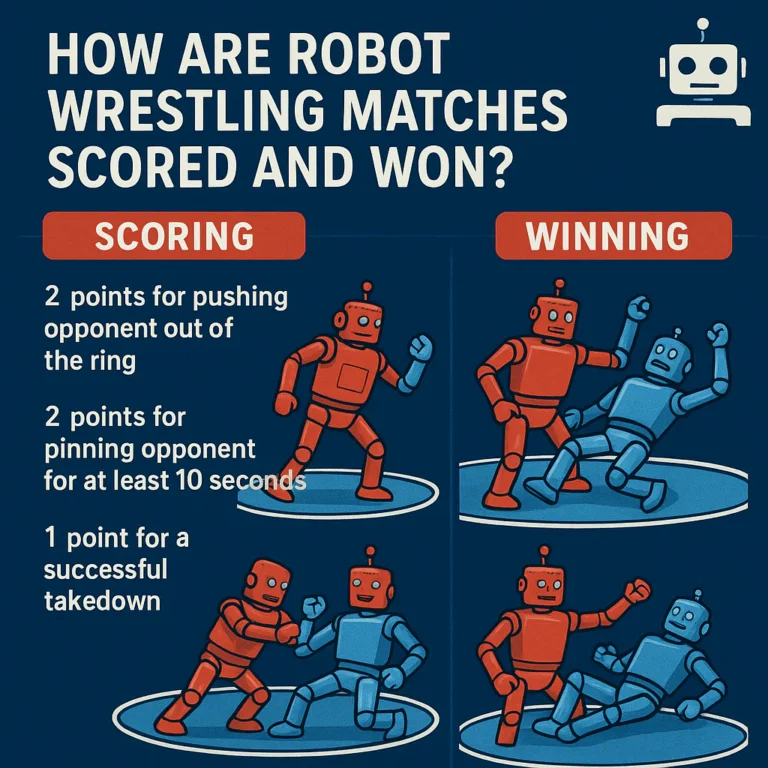
- Are matches decided by pining, ring-outs, immobilization, judges’ decisions, or a combination?
- Are active weapons allowed? If so, which types?
- What are the inspection, battery, radio-control, and arena requirements?
- What happens if a robot is damaged or cannot continue?
A match format can change the best design. A low, grippy pusher may excel in a ruleset focused on control, while a weapon-driven format may reward a different balance offense, armor, and maneuverability. That’s why our designers start with the rulebook and arena, not a sketch of a spectacular spinning blade.
🛠️ Can Anyone Build and Enter a Robot?
Anyone curious can start learning and building skills. Not everyone can enter every event. Entry depends on the organizer’s eligibility criteria, registration process, robot rules, available spaces, and safety inspection. For the specific “Robot Wrestling League” mentioned in social or video material, we could not verify public official requirements—so contact the organizer before buying parts or fabricating a chassis.
BattleBots makes the distinction clear for its own TV competition: applicants can apply, but a completed build does not guarantee selection. Its guide to getting on BattleBots also advises newcomers to start with local events and build experience. That is a sensible path for combat robotics generally, even though each event’s own rules still control.
Who Can Compete: Age, Experience, and Team Requirements
Age limits and team rules vary. Some competitions accept individual builders; others require a team, an adult mentor for minors, or a designated safety officer. Never assume an age policy from a different league applies.
Before registering, check:
- Minimum age and guardian-consent requirements.
- Whether the team must name a captain or technical contact.
- Whether one builder may enter multiple robots.
- Whether a school, club, or business team is eligible.
- Whether the event provides insurance or requires waivers.
- Whether spectators and pit-crew members have separate safety requirements.
For young builders, adult supervision is essential around tools, high-current batteries, and any powered weapon. The U.S. Consumer Product Safety Commission’s power-tool guidance is a useful starting point for workshop safety; follow the tool manufacturer’s instructions as well.
Do You Need to Build Your Own Robot?
That depends on the event. Some organizers may allow kits, shared team builds, or repaired and modified robots; others may require original work or restrict certain components. Ask before assuming a kit is eligible.
Even when a kit is allowed, building and tuning it teaches skills that matter in a match:
- Wiring a reliable drive system.
- Securing batteries and electronics.
- Setting up a failsafe.
- Testing radio control and drive response.
- Repairing damage under time pressure.
We’ve seen new teams spend most of their effort making a robot look intimidating, only to discover that a loose battery mount or twitchy steering causes more trouble than the opponent. A tested, easy-to-repair machine often beats a flashy build that cannot finish a match.
Are Schools, Clubs, Families, and First-Time Builders Welcome?
Many communities use robotics clubs, makerspaces, and school programs to bring new builders into the hobby. CHAMP Makerspace’s combat-robotics invitation is one example of the broader community approach. But welcoming newcomers is not the same as confirming that a particular league is open to every entrant.
For a first project, look for:
- A local robotics club or makerspace with experienced mentors.
- A beginner-friendly event or non-weapon class.
- A team that shares build knowledge and safety practices.
- A clear rulebook and accessible organizer contact.
- Practice time before competition day.
If you’re choosing between building alone and joining a team, we recommend finding a club first. A second pair of eyes can spot a bad wiring route, a weak fastener, or an unsafe test setup before it turns into a very memorable afternoon.
📜 Robot Wrestling League Rules and Entry Requirements
There is no single universal Robot Wrestling League rulebook we can responsibly cite. Rules belong to the event organizer. Before building, obtain the latest documents directly from the event’s official website organizer and confirm that the version applies to your exact event date.
Ask for the rules covering:
- Eligibility, registration, and team size.
- Weight and dimensional limits.
- Permitted and banned weapons.
- Battery, electrical, and radio-control requirements.
- Safety inspection and failsafe tests.
- Match format, judging, and recovery procedures.
- Pit access, charging, transport, and emergency response.
Robot combat organizations such as BattleBots publish rules for their own competition. Those rules can help you understand the kinds of requirements to expect, but do not use them as a substitute for your target event’s rulebook.
Robot Weight Classes and Size Limits
Weight classes are set by each organizer. A robot might fit one event’s class but exceed another’s limit once you include its battery, attachments, and removable components. Some events also set a maximum footprint, height, or arena-clearance requirement.
| Specification | Why it matters | What to confirm |
|---|---|---|
| Weight limit | Determines your chassis, armor, drive, and weapon trade-offs. | Whether the limit includes batteries, attachments, and safety covers. |
| Length and width | Affects arena fit, maneuverability, and transport. | Whether size is measured in a ready-to-fight configuration. |
| Height and clearance | Can affect stability and whether the robot can enter the arena. | Any maximum height, ground-clearance, or wedge restrictions. |
| Removable parts | May be useful for setup or modular designs. | Whether components can be swapped during an event. |
| Weigh-in tolerance | Determines how much margin you need. | Scale type, rounding rules, and re-weigh policy. |
Design to the published limit with a little margin, not to the last gram. Repairs, replacement fasteners, and a slightly different battery can push a tight build over the line.
Allowed and Prohibited Weapons, Materials, and Power Systems
Weapon rules differ sharply between events. A spinning weapon, flame effect, projectile, or high-voltage system may be allowed in one format and banned in another. Do not power up a weapon unless the organizer’s rules and inspection process explicitly permit it.
Check the rulebook for:
- Active-weapon types and energy limits.
- Restrictions on fire, liquids, entangling parts, or projectiles.
- Required weapon locks and safe handling procedures.
- Permitted materials and prohibited hazardous substances.
- Battery chemistry, enclosure, charging, and damage rules.
- Required radio frequency or control-system behavior.
For lithium-ion battery handling, review guidance from the National Fire Protection Association and your battery manufacturer. A robot battery is not just a power source; it is a high-energy component that needs secure mounting, protected wiring, and careful charging.
Safety Inspections, Fail-Safes, and Radio Controls
A robot that drives beautifully but keeps moving after signal loss is not ready to fight. Organizers may inspect mechanical restraint, electrical protection, weapon locks, radio fail-safe behavior, battery security, and the robot’s response to an emergency stop.
Build and test for:
- A reliable radio failsafe that stops drive and weapons when control is lost.
- Secure battery mounting and protected connectors.
- Insulated or covered exposed conductors.
- A clearly accessible power switch or disconnect where required.
- A mechanical weapon lock for transport and pit handling, if applicable.
- A robust test stand or safe test area.
The Federal Communications Commission’s radio-control guidance explains that radio devices operate under regulatory requirements; use compliant equipment and follow the event’s frequency-management instructions. Event rules and the radio manufacturer’s documentation take priority for your build.
How Matches Are Judged and Won
Match scoring is not universal. An event may decide a result through immobilization, ring-out, pining, judge scoring, or a time limit. Our guide to how robot wrestling matches are scored and won 🤖 explains the concepts in more detail.
| Match factor | What it can reward |
|---|---|
| Control | Positioning, steering, and ability to dictate engagement. |
| Aggression | Consistent attempts to engage, subject to that event’s scoring rules. |
| Damage | Visible or functional harm to the opponent, where the rules score it. |
| Immobilization | Preventing an opponent from moving or functioning for the required period. |
| Ring-out or pin | Winning by pushing an opponent out or holding it in a defined position, if the format allows it. |
The video’s robot-combat creators emphasize that human pilots are part of the audience appeal: even a technically capable robot needs a pilot who can make the action legible and compelling. That point rings true from the pits too—control and clear decisions matter as much as raw power.
🔧 How to Build a Competition-Ready Wrestling Robot
The most reliable build process begins with questions, not a shopping cart. First, choose an event and get its rulebook. Then design around the arena, class, safety requirements, and repair time.
BattleBots’ build guide recommends learning through research, community participation, testing, and revision. We agree with the spirit of its advice: “Start small, think big. Keep perfecting, keep innovating, and keep learning.” For a new team, starting small is not a lack of ambition—it is a way to learn without turning every mistake into a heavyweight repair job.
Choose a Weight Class and Robot Design
Pick the event and class before finalizing the design. Then ask what the robot must do to win: push, control, pin, survive, or use an allowed weapon.
A simple design brief can include:
- Purpose: What scoring advantage are we pursuing?
- Constraints: What are the event’s mass, dimensions, and safety limits?
- Drive: How many wheels, what layout, and what turning behavior?
- Protection: Which parts are likely to take hits?
- Serviceability: Can the team reach the battery, motor, and wiring quickly?
- Test plan: What will we test before the first match?
| Common design direction | Strengths | Trade-offs |
|---|---|---|
| Pusher | Mechanically simple; focuses on traction and control. | May struggle if the rules reward damage or active weapons. |
| Wedge or lifter | Can get under or disrupt an opponent, depending on rules. | Front geometry and actuator reliability matter greatly. |
| Drum or other active weapon | Can deliver strong impact in formats that permit it. | Adds complexity, energy, safety constraints, and inspection burden. |
| Walker or unusual drive | Can offer a distinctive tactical profile. | More parts and control challenges; rule treatment varies. |
Do not commit to a weapon concept until you have confirmed it is legal. If you’re new, a robust drive base that survives testing is often a better learning platform than an ambitious mechanism built before you understand the rules.
Select Motors, Batteries, Drive, and Control Electronics
Match the electrical system to the robot’s mass and intended use. A motor is only one part of the system: the drive controller, battery, wiring, connector, cooling, and radio-control failsafe all need to work together.
| Component | Selection checklist |
|---|---|
| Motors | Confirm voltage range, current demand, gearing, mounting, and thermal limits. |
| Motor controllers | Verify current capacity, cooling, braking behavior, and compatibility with your radio system. |
| Battery | Choose a chemistry and configuration permitted by the event; secure it against impact. |
| Wiring and connectors | Size them for expected current and protect them from abrasion and loose fasteners. |
| Radio receiver | Configure and test loss-of-signal behavior before any powered test. |
| Switch or disconnect | Meet event rules and make shutdown practical and unambiguous. |
For established hobby electronics, brands such as Spektrum RC and Hobbywing offer radio-control and motor-control products; select specific models only after checking the event rules and your electrical requirements. A brand name does not make a part automatically suitable or legal.
Test the complete system, not just each component on the bench. A low-speed drive check can expose reversed channels, poor steering response, loose connectors, or a failsafe that behaves differently than expected.
Build for Durability, Grip, and Easy Repairs
A combat robot is a machine that will be pushed, struck, and hurried back into service. Design it so the likely failure points are accessible.
- Keep batteries and electronics secure and protected.
- Use fastening methods appropriate to vibration and impact.
- Avoid fragile protrusions unless they provide a clear tactical benefit.
- Make common repairs possible with tools you can bring to the event.
- Leave room for wiring and connectors; packed-tight builds are harder to troubleshoot.
- Record changes so teammates know what was modified and why.
Our team has watched a simple connector failure turn a promising match into an early exit. The unglamorous fix was better strain relief and a pre-match inspection checklist. Robot wrestling is full of dramatic hits, but many losses start with a tiny detail that nobody checked.
Budget, Tools, and Workshop Safety
A build budget includes more than motors and metal. Consider batteries, chargers, radio equipment, tools, spares, transport, event registration, safety gear, and replacement parts. The exact total varies so much by class, design, and event that a universal figure would be misleading.
Before building, make a parts-and-risk list:
- Which parts are required by the rulebook?
- Which components are likely to need spares?
- What tools can the team borrow from a makerspace?
- Who will supervise machining, soldering, and battery work?
- Where can the robot be tested safely?
- How will it be transported with power systems secured?
BattleBots warns that design, construction, testing, and fighting involve risk and substantial effort in its build guidance. Take that seriously. Use the correct protective equipment, keep others clear of powered tests, and ask a qualified person for help when you are unsure.
🚀 How to Enter the Robot Wrestling League
Because we could not verify a public official entry portal for a league under the exact name “Robot Wrestling League,” treat the following as a reliable entry checklist, not a claim about that league’s unpublished process. Follow the organizer’s instructions whenever they differ.
1. Find an Official League Event and Read Its Rulebook
Search for the organizer’s official website or event page. Verify that the event is current and that the rules apply to the date and location you plan to attend.
- Confirm the organization’s name and contact details.
- Find the latest rulebook and event-specific announcements.
- Confirm weight classes, format, eligibility, and registration dates.
- Ask the organizer about anything unclear, especially weapons and safety.
- Save the rulebook version and any written clarifications.
Use our event announcements as a discovery point, not as a replacement for the organizer’s official information.
2. Register Your Team and Submit Robot Details
Complete the event’s registration process and submit the requested details accurately. Organizers may ask for team contacts, robot dimensions, mass, drive type, power source, weapon description, or proof of eligibility.
Before you submit:
- Check whether all team members need separate registration.
- Confirm whether the robot name and design can be changed later.
- Describe powered mechanisms honestly.
- Ask about entry limits or waitlists.
- Keep confirmation emails and organizer responses.
Do not assume that an application means acceptance. BattleBots explicitly separates applying from selection for its own competition. A local event may instead use open registration, but the organizer must tell you which process applies.
3. Pass Technical Inspection and Safety Checks
Arrive with the robot configured exactly as it will compete. Inspectors may check weight, dimensions, wiring, failsafe, battery security, weapon locks, and compliance with event-specific restrictions.
Before event day, run a checklist:
- Robot meets the current weight and size limits.
- Batteries are secure and in acceptable condition.
- Radio failsafe works as required.
- Drive and weapon controls operate as intended.
- Required locks, covers, or disconnects are present.
- The robot can be switched off safely.
If your robot fails inspection, ask the inspector what must be corrected and whether a reinspection is permitted. Never bypass a safety requirement to save a match slot.
4. Prepare for Weigh-In, Practice, and Match Day
Competition day is easier when the team prepares for the unexciting stuff—because the robot has enough exciting parts already.
Bring:
- The robot, controller, and required safety equipment.
- Charged batteries and an approved charging setup.
- Basic tools and permitted spare components.
- A printed or saved copy of the rulebook.
- A team contact list and registration confirmation.
- A notebook for failures, repairs, and setup changes.
At weigh-in, use the organizer’s process and confirm the robot’s competition configuration. During practice, test steering, communication, and shutdown. Before each match, do a short inspection rather than making unplanned modifications in the pit.
🧰 What to Bring to a Robot Wrestling Event
A compact, organized pit kit makes repairs faster and safer. Your event’s rules determine what tools and substances may be used, so check those first.
| Pit-kit item | Why it helps |
|---|---|
| Robot controller and charged, approved batteries | Avoids preventable control or power problems. |
| Correct chargers and safe charging accessories | Keeps batteries managed according to manufacturer guidance. |
| Hand tools that fit your fasteners | Reduces improvised repairs. |
| Spare fasteners, connectors, and wiring | Covers common wear and connection failures. |
| Multimeter | Helps diagnose continuity and voltage problems. |
| Safety glasses and gloves where appropriate | Supports safer repair work. |
| Rulebook and inspection checklist | Prevents last-minute eligibility surprises. |
| Labels and notebook | Tracks batteries, settings, and repairs. |
Do not bring prohibited materials or unapproved power systems. Ask organizers about pit charging, fire-safety arrangements, and any tool restrictions before travelling.
🏆 Training, Match Strategy, and Common Build Mistakes
A good robot needs a good pilot. Practice at low speed first, then rehearse the movements the event’s scoring system rewards. For judging formats, learn how control, aggression, damage, and other criteria are defined in that specific rulebook.
| Common mistake | Why it hurts | Better approach |
|---|---|---|
| Building before reading the rules | A feature may be illegal or over the limit. | Choose the event and class first. |
| Designing only for appearance | Looks do not fix poor traction or reliability. | Prioritize drive, control, and serviceability. |
| Testing at full power immediately | Raises the chance of injury and damage. | Test progressively in a secure area. |
| Skipping failsafe checks | Signal loss can leave a robot moving. | Verify shutdown behavior before powered practice. |
| No spare parts or repair plan | Small faults can end the day. | Identify likely failures and pack permitted spares. |
| Treating every event like BattleBots | Rules and selection processes differ. | Use the target organizer’s current documents. |
For inspiration, follow our famous robot wrestling matches and opinion pieces. Watch with a builder’s eye: notice how robots approach, recover, and keep operating—not just how loud the hit sounds.
❓ Frequently Asked Questions About Entering a Robot
Can I Enter Without an Engineering Background?
Often, yes—if the specific event allows you to register and your robot passes inspection. You do not need a formal engineering degree to learn basic fabrication, electronics, control, and testing. A team can also divide roles so one person focuses on mechanical design, another on wiring, and another on driving.
Start with a club, makerspace, or beginner-friendly event. BattleBots recommends building experience and learning through smaller competitions in its build guide. That advice is especially useful if you have never designed a robot before.
Can I Compete With a Kit or a Rebuilt Robot?
Possibly; ask the event organizer. Some events may accept kits or modified robots, while others may restrict them or require specific construction. A rebuilt robot also needs to meet the current rules and pass inspection, regardless of its history.
Before registering, send the organizer the kit or robot details and ask whether its drive system, battery, dimensions, and any weapon are allowed.
Can I Enter More Than One Robot or Team?
That depends on registration limits, event scheduling, and available slots. Some events may cap entries per builder or team; others may allow multiple robots but assign them to different brackets. Check the registration policy before planning two builds.
What If My Robot Fails Inspection or Breaks Before a Match?
Ask the inspector or event organizer what repairs are permitted and whether the robot can be reinspected. If the robot is damaged, power it down and handle batteries or mechanical parts according to the event’s safety procedures. Do not operate an unsafe robot just to stay in the bracket.
A repair kit and a simple failure log help your team work methodically. If you cannot make a safe, rule-compliant repair, withdrawing is better than risking injury.
How Do I Find the Official Rules, Registration, and Event Calendar?
Start with the organizer’s official site and current event listing. If you found the “Robot Wrestling League” through a social post or video, ask the person organization that shared it for the league’s official event page, rulebook, and registration contact.
Our competition category and event announcement category can help you spot opportunities. Always verify dates, rules, and eligibility with the event organizer directly.
How Can Beginners Build a Robot for a Wrestling Competition?
Start by choosing a real event and reading its rulebook. Then select a class, create a simple design, and build a robust drive system before adding complexity. Test electronics, steering, and failsafe behavior in stages, and ask an experienced builder to review the design.
A pusher or other simple platform can teach control and reliability without introducing every challenge of a powered weapon. If weapons are permitted and you later choose to add one, follow the organizer’s safety rules and get qualified help.
How Do You Enter a Robot in the Robot Wrestling League?
We could not verify a public official application process for a league using that exact name. In general, you should locate the official organizer, obtain the current rules, confirm eligibility and class, register the team, submit robot details, and pass safety inspection.
Do not rely on a social-media invitation alone as proof that registration is open. Ask the organizer for written confirmation and the current event documents.
What Are the Rules for Building a Robot Wrestling League Competitor?
There is no universal rule set we can attribute to the named league without an official document. The event rules should specify dimensions, weight, permitted weapons, batteries, radio controls, failsafes, inspection, and match scoring.
Use BattleBots’ rules only as an example of the sort of detailed requirements a major competition publishes—not as the rules for another event.
Do You Need Engineering Experience to Build a Wrestling Robot?
No formal degree is necessarily required, but you do need to learn the practical skills relevant to your design. These can include basic CAD, mechanical fastening, motor control, battery safety, radio setup, and systematic testing.
A mentor or experienced teammate can help you avoid common hazards. If a task involves equipment or electrical work you do not understand, get qualified supervision rather than guessing.
What Weight Classes Are Available in the Robot Wrestling League?
We could not verify official weight classes for the named league. The organizer’s current rulebook is the only reliable answer. Confirm the limit, what components count toward weight, how weigh-in is conducted, and whether a tolerance applies.
Do not borrow a weight class from BattleBots or another league; organizers set their own divisions.
What Types of Robots Are Allowed to Compete in Robot Wrestling Battles?
That depends on the format. A particular event might allow pushers, wedges, lifters, or active weapons; another may prohibit weapons entirely. Check the rulebook for drive, weapon, material, battery, and control restrictions.
If the rules are unclear, send the organizer a concise description or drawing of your proposed robot and request written guidance before building.
How Much Does It Cost to Build a Robot for the Robot Wrestling League?
There is no dependable single cost: the class, design, tools, parts, repairs, travel, and event fees all affect the total. A simple robot built with shared workshop tools has a different resource profile from a complex machine with custom machining and an active weapon.
Make a bill of materials before buying, include likely spares, and ask a local club what components can be borrowed or reused. Do not spend heavily until the event’s rules and your entry eligibility are clear.
Where Can You Find Robot Design Tips for Robot Wrestling League Competitions?
Start with the target event’s rulebook and organizer guidance. For broader combat-robot learning, BattleBots lists resources in its build guide, including the RioBotz Combat Robot Tutorial, Kickin’ Bot by Grant Imahara, and robot-building communities.
You can also follow our robot combat competitions, history, and design-focused opinion pieces. Treat every design tip as a starting point, then verify it against the rules of the event you plan to enter.
Does Applying to BattleBots Mean You Can Enter the Robot Wrestling League?
No. BattleBots is a separate competition, with its own application, rules, and selection process. Its official “How to get on BattleBots!” guide says builders can apply, but acceptance is not guaranteed; it also encourages gaining experience in smaller competitions.
Use BattleBots’ advice to understand the work involved, not as confirmation of another league’s entry requirements.