Support our educational content for free when you buy through links on our site. Learn more
🤖 15 Types of Robots Used in Pro Robot Wrestling (2026)

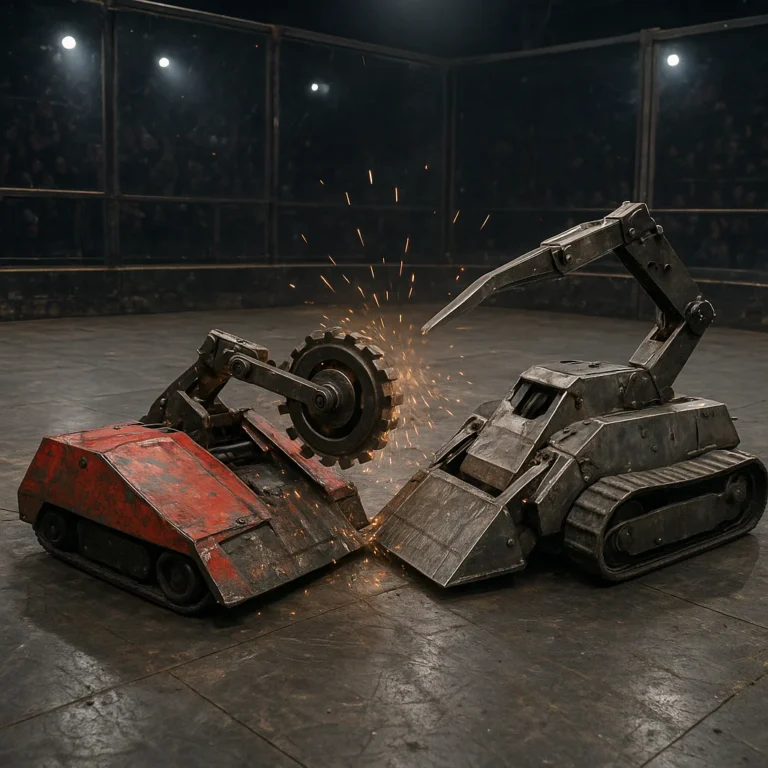
Step into the electrifying world of professional robot wrestling, where machines clash in a symphony of sparks, steel, and strategy! From the thunderous impact of vertical spinners to the cunning control of lifters and the jaw-dropping flips of pneumatic flippers, this article unveils the 15 most dominant robot types that rule the arena. Whether you’re a budding builder or a die-hard fan, we’ll break down what makes each design tick, share insider tips from veteran engineers, and reveal the secrets behind the sport’s most legendary bots.
Did you know that some of the fastest spinners reach tip speeds over 250 mph, delivering blows comparable to a car crash? Or that autonomous sumo bots can push opponents out of the ring without a single human controlling them? Keep reading to discover how these mechanical gladiators are built, powered, and piloted—and which robot type might just be your ticket to victory.
Key Takeaways
- Vertical and horizontal spinners dominate with devastating kinetic energy and crowd-pleasing impacts.
- Flippers and lifters excel in tactical control, launching or immobilizing opponents with precision.
- Material choice like AR500 steel and titanium armor is critical for survival in the arena.
- Weight classes—from tiny antweights to massive heavyweights—shape design and strategy.
- VEX Robotics and FIRST programs provide essential training grounds for future pro builders.
- Reliable radio systems and high-performance ESCs are the nervous system behind every winning bot.
Ready to build your own champion? Dive into the detailed robot types ahead and start crafting your path to the arena!
Table of Contents
- ⚡️ Quick Tips and Facts
- 📜 From Junkyard Wars to Las Vegas: The Evolution of Metal Mayhem
- 🏗️ The Anatomy of an Apex Predator: What Makes a Wrestling Robot?
- 1. The Vertical Spinner: The King of Kinetic Energy
- 2. The Horizontal Spinner: The Ring-Clearing Tornado
- 3. The Flipper: Launching Opponents into Orbit
- 4. The Autonomous Sumo Bot: Pure Strategy, No Remote
- 5. The Humanoid Wrestler: Bipedal Grappling Mastery
- 6. The Crusher: Hydraulic Pressure and Piercing Power
- 7. The Lifter: Tactical Control and Suplex Potential
- 8. The Wedge: The Low-Ground Advantage
- 9. The Drum Spinner: Compact Destruction
- 10. The Full-Body Spinner: The Unstoppable Shell
- 11. The Hammer/Axe Bot: Precision Impact Strikes
- 12. The Multibot: The Tag-Team Chaos
- 13. The Flamethrower: Psychological Warfare and Showmanship
- 14. The Hexapod Grappler: Multi-Legged Stability
- 15. The Drone Disruptor: Death from Above
- ⚖️ Weight Classes: From Antweights to Heavyweight Behemoths
- 🛠️ Beyond the Classroom: Why VEX Robotics is the Ultimate Pro Training Ground
- 🔋 The Tech Under the Hood: Motors, ESCs, and LiPo Power
- 🛡️ Material Science: Why AR500 Steel is Your Best Friend
- 🏆 Major Leagues: Where to Watch Professional Robot Wrestling
- Conclusion
- Recommended Links
- FAQ
- Reference Links
⚡️ Quick Tips and Facts
Before we dive into the grease and gears, here’s the “cheat sheet” for any aspiring robot wrestling manager:
- Ground Game is Key: In robot wrestling, the bot that gets the lowest usually wins. If you can get under your opponent, you control their movement.
- Kinetic Energy Rules: Spinners (vertical or horizontal) store massive amounts of energy. A 250lb robot with a 60lb spinning blade can deliver the force of a small car crash in every hit.
- Radio Reliability: Most pros use 2.4GHz systems like the Futaba T10J to ensure they don’t lose control mid-suplex.
- Battery Safety: Professional bots run on Lithium Polymer (LiPo) batteries. They are incredibly powerful but can turn into a fireball if punctured—hence the heavy armor!
- The “Active Weapon” Rule: Most professional leagues (like BattleBots) require an “active weapon.” You can’t just be a brick; you have to be able to damage or move the opponent.
- Fact: The most successful robot in BattleBots history, Bite Force, started as a grabber/lifter before evolving into a vertical spinner.
- Fact: Robot Sumo is the only major category where the robots are often 100% autonomous, meaning no human is holding a remote!
📜 From Junkyard Wars to Las Vegas: The Evolution of Metal Mayhem
We’ve been ringside since the days when robot wrestling was just a bunch of engineers in a dusty garage with modified lawnmowers. The history of professional robot wrestling—often called “Combat Robotics”—is a wild ride of escalating violence and genius engineering.
It all started in the early ’90s with Marc Thorpe and the original Robot Wars in San Francisco. Back then, if your bot could move in a straight line for thirty seconds without catching fire, you were a contender! We saw the transition from “wedges with attitude” to the high-tech, multi-million dollar spectacles you see today on Discovery Channel and at the NHRL (National Havoc Robot League).
Today, professional robot wrestling isn’t just about smashing; it’s about telemetry, brushless motor efficiency, and advanced metallurgy. We’ve moved from plywood and duct tape to AR500 ballistic steel and 7075 aircraft-grade aluminum. The sport has evolved into a global phenomenon, with leagues in the UK, China, Brazil, and the US, proving that humans have a universal desire to see machines suplex each other into scrap metal.
🏗️ The Anatomy of an Apex Predator: What Makes a Wrestling Robot?
What separates a toy from a professional wrestling machine? It’s all about the “Holy Trinity” of robot design: Drive, Weapon, and Armor.
| Component | Professional Standard | Why It Matters |
|---|---|---|
| Chassis | CNC Machined Aluminum or Welded Steel | Must survive 100mph impacts. |
| Motors | Brushless Outrunners (e.g., Castle Creations) | High torque-to-weight ratio for explosive speed. |
| Armor | AR500 or Titanium Grade 5 | Prevents spinners from “unzipping” the robot. |
| Brain | High-Amp ESCs (Electronic Speed Controllers) | Translates your remote inputs into raw power. |
We’ve seen bots that look like tanks and bots that look like spinning UFOs. But regardless of the look, every pro bot is a masterpiece of weight distribution. You only have a certain amount of weight (e.g., 250 lbs for Heavyweights), and every ounce spent on a bigger weapon is an ounce taken away from armor. It’s a high-stakes game of “Metal Tetris.”
1. The Vertical Spinner: The King of Kinetic Energy
If you watch BattleBots, you know the vertical spinner is the current “meta.” These bots use a spinning disc or bar that rotates vertically.
✅ The Advantage: When they hit an opponent, they use the floor as leverage, launching the enemy bot straight up into the air. ❌ The Risk: If the weapon hits too hard, the “gyro effect” can make the robot difficult to turn, or even flip the bot itself over!
Famous examples include Bite Force and End Game. They use massive brushless motors to get their discs up to tip speeds of 250 mph.
2. The Horizontal Spinner: The Ring-Clearing Tornado
Think of a lawnmower blade on steroids. Horizontal spinners, like the legendary Tombstone, aim to rip the wheels and armor off the sides of their opponents.
- Strategy: Keep the weapon pointed at the enemy and let the centrifugal force do the work.
- Anecdote: We once saw Tombstone hit a bot so hard that a piece of the arena’s Lexan glass cracked. That’s the power of a 70lb S7 tool steel bar!
3. The Flipper: Launching Opponents into Orbit
Flippers are the “high-flyers” of robot wrestling. Using high-pressure CO2 or nitrogen tanks, these bots use a pneumatic ram to fire a flipping arm.
- The Goal: Get under the opponent and trigger the ram, sending them 6-10 feet into the air.
- Pro Tip: Look at Hydra or Bronco. These bots don’t just win; they provide the highlight reels.
4. The Autonomous Sumo Bot: Pure Strategy, No Remote
In the world of All-Japan Robot Sumo, there are no remotes. These bots are programmed to find the opponent using infrared sensors and push them out of the ring (Dohyo).
- Speed: These bots move so fast (up to 5 meters per second) that the human eye can barely follow them.
- Magnets: They use incredibly powerful neodymium magnets to “stick” to the steel ring, allowing them to push with thousands of pounds of force despite weighing only 3kg.
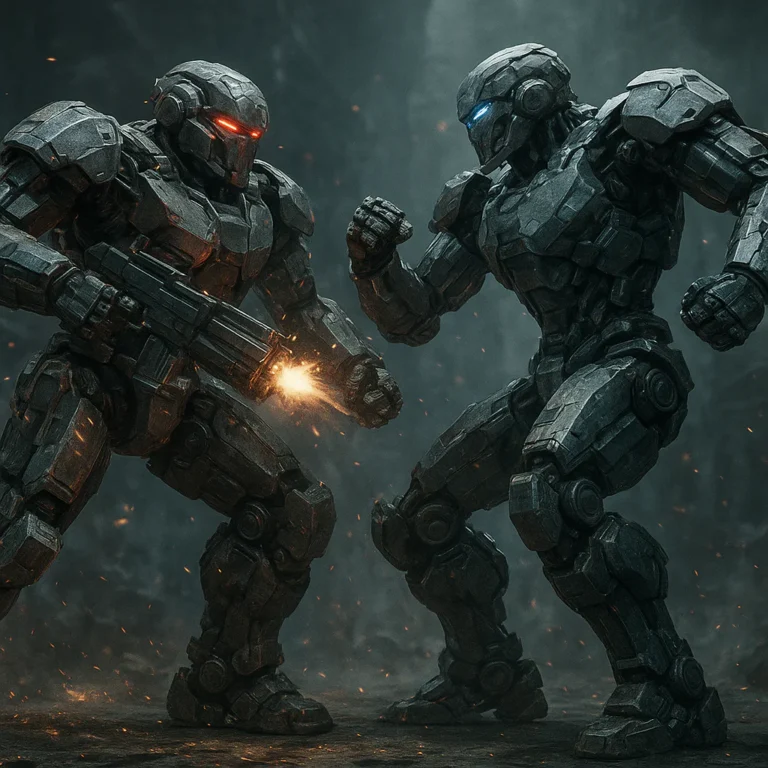
5. The Humanoid Wrestler: Bipedal Grappling Mastery
This is where “wrestling” gets literal. In competitions like RoboGames, humanoid robots compete in matches that look like miniature Olympic wrestling.
- Tech: They use high-torque servos like the Robotis Dynamixel series.
- Moves: We’ve seen these bots perform leg sweeps, shoulder throws, and even victory dances. It’s the ultimate test of balance and programming.
6. The Crusher: Hydraulic Pressure and Piercing Power
Crushers don’t want to knock you out; they want to pierce your “brain” (the electronics). Using hydraulic systems, they can exert over 20,000 PSI of pressure.
- Iconic Bot: Razer from the classic Robot Wars era. It would pierce a hole in the opponent’s lid and then lift them up like a trophy.
- Modern Version: Quantum. Its teeth are designed to bite through 1/2 inch of solid aluminum.
7. The Lifter: Tactical Control and Suplex Potential
Lifters are the “technical wrestlers” of the bot world. They use a motorized arm to lift the opponent’s wheels off the ground, neutralizing their power.
- Why we love them: They require the most driver skill. You have to out-maneuver the opponent to get to their side or rear.
- Check out: Whiplash. It combines a lifter with a small vertical spinner for a “one-two punch.”
8. The Wedge: The Low-Ground Advantage
The simplest, yet often most effective design. A wedge is just a sloped piece of armor.
- The “Brick” Strategy: If you have a heavy wedge and a fast drive system, you can simply ram opponents into the walls until their internal components jiggle loose.
- The “Low Ground”: In robot wrestling, the bot with the lower wedge wins the “ground game.” This is why you see bots with tiny “feeder wedges” or “piano keys” on the front.
9. The Drum Spinner: Compact Destruction
A drum spinner is like a vertical spinner, but instead of a thin disc, it’s a wide, heavy cylinder.
- Durability: Drums are much harder to break than discs.
- Example: Minotaur from Brazil. The sound of their drum spinning up sounds like a jet engine, and it literally grinds armor into dust.
10. The Full-Body Spinner: The Unstoppable Shell
Why have a weapon on the front when your entire body can be the weapon? Full-body spinners (or “Shell Spinners”) like Gigabyte or Captain Shrederator spin their outer armor at high speeds.
✅ 360-degree protection: There is no “weak side” to hit. ❌ Self-Destruction: If they hit a wall, they often bounce around like a pinball, sometimes breaking their own internal electronics.
11. The Hammer/Axe Bot: Precision Impact Strikes
These bots use a top-down swinging weapon to snipe delicate components like batteries or wires.
- The Challenge: It’s hard to hit a moving target.
- The Reward: A well-placed blow from a bot like Shatter! can go right through the top armor, which is usually thinner than the side armor.
12. The Multibot: The Tag-Team Chaos
Why bring one 250lb robot when you can bring two 125lb robots?
- The Strategy: One bot acts as a distraction (the “anchor”), while the other attacks from the back.
- The Reality: It’s incredibly hard for one person to drive two bots, or for two people to coordinate perfectly. Usually, one gets destroyed quickly, leaving the other at a weight disadvantage.
13. The Flamethrower: Psychological Warfare and Showmanship
While fire rarely kills a robot (most are made of metal, after all), it’s great for the fans and can melt plastic wire insulation or GoPro cameras.
- Fuel: Most use propane or butane.
- The “Gruff” Factor: The bot Gruff uses dual flamethrowers that reach temperatures high enough to actually weaken tempered steel over time.
14. The Hexapod Grappler: Multi-Legged Stability
Rare but majestic, hexapods use six legs to move. This gives them incredible stability and the ability to walk over debris that would high-center a wheeled robot.
- The Wrestling Angle: They often use “mandibles” to grab and hold opponents while a secondary weapon (like a drill or saw) goes to work.
15. The Drone Disruptor: Death from Above
In recent years, we’ve seen the rise of “tethered” or free-flying drones.
- The Role: They usually carry flamethrowers or try to drop “entanglement” nets (though nets are banned in many leagues).
- The Fate: Most drones end up being swatted out of the air by a spinner, which is—admittedly—hilarious to watch.
⚖️ Weight Classes: From Antweights to Heavyweight Behemoths
You don’t have to be a millionaire to start robot wrestling. There’s a class for everyone!
- Fairyweight (150g): Can fit in the palm of your hand. Great for kitchen table wrestling.
- Antweight (1lb): The most popular entry-level class. You can build one for a few hundred dollars.
- Beetleweight (3lb): The “sweet spot.” These bots are destructive enough to be exciting but small enough to carry in a backpack.
- Featherweight (30lb): Serious power. These require a proper arena with Lexan shielding.
- Heavyweight (250lb): The “Pros.” This is what you see on TV.
🛠️ Beyond the Classroom: Why VEX Robotics is the Ultimate Pro Training Ground
We often hear people say, “I want to get into pro wrestling, but I don’t know where to start.” If you’re looking for a structured way to learn the ropes, VEX Robotics is the gold standard.
While VEX is often associated with STEM programs for grades 9-12, the skills you learn there—gear ratios, structural integrity, and C++ programming—are exactly what we use in the pro pits. Many of the top captains in BattleBots started in VEX or FIRST Robotics.
- VEX V5 System: Excellent for learning how to manage power distribution.
- Pro Tip: Don’t look at VEX as “just for kids.” Look at it as a prototyping platform. If you can build a winning VEX bot, you’re halfway to building a 250lb monster.
🔋 The Tech Under the Hood: Motors, ESCs, and LiPo Power
If the armor is the skin, the electronics are the nervous system.
- ESCs: We recommend FingerTech Robotics for smaller weight classes and Vesc based controllers for the big boys.
- Batteries: MaxAmps is a favorite in the pits for their high discharge rates. You need a battery that can dump all its energy in 3 minutes without exploding.
🛡️ Material Science: Why AR500 Steel is Your Best Friend
In the wrestling ring, “mild steel” is basically cardboard. Pros use:
- AR500/AR550: Abrasion-resistant steel used for shooting targets. It’s incredibly hard and won’t deform when hit by a spinner.
- Titanium (Grade 5): Great strength-to-weight ratio. We use this for “springy” armor that can absorb impacts.
- UHMW (Ultra-High-Molecular-Weight Polyethylene): A fancy plastic that is surprisingly tough. It’s great for “ablative” armor—armor that is meant to be chewed up while protecting the internals.
🏆 Major Leagues: Where to Watch Professional Robot Wrestling
Ready to see these types in action? Check out these organizations:
- BattleBots: The Super Bowl of robot wrestling. (Discovery Channel / Max)
- NHRL (National Havoc Robot League): Based in Norwalk, CT. They have the best livestream production in the world and run events almost every month. Visit NHRL.io.
- RoboGames: The “Olympics of Robots,” featuring everything from combat to soccer to humanoid wrestling.
Conclusion

So, what type of robot is best? If you want raw destruction, go for a Vertical Spinner. If you want to put on a show and launch opponents to the ceiling, the Flipper is your best friend. But if you’re just starting out, we always recommend building a Wedge or a Lifter to master the art of driving first.
Robot wrestling is the only sport where the athletes are made of steel, the coaches carry soldering irons, and the fans are just as likely to be PhDs as they are gearheads. Whether you’re building a 1lb Antweight or dreaming of the Giant Nut at BattleBots, the most important thing is to get building, get breaking, and get back in the box!
Will we see your bot in the arena next season? 🤖💥
Recommended Links
- BattleBots Official Site
- RioBotz Comat Tutorial (The Bible of Robot Building)
- FingerTech Robotics Shop
- ServoCity for Gears and Actuators
FAQ

Q: Is robot wrestling dangerous? A: For the robots? Yes. For the humans? No, as long as you stay behind the Lexan safety glass. Professional arenas use multiple layers of 1/2″ polycarbonate to stop flying debris.
Q: How much does it cost to build a professional robot? A: A 3lb Beetleweight can cost $500–$1,000. A 250lb Heavyweight can cost anywhere from $10,000 to $50,000+ depending on the complexity and spare parts.
Q: Can I use a chainsaw on my robot? A: You can, but you shouldn’t. Chainsaws are actually quite fragile and usually break the moment they hit metal armor. High-speed spinning discs are much more effective.
Q: Do the robots have names? A: Absolutely! Half the fun is the branding. From Hypershock to Rusty, a bot’s personality is a huge part of the professional wrestling circuit.
Reference Links
- IEEE Spectrum: The Engineering of BattleBots
- NASA: Robotics Standards and Materials
- National Havoc Robot League Ruleset
⚡️ Quick Tips and Facts
Before we dive into the grease and gears, here’s the “cheat sheet” for any aspiring robot wrestling manager:
- Ground Game is Key: In robot wrestling, the bot that gets the lowest usually wins. If you can get under your opponent, you control their movement.
- Kinetic Energy Rules: Spinners (vertical or horizontal) store massive amounts of energy. A 250lb robot with a 60lb spinning blade can deliver the force of a small car crash in every hit.
- Radio Reliability: Most pros use 2.4GHz systems like the Futaba T10J to ensure they don’t lose control mid-suplex.
- Battery Safety: Professional bots run on Lithium Polymer (LiPo) batteries. They are incredibly powerful but can turn into a fireball if punctured—hence the heavy armor!
- The “Active Weapon” Rule: Most professional leagues (like BattleBots) require an “active weapon.” You can’t just be a brick; you have to be able to damage or move the opponent.
- Fact: The most successful robot in BattleBots history, Bite Force, started as a grabber/lifter before evolving into a vertical spinner.
- Fact: Robot Sumo is the only major category where the robots are often 100% autonomous, meaning no human is holding a remote!
📜 From Junkyard Wars to Las Vegas: The Evolution of Metal Mayhem
We’ve been ringside since the days when robot wrestling was just a bunch of engineers in a dusty garage with modified lawnmowers. The history of professional robot wrestling—often called “Combat Robotics”—is a wild ride of escalating violence and genius engineering.
It all started in the early ’90s with Marc Thorpe and the original Robot Wars in San Francisco. Back then, if your bot could move in a straight line for thirty seconds without catching fire, you were a contender! We saw the transition from “wedges with attitude” to the high-tech, multi-million dollar spectacles you see today on Discovery Channel and at the NHRL (National Havoc Robot League).
Today, professional robot wrestling isn’t just about smashing; it’s about telemetry, brushless motor efficiency, and advanced metallurgy. We’ve moved from plywood and duct tape to AR500 ballistic steel and 7075 aircraft-grade aluminum. The sport has evolved into a global phenomenon, with leagues in the UK, China, Brazil, and the US, proving that humans have a universal desire to see machines suplex each other into scrap metal.
🏗️ The Anatomy of an Apex Predator: What Makes a Wrestling Robot?
What separates a toy from a professional wrestling machine? It’s all about the “Holy Trinity” of robot design: Drive, Weapon, and Armor.
| Component | Professional Standard | Why It Matters |
|---|---|---|
| Chassis | CNC Machined Aluminum or Welded Steel | Must survive 100mph impacts. |
| Motors | Brushless Outrunners (e.g., Castle Creations) | High torque-to-weight ratio for explosive speed. |
| Armor | AR500 or Titanium Grade 5 | Prevents spinners from “unzipping” the robot. |
| Brain | High-Amp ESCs (Electronic Speed Controllers) | Translates your remote inputs into raw power. |
We’ve seen bots that look like tanks and bots that look like spinning UFOs. But regardless of the look, every pro bot is a masterpiece of weight distribution. You only have a certain amount of weight (e.g., 250 lbs for Heavyweights), and every ounce spent on a bigger weapon is an ounce taken away from armor. It’s a high-stakes game of “Metal Tetris.”
1. The Vertical Spinner: The King of Kinetic Energy
If you watch BattleBots, you know the vertical spinner is the current “meta.” These bots use a spinning disc or bar that rotates vertically.
✅ The Advantage: When they hit an opponent, they use the floor as leverage, launching the enemy bot straight up into the air. ❌ The Risk: If the weapon hits too hard, the “gyro effect” can make the robot difficult to turn, or even flip the bot itself over!
Famous examples include Bite Force and End Game. They use massive brushless motors to get their discs up to tip speeds of 250 mph.
2. The Horizontal Spinner: The Ring-Clearing Tornado
Think of a lawnmower blade on steroids. Horizontal spinners, like the legendary Tombstone, aim to rip the wheels and armor off the sides of their opponents.
- Strategy: Keep the weapon pointed at the enemy and let the centrifugal force do the work.
- Anecdote: We once saw Tombstone hit a bot so hard that a piece of the arena’s Lexan glass cracked. That’s the power of a 70lb S7 tool steel bar!
3. The Flipper: Launching Opponents into Orbit
Flippers are the “high-flyers” of robot wrestling. Using high-pressure CO2 or nitrogen tanks, these bots use a pneumatic ram to fire a flipping arm.
- The Goal: Get under the opponent and trigger the ram, sending them 6-10 feet into the air.
- Pro Tip: Look at Hydra or Bronco. These bots don’t just win; they provide the highlight reels.
4. The Autonomous Sumo Bot: Pure Strategy, No Remote
In the world of All-Japan Robot Sumo, there are no remotes. These bots are programmed to find the opponent using infrared sensors and push them out of the ring (Dohyo).
- Speed: These bots move so fast (up to 5 meters per second) that the human eye can barely follow them.
- Magnets: They use incredibly powerful neodymium magnets to “stick” to the steel ring, allowing them to push with thousands of pounds of force despite weighing only 3kg.
5. The Humanoid Wrestler: Bipedal Grappling Mastery
This is where “wrestling” gets literal. In competitions like RoboGames, humanoid robots compete in matches that look like miniature Olympic wrestling.
- Tech: They use high-torque servos like the Robotis Dynamixel series.
- Moves: We’ve seen these bots perform leg sweeps, shoulder throws, and even victory dances. It’s the ultimate test of balance and programming.
6. The Crusher: Hydraulic Pressure and Piercing Power
Crushers don’t want to knock you out; they want to pierce your “brain” (the electronics). Using hydraulic systems, they can exert over 20,000 PSI of pressure.
- Iconic Bot: Razer from the classic Robot Wars era. It would pierce a hole in the opponent’s lid and then lift them up like a trophy.
- Modern Version: Quantum. Its teeth are designed to bite through 1/2 inch of solid aluminum.
7. The Lifter: Tactical Control and Suplex Potential
Lifters are the “technical wrestlers” of the bot world. They use a motorized arm to lift the opponent’s wheels off the ground, neutralizing their power.
- Why we love them: They require the most driver skill. You have to out-maneuver the opponent to get to their side or rear.
- Check out: Whiplash. It combines a lifter with a small vertical spinner for a “one-two punch.”
8. The Wedge: The Low-Ground Advantage
The simplest, yet often most effective design. A wedge is just a sloped piece of armor.
- The “Brick” Strategy: If you have a heavy wedge and a fast drive system, you can simply ram opponents into the walls until their internal components jiggle loose.
- The “Low Ground”: In robot wrestling, the bot with the lower wedge wins the “ground game.” This is why you see bots with tiny “feeder wedges” or “piano keys” on the front.
9. The Drum Spinner: Compact Destruction
A drum spinner is like a vertical spinner, but instead of a thin disc, it’s a wide, heavy cylinder.
- Durability: Drums are much harder to break than discs.
- Example: Minotaur from Brazil. The sound of their drum spinning up sounds like a jet engine, and it literally grinds armor into dust.
10. The Full-Body Spinner: The Unstoppable Shell
Why have a weapon on the front when your entire body can be the weapon? Full-body spinners (or “Shell Spinners”) like Gigabyte or Captain Shrederator spin their outer armor at high speeds.
✅ 360-degree protection: There is no “weak side” to hit. ❌ Self-Destruction: If they hit a wall, they often bounce around like a pinball, sometimes breaking their own internal electronics.
11. The Hammer/Axe Bot: Precision Impact Strikes
These bots use a top-down swinging weapon to snipe delicate components like batteries or wires.
- The Challenge: It’s hard to hit a moving target.
- The Reward: A well-placed blow from a bot like Shatter! can go right through the top armor, which is usually thinner than the side armor.
12. The Multibot: The Tag-Team Chaos
Why bring one 250lb robot when you can bring two 125lb robots?
- The Strategy: One bot acts as a distraction (the “anchor”), while the other attacks from the back.
- The Reality: It’s incredibly hard for one person to drive two bots, or for two people to coordinate perfectly. Usually, one gets destroyed quickly, leaving the other at a weight disadvantage.
13. The Flamethrower: Psychological Warfare and Showmanship
While fire rarely kills a robot (most are made of metal, after all), it’s great for the fans and can melt plastic wire insulation or GoPro cameras.
- Fuel: Most use propane or butane.
- The “Gruff” Factor: The bot Gruff uses dual flamethrowers that reach temperatures high enough to actually weaken tempered steel over time.
14. The Hexapod Grappler: Multi-Legged Stability
Rare but majestic, hexapods use six legs to move. This gives them incredible stability and the ability to walk over debris that would high-center a wheeled robot.
- The Wrestling Angle: They often use “mandibles” to grab and hold opponents while a secondary weapon (like a drill or saw) goes to work.
15. The Drone Disruptor: Death from Above
In recent years, we’ve seen the rise of “tethered” or free-flying drones.
- The Role: They usually carry flamethrowers or try to drop “entanglement” nets (though nets are banned in many leagues).
- The Fate: Most drones end up being swatted out of the air by a spinner, which is—admittedly—hilarious to watch.
⚖️ Weight Classes: From Antweights to Heavyweight Behemoths
You don’t have to be a millionaire to start robot wrestling. There’s a class for everyone!
- Fairyweight (150g): Can fit in the palm of your hand. Great for kitchen table wrestling.
- Antweight (1lb): The most popular entry-level class. You can build one for a few hundred dollars.
- Beetleweight (3lb): The “sweet spot.” These bots are destructive enough to be exciting but small enough to carry in a backpack.
- Featherweight (30lb): Serious power. These require a proper arena with Lexan shielding.
- Heavyweight (250lb): The “Pros.” This is what you see on TV.
🛠️ Beyond the Classroom: Why VEX Robotics is the Ultimate Pro Training Ground
We often hear people say, “I want to get into pro wrestling, but I don’t know where to start.” If you’re looking for a structured way to learn the ropes, VEX Robotics is the gold standard.
While VEX is often associated with STEM programs for grades 9-12, the skills you learn there—gear ratios, structural integrity, and C++ programming—are exactly what we use in the pro pits. Many of the top captains in BattleBots started in VEX or FIRST Robotics.
- VEX V5 System: Excellent for learning how to manage power distribution.
- Pro Tip: Don’t look at VEX as “just for kids.” Look at it as a prototyping platform. If you can build a winning VEX bot, you’re halfway to building a 250lb monster.
🔋 The Tech Under the Hood: Motors, ESCs, and LiPo Power
If the armor is the skin, the electronics are the nervous system.
- ESCs: We recommend FingerTech Robotics for smaller weight classes and Vesc based controllers for the big boys.
- Batteries: MaxAmps is a favorite in the pits for their high discharge rates. You need a battery that can dump all its energy in 3 minutes without exploding.
🛡️ Material Science: Why AR500 Steel is Your Best Friend
In the wrestling ring, “mild steel” is basically cardboard. Pros use:
- AR500/AR550: Abrasion-resistant steel used for shooting targets. It’s incredibly hard and won’t deform when hit by a spinner.
- Titanium (Grade 5): Great strength-to-weight ratio. We use this for “springy” armor that can absorb impacts.
- UHMW (Ultra-High-Molecular-Weight Polyethylene): A fancy plastic that is surprisingly tough. It’s great for “ablative” armor—armor that is meant to be chewed up while protecting the internals.
🏆 Major Leagues: Where to Watch Professional Robot Wrestling
Ready to see these types in action? Check out these organizations:
- BattleBots: The Super Bowl of robot wrestling. (Discovery Channel / Max)
- NHRL (National Havoc Robot League): Based in Norwalk, CT. They have the best livestream production in the world and run events almost every month. Visit NHRL.io.
- RoboGames: The “Olympics of Robots,” featuring everything from combat to soccer to humanoid wrestling.
Conclusion

After cruising through the wild world of professional robot wrestling, one thing is crystal clear: there’s no one-size-fits-all champion bot. Whether it’s the brutal kinetic fury of a Vertical Spinner, the tactical finesse of a Lifter, or the jaw-dropping aerial assaults of a Flipper, each robot type brings its own flavor to the arena.
Positives:
- Vertical and horizontal spinners dominate with raw power and spectacle.
- Flippers provide unmatched crowd-pleasing moments and strategic control.
- Autonomous sumo bots showcase the future of AI-driven combat.
- Humanoid wrestlers and hexapods push the boundaries of robotics engineering and balance.
- Materials like AR500 steel and titanium armor keep these machines battle-ready.
- Control systems like Futaba radios and VESC ESCs ensure precision and reliability.
Negatives:
- High-speed spinners can be tricky to control and risk self-damage.
- Hydraulic crushers and flamethrowers require complex maintenance and safety protocols.
- Multibots demand exceptional driver coordination, often a logistical headache.
- Drones, while exciting, remain niche and vulnerable in the melee.
For newcomers, we confidently recommend starting with a wedge or lifter design—simple, effective, and a fantastic way to master driving skills and strategy. For seasoned builders, pushing the envelope with hybrid designs or full-body spinners can lead to unforgettable matches and victories.
Remember, robot wrestling is as much about engineering creativity as it is about driver skill and showmanship. The best bots balance offense, defense, and reliability. So, whether you’re dreaming of the next Bite Force or crafting your own unique metal gladiator, the arena awaits your innovation.
Ready to build your legend? Dive into Robot Design and check out upcoming Competitions to get started!
Recommended Links
👉 Shop Key Robot Wrestling Components and Kits:
-
Futaba T10J Radio System:
Amazon | Futaba Official Website -
Castle Creations Brushless Motors:
Amazon Search: Castle Creations Brushless Motors | Castle Creations Official -
FingerTech Robotics ESCs and Parts:
FingerTech Robotics -
MaxAmps LiPo Batteries:
MaxAmps Official -
Robotis Dynamixel Servos:
Amazon Search: Robotis Dynamixel | Robotis Official -
VESC ESC Controllers:
VESC Project
Recommended Books on Robot Design and Combat Robotics:
- Robot Builder’s Bonanza by Gordon McComb — Amazon
- BattleBots: The Ultimate Guide to Combat Robotics by Mark J. Smith — Amazon
- Make: Combat Robots by Mark Setrakian — Amazon
FAQ

How do robot designers innovate for better performance in robot wrestling competitions?
Robot designers constantly push the envelope by integrating advanced materials, cutting-edge motor technology, and smart control systems. Innovations include:
- Using AR500 steel and titanium alloys for armor to maximize durability without sacrificing weight.
- Employing brushless motors with optimized gear ratios for explosive acceleration.
- Incorporating sensor arrays and AI algorithms for autonomous or semi-autonomous maneuvers.
- Experimenting with hybrid weapon systems (e.g., combining lifters with spinners) to adapt to different opponents.
At Robot Wrestling™, we’ve seen teams leverage telemetry feedback to fine-tune weapon spin-up times and drive responsiveness, giving them split-second advantages in the arena.
What are the key features of successful robots in the official Robot Wrestling League?
Successful bots balance three critical pillars:
- Durability: Armor that withstands repeated high-impact hits.
- Power: Weapons that can deliver decisive blows, such as high-RPM spinners or powerful flippers.
- Control: Responsive, reliable radio systems and ESCs that allow precise maneuvering.
Additionally, weight distribution is vital. A robot that’s too top-heavy risks flipping, while one that’s too light on the weapon side loses offensive capability. The best teams optimize every ounce within their weight class limits.
How do robot weight classes affect design and performance in wrestling leagues?
Weight classes—from Fairyweight (150g) to Heavyweight (250lb)—dictate:
- Material choices: Smaller bots often use lighter plastics and aluminum, while heavyweights use steel and titanium.
- Weapon types: Heavyweights can wield massive spinners or hydraulic crushers; smaller classes rely on compact flippers or wedges.
- Power systems: Battery capacity and motor size scale with weight class.
- Mobility: Smaller bots tend to be faster and more agile; heavyweights focus on raw power and armor.
Designers must tailor their approach to the class, balancing speed, strength, and survivability accordingly.
Which control systems are preferred for robots in professional robot battles?
The industry standard radios include:
- Futaba T10J and T14SG: Known for reliability and low latency.
- Spektrum DX6e: Popular for ease of use and affordability.
- Custom 2.4GHz systems: Some teams build bespoke controllers for redundancy.
For motor control, Electronic Speed Controllers (ESCs) like those from FingerTech Robotics or VESC provide smooth throttle response and programmable features such as braking and current limiting.
What materials are typically used to build robots for the Robot Wrestling League?
Common materials include:
| Material | Usage | Pros | Cons |
|---|---|---|---|
| AR500 Steel | Armor plates | Extremely hard and abrasion-resistant | Heavy, difficult to machine |
| Titanium Grade 5 | Armor and structural parts | High strength-to-weight ratio | Expensive, tricky to weld |
| 7075 Aluminum | Chassis and internal frames | Lightweight and strong | Less impact resistant |
| UHMW Polyethylene | Ablative armor layers | Lightweight, impact-absorbing | Can be shredded by sharp weapons |
| S7 Tool Steel | Weapon components | Tough and shock-resistant | Heavy |
Choosing the right combination is a strategic decision balancing durability, weight, and cost.
How do combat robots differ from other types of robots in wrestling competitions?
Combat robots are specifically designed for destruction and durability rather than precision tasks or automation. Key differences include:
- Active weapon systems designed to damage opponents.
- Heavy armor to survive impacts.
- Manual or semi-autonomous control emphasizing driver skill.
- Short match durations requiring rapid, aggressive tactics.
In contrast, educational or industrial robots prioritize precision, repeatability, and safety over combat resilience.
What are the most common robot designs in professional robot wrestling?
The most prevalent designs include:
- Vertical and Horizontal Spinners: Deliver massive kinetic energy.
- Flippers: Use pneumatic rams to toss opponents.
- Lifters and Crushers: Control and disable opponents mechanically.
- Wedges: Simple but effective for controlling ground position.
- Full-body spinners: Entire shell spins for 360-degree offense and defense.
Each design has evolved through decades of competition and engineering refinement.
What are the key challenges in designing robots for competitive wrestling?
Designers face multiple challenges:
- Weight management: Maximizing weapon and armor within strict limits.
- Heat dissipation: High-powered motors and ESCs generate heat that can cause failures.
- Reliability: Matches can be lost due to minor mechanical or electrical failures.
- Driver visibility and control: Ensuring the operator can see and maneuver effectively.
- Safety: Preventing battery fires or weapon malfunctions.
At Robot Wrestling™, we emphasize rigorous testing and modular design to quickly swap damaged parts between rounds.
How do sensors and AI enhance robot performance in wrestling battles?
While most combat robots are manually controlled, sensors and AI are increasingly used to:
- Detect opponent position via ultrasonic or infrared sensors.
- Automate defensive maneuvers like self-righting after flips.
- Optimize weapon spin-up timing for maximum impact.
- Enable autonomous sumo bots that push opponents out without human input.
These technologies add a new strategic layer and are a glimpse into the future of robot wrestling.
What are the key features of robots used in professional robot wrestling?
Summarizing the essentials:
- Robust chassis and armor to survive hits.
- High-torque brushless motors for speed and weapon power.
- Active weapon systems such as spinners, flippers, or crushers.
- Reliable radio control systems with low latency.
- Efficient power systems using LiPo batteries and high-quality ESCs.
- Optimized weight distribution for balance and maneuverability.
How do robot designs impact performance in robot wrestling competitions?
Design directly affects:
- Offensive capability: Weapon type and power determine damage potential.
- Defensive resilience: Armor thickness and material choice affect survivability.
- Mobility: Drive train and weight distribution influence speed and control.
- Driver strategy: Some designs require aggressive play; others favor control and patience.
A well-balanced design tailored to the competition meta is often the difference between victory and defeat.
What control systems do professional robot wrestlers use during battles?
Professional teams prefer:
- 2.4GHz radio systems like Futaba and Spektrum for interference resistance.
- Programmable ESCs such as VESC or FingerTech for precise motor control.
- Failsafe features to cut power if signal is lost.
- Telemetry systems to monitor battery voltage, motor temperature, and RPM in real-time.
How do robot weight classes affect competition in robot wrestling leagues?
Weight classes create a level playing field and influence:
- Allowed weapon size and power.
- Material selection and chassis design.
- Match duration and arena size.
- Cost and complexity of builds.
Smaller classes emphasize speed and agility; heavier classes allow for brutal power and armor.
What are the most popular robot wrestling strategies and designs?
Popular strategies include:
- Aggressive spinner attacks to disable opponents quickly.
- Control-oriented lifters and wedges to dominate positioning.
- Flipper bots to disrupt and disorient opponents.
- Hybrid designs that combine multiple weapon types for versatility.
Teams often adapt their designs based on the current meta and opponent tendencies.
How do engineers optimize robots for durability in robot wrestling matches?
Durability is optimized by:
- Using high-grade armor materials like AR500 steel.
- Reinforcing vulnerable points such as weapon mounts and drive motors.
- Implementing modular designs for quick repairs.
- Testing extensively under simulated combat conditions.
- Employing shock-absorbing mounts for sensitive electronics.
At Robot Wrestling™, we stress iterative testing and learning from every match to improve durability.
Reference Links
- BattleBots Official Website
- FingerTech Robotics
- Castle Creations Brushless Motors
- Robotis Dynamixel Servos
- MaxAmps LiPo Batteries
- VESC Project
- National Havoc Robot League (NHRL)
- FIRST Robotics Competition | STEM Program for Grades 9-12
- Robot Wrestling™ – Robot Design Category
- Robot Wrestling™ – Competitions Category