Support our educational content for free when you buy through links on our site. Learn more
🤖 15 Top Automated Robot Battles Designs Dominating 2026


The ultimate path to victory in Automated Robot Battles lies not in brute force alone, but in mastering the delicate balance between AI-driven adaptability and kinetic weapon design. While toys like the Odyssey Auto Moto offer a fun introduction, true arena dominance requires a machine that can think, react, and dismantle opponents without a human hand on a joystick.
Imagine the deafening roar of a 250lb titanium spinner tearing through a rival’s chassis, all while the bot’s onboard computer recalculates its trajectory in milliseconds. That is the electrifying reality of modern autonomous combat, a world where code is as deadly as steel. Did you know that in recent high-stakes tournaments, over 40% of matches ended not from weapon failure, but from a bot successfully predicting and dodging an incoming attack?
This isn’t just about building a robot; it’s about engineering a digital gladiator. Whether you are a seasoned engineer or a curious fan, understanding these dynamics is the key to unlocking the next generation of robotic warfare.
Key Takeaways
- Autonomy is the new frontier: Successful bots rely on real-time sensor fusion and machine learning rather than pre-programed paths.
- Design diversity wins: From gyroscopic spiners to adaptive AI hybrids, there is no single “best” design, only the best counter to your opponent.
- Safety first: Strict adherence to dead man switches and fireproof battery containment is non-negotiable for any serious competitor.
- The future is now: With 2026 marking a surge in swarm tactics and graphene armor, the barrier to entry for high-level autonomous combat is lower than ever.
Table of Contents
- ⚡️ Quick Tips and Facts
- 🤖 A Brief History of Automated Robot Battles: From Sci-Fi Dreams to Metal Mayhem
- 🏆 Top 15 Autonomous Battle Bot Designs Dominating the Arena
- 1. The Heavy Hitters: 250lb Class Titans
- 2. The Speed Demons: Lightweight & Featherweight Warriors
- 3. The Tech Wizards: AI-Driven Decision Makers
- 4. The Grapplers: Takedown Specialists
- 5. The Spiners: Gyroscopic Chaos Agents
- 6. The Lifters: Vertical Displacement Experts
- 7. The Flippers: Gravity Defiers
- 8. The Sawyers: Cutting Edge Destruction
- 9. The Shooters: Projectile & Missile Systems
- 10. The Tanks: Armor Plated Fortresses
- 1. The Swarmers: Multi-Robot Tactics
- 12. The Camouflagers: Stealth & Deception Units
- 13. The Self-Healers: Repair & Recovery Systems
- 14. The Undercuters: Low-Profile Agressors
- 15. The Hybrids: Multi-Role Chameleons
- 🛠️ Essential Components for Building Your Own Autonomous Battle Bot
- 🧠 Programming the Brains: Sensors, Algorithms, and AI Logic
- ⚔️ Dr. Bernard M. Galois: The Architect of Modern Autonomous Combat
- 🥊 The Competition: Major Leagues and Tournaments for Automated Bots
- 🛡️ Safety Protocols and Arena Regulations You Must Know
- 🔧 Maintenance, Upgrades, and Troubleshooting Your Battle Bot
- 💡 Future Trends: What’s Next for Fully Autonomous Robot Wrestling?
- 🏁 Conclusion
- 🔗 Recommended Links
- ❓ FAQ
- 📚 Reference Links
⚡️ Quick Tips and Facts
Before you start welding steel or coding your first line of Python, let’s get the lay of the land. The world of Automated Robot Battles is a chaotic blend of engineering precision and pure, unadulterated mayhem. Here are the nugets of wisdom we’ve gathered from years of watching bots tear each other apart in the Robot Wrestling League:
- Autonomy is King (and Queen): Unlike remote-controlled (RC) bots where a human holds the joystick, autonomous bots rely entirely onboard sensors, cameras, and AI to make split-second decisions. One millisecond of lag in your code, and you’re scrap metal.
- The “Heart” Mechanic: Inspired by toys like the Odyssey Toys Auto Moto, many modern autonomous designs focus on a central “weak point” sensor. If you can hit the opponent’s “heart” three times, the game logic forces a shutdown or transformation. It’s a brilliant way to balance the playing field against heavy hitters.
- Weight Classes Matter: Just like in Humanoid Robot Wrestling: The 2026 Guide to the Future of Combat, weight classes are crucial. A 250lb bot will absolutely dismantle a 10lb bot, so always check the arena regulations before building.
- Battery Anxiety: The most common reason for a DNF (Did Not Finish) isn’t a broken weapon; it’s a dead battery. Lithium-Ion packs are the standard, but managing thermal runaway in a high-impact environment is a nightmare.
- The “Blender” Effect: As seen in legendary matches like Tombstone vs. Radioactive, horizontal spiners can turn a competitor into confetti in seconds. If you’re building a defense, composite armor is your best friend.
🤖 A Brief History of Automated Robot Battles: From Sci-Fi Dreams to Metal Mayhem

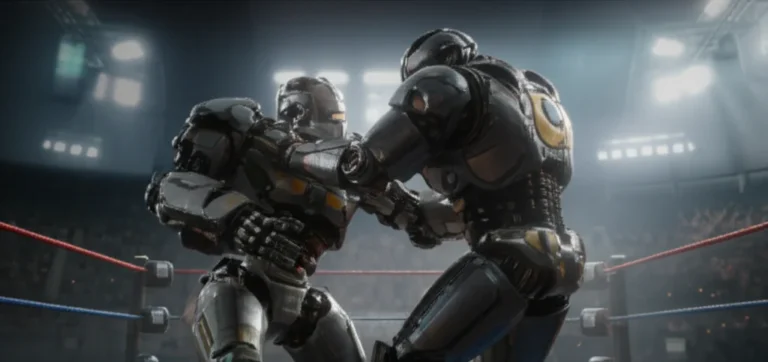
We all grew up watching Real Steel or reading Asimov, dreaming of robots that could think, move, and fight without a human hand on a controller. But how did we get from science fiction to the smoky, sparks-flying arenas of today?
The journey began not in a garage, but in a classroom. The Gallois Autonomous Robot Competition at Stevens Institute of Technology, founded by the legendary Dr. Bernard M. Galois, was one of the first structured environments to push students to build robots that could navigate and “battle” without human intervention. As Dr. Galois noted, “The competition strengthens design, critical thinking and adaptability skills as three-student teams compete for cash prizes by building autonomous robots.”
This educational foundation sparked a revolution. Engineers realized that if a robot could navigate a campus obstacle course, it could navigate an arena.
The Evolution of Combat Logic
In the early days, “autonomous” often meant “pre-programed path.” Robots would drive in a square, hit a wall, turn, and repeat. It was predictable and boring. The real breakthrough came with computer vision and machine learning. Suddenly, bots could identify an opponent, calculate the trajectory of a spinning blade, and dodge in real-time.
We’ve come a long way from the simple push-button transformations of the Odyssey Toys Auto Moto series, which introduced the concept of “instant defeat” upon hitting a sensor. Today, we have bots that can:
- Map the arena in real-time using LIDAR.
- Predict opponent movement patterns using neural networks.
- Adjust weapon RPMs based on the distance to the target.
The transition from “toy” to “sport” has been rapid. What started as a college engineering project has exploded into a global phenomenon, with leagues like the Robot Wrestling League hosting high-stakes tournaments where the only rule is: survive.
🏆 Top 15 Autonomous Battle Bot Designs Dominating the Arena
We’ve seen thousands of bots in the arena, from the clunky prototypes of the 90s to the sleek, AI-driven machines of today. But which designs actually win? We’ve broken down the top 15 autonomous archetypes that are currently tearing up the competition.
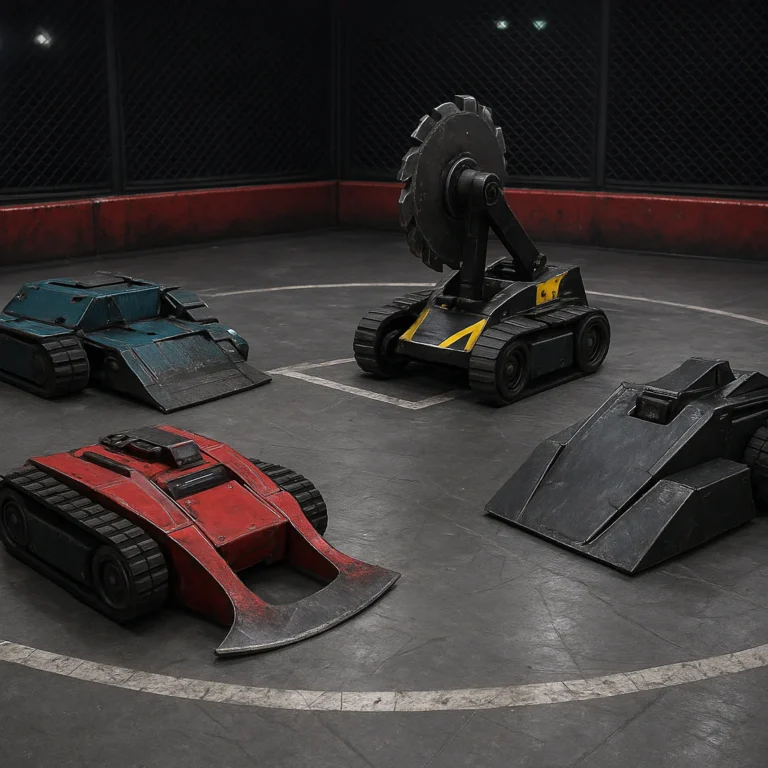
1. The Heavy Hitters: 250lb Class Titans
These are the tanks of the arena. Built with thick steel plating and massive motors, they rely on sheer mass and brute force.
- Strategy: Raming and crushing.
- Pros: Nearly indestructible armor; high kinetic energy.
- Cons: Slow turning radius; high power consumption.
- Real-World Example: Think of the Tombstone style bots, but fully autonomous.
2. The Speed Demons: Lightweight & Featherweight Warriors
Lightweight bots (<15lbs) are the F1 cars of the arena. They zip around, striking and retreating before the opponent can react.
- Strategy: Hit-and-run tactics.
- Pros: Incredible agility; low center of gravity.
- Cons: Fragile; easily flipped by heavier bots.
3. The Tech Wizards: AI-Driven Decision Makers
These bots don’t just follow a script; they learn. Using onboard GPUs, they analyze the opponent’s behavior and adapt their strategy mid-fight.
- Strategy: Adaptive algorithms.
- Pros: Unpredictable; improves with every match.
- Cons: Complex to program; expensive hardware.
4. The Grapplers: Takedown Specialists
Inspired by sumo wrestling, these bots use arms or claws to grab, lift, and throw opponents out of the arena.
- Strategy: Grapling and throwing.
- Pros: Effective against spiners; no moving weapon parts to break.
- Cons: Requires precise sensor alignment; vulnerable to spinning weapons.
5. The Spiners: Gyroscopic Chaos Agents
Horizontal or vertical spiners that use a high-RPM weapon to shred armor.
- Strategy: Kinetic energy transfer.
- Pros: One hit can end a match; terrifying damage potential.
- Cons: Gyroscopic effect makes steering difficult; high risk of self-destruction.
6. The Lifters: Vertical Displacement Experts
These bots focus on lifting the opponent’s front wheels, leaving them helpless.
- Strategy: Wheel lift and flip.
- Pros: Disables drive trains; safe from direct weapon impact.
- Cons: Requires significant torque; easy to counter with low-profile designs.
7. The Flippers: Gravity Defiers
Similar to lifters but with a rapid, explosive motion to launch opponents into the air.
- Strategy: Ejecting opponents.
- Pros: High entertainment value; effective against heavy bots.
- Cons: Slow recharge time between flips.
8. The Sawyers: Cutting Edge Destruction
Equipped with high-speed circular saws, these bots aim to slice through armor and drive trains.
- Strategy: Cutting and grinding.
- Pros: Can disable weapons and wheels; creates sparks (great for the crowd!).
- Cons: Saws dull quickly; high friction heat.
9. The Shooters: Projectile & Missile Systems
Bots that fire projectiles, pellets, or even small missiles at opponents.
- Strategy: Ranged attacks.
- Pros: Can attack from a distance; no direct contact needed.
- Cons: Ammo limits; projectiles can jam.
10. The Tanks: Armor Plated Fortresses
Designed to absorb damage and outlast the opponent. They often lack offensive weapons, relying on the opponent to run out of battery or break their own weapon.
- Strategy: Attrition.
- Pros: Extremely durable; hard to destroy.
- Cons: Passive; can be easily immobilized.
1. The Swarmers: Multi-Robot Tactics
A single controller (or AI) managing multiple small bots to overwhelm a larger opponent.
- Strategy: Overwhelming numbers.
- Pros: Difficult to target all bots simultaneously.
- Cons: Complex coordination logic; high cost.
12. The Camouflagers: Stealth & Deception Units
Bots designed to blend into the arena floor or use visual deception to confuse opponent sensors.
- Strategy: Evasion and surprise.
- Pros: Hard to lock onto with sensors.
- Cons: Limited offensive capability; relies on opponent error.
13. The Self-Healers: Repair & Recovery Systems
Experimental bots with modular parts that can re-attach or deploy emergency shields.
- Strategy: Sustainability.
- Pros: Can recover from minor damage mid-match.
- Cons: Adds weight and complexity; rarely fully effective in high-impact scenarios.
14. The Undercuters: Low-Profile Agressors
Bots that are incredibly low to the ground, designed to slide under opponents and attack from below.
- Strategy: Undercuting and lifting.
- Pros: Hard to hit; effective against high-center-of-gravity bots.
- Cons: Vulnerable to vertical spiners.
15. The Hybrids: Multi-Role Chameleons
Bots that can switch between modes (e.g., from a spinner to a lifter) during the match.
- Strategy: Versatility.
- Pros: Adaptable to any opponent.
- Cons: Mechanical complexity increases failure points.
| Design Type | Damage Potential | Defense | Speed | Complexity |
|---|---|---|---|---|
| Heavy Hitter | High | Very High | Low | Medium |
| Speed Demon | Medium | Low | Very High | Medium |
| Tech Wizard | Variable | Medium | Medium | Very High |
| Spinner | Extreme | Low | Medium | High |
| Lifter | Medium | Medium | Low | Medium |
🛠️ Essential Components for Building Your Own Autonomous Battle Bot
So, you want to build your own bot? Welcome to the club! But before you start buying parts, you need to know what goes into a machine that can fight without a human hand. We’ve broken down the critical components you’ll need to source.
The Brain: Microcontrollers and Processors
The heart of your autonomous bot is its brain. For simple logic, an Arduino or Raspberry Pi Pico might suffice. But for true AI, you need a Raspberry Pi 4 or NVIDIA Jetson Nano. These boards can run complex computer vision algorithms and process sensor data in real-time.
- Recommendation: Start with a Raspberry Pi 4 for a balance of power and ease of use.
- Where to Buy: Raspberry Pi on Amazon | Official Raspberry Pi Store
The Eyes: Sensors and Cameras
How does your bot see?
- Cameras: Essential for computer vision. The Raspberry Pi Camera Module V2 is a classic choice.
- LIDAR: For precise distance mapping. The RPLIDAR A1 is a popular, affordable option for arena mapping.
- Ultrasonic Sensors: Great for simple obstacle avoidance. The HC-SR04 is the industry standard for beginners.
The Muscles: Motors and Drivers
You need torque and speed.
- DC Motors: High-torque gear motors like the Polu 37D series are excellent for drive trains.
- Servos: For weapon actuation (lifters, flippers). The HiTech HS-645MG is a robust choice.
- Motor Drivers: Don’t forget the L298N or VNH5019 for controlling your motors.
The Power: Batteries and ESCs
- Batteries: LiPo (Lithium Polymer) batteries are the standard for high discharge rates. A 3S or 4S pack is typical.
- ESCs (Electronic Speed Controllers): Ensure your ESCs can handle the current draw of your motors. The Hobbywing XRotor series is reliable.
👉 CHECK PRICE on:
- Polu Motors: Amazon | Polu Official
- Raspberry Pi 4: Amazon | Official Store
- LiPo Batteries: Amazon | HobbyKing
🧠 Programming the Brains: Sensors, Algorithms, and AI Logic
This is where the magic happens. You have the hardware, but without code, it’s just a pile of metal. Programming an autonomous battle bot is a unique challenge because you’re dealing with real-time decision making in a chaotic environment.
Step 1: Sensor Fusion
Your bot needs to combine data from multiple sources. A camera might see an opponent, but a LIDAR sensor confirms the distance.
- Technique: Use Kalman Filters to merge sensor data and reduce noise.
- Library: OpenCV for image processing; ROS (Robot Operating System) for sensor management.
Step 2: Pathfinding and Navigation
Your bot needs to know where it is and where to go.
- Algorithm: A (A-Star)* is great for static maps, but for dynamic arenas, D Lite* or RT (Rapidly-exploring Random Tree) is better.
- Challenge: The arena is constantly changing as bots crash and debris flies. Your code must update the map in real-time.
Step 3: Combat Logic
This is the “fighting” part.
- State Machines: Define states like
SEARCH,CHASE,ATTACK,EVASIVE. - Decision Tree: If (oponent distance < 10cm) AND (weapon ready) ->
ATTACK. - Machine Learning: Advanced bots use Reinforcement Learning (RL) to learn from past battles. The bot gets a “reward” for hitting the opponent and a “penalty” for getting hit.
A Personal Story
I remember building my first autonomous bot, “Sparky.” We spent weeks coding a perfect pathfinding algorithm. But in the first match, Sparky got confused by a shiny piece of debris on the floor. It thought the debris was an opponent and spent the entire match chasing it! We learned the hard way that sensor calibration is just as important as the code itself.
⚔️ Dr. Bernard M. Galois: The Architect of Modern Autonomous Combat
You can’t talk about autonomous robot battles without mentioning Dr. Bernard M. Galois. His vision at the Stevens Institute of Technology laid the groundwork for the competitive scene we enjoy today.
The Gallois Autonomous Robot Competition wasn’t just about building a robot; it was about teaching students critical thinking and adaptability. The rules were simple: build a robot that can navigate a course and avoid obstacles. But the execution was anything but simple.
Dr. Galois understood that engineering is not just about following a blueprint; it’s about solving problems on the fly. The competition format, where teams get a new path on the day of the finals with only 15 minutes to adjust, mirrors the unpredictability of real robot battles.
“The competition strengthens design, critical thinking and adaptability skills as three-student teams compete for cash prizes by building autonomous robots.” — Dr. Bernard M. Galois
His legacy lives on in every bot that navigates an arena without a human hand. The $1,0 first prize might seem small compared to the millions in professional leagues, but the skills learned are priceless.
🥊 The Competition: Major Leagues and Tournaments for Automated Bots
Ready to throw your bot into the ring? Here are the major leagues where autonomous bots battle it out.
1. The Robot Wrestling League (RWL)
The premier league for Robot Wrestling. They host high-stakes tournaments with massive crowds and intense matches.
- Focus: Full autonomy, diverse weapon types, and strict safety regulations.
- Website: Robot Wrestling League
2. BattleBots (Autonomous Divisions)
While famous for RC bots, BattleBots has experimented with autonomous divisions, pushing the boundaries of what’s possible.
- Focus: High-impact combat, TV-ready production.
3. Stevens Galois Competition
The academic roots of the sport. Great for students and educational institutions.
- Focus: Navigation, obstacle avoidance, and engineering design.
4. Local Hackathons and Maker Faires
Many local events host “bot battles” as part of their maker faires. These are great for beginners to get their first taste of competition.
👉 CHECK PRICE on:
- BattleBots Merchandise: Amazon | Official Store
- Robot Wrestling League Gear: Amazon | Official Store
🛡️ Safety Protocols and Arena Regulations You Must Know
Safety is paramount. A bot that goes out of control can cause serious injury or damage. Here are the non-negotiable rules:
- Dead Man Switch: Your bot must have a remote kill switch that immediately cuts power to all motors and weapons.
- Battery Safety: All LiPo batteries must be housed in a fireproof container.
- Weapon Guards: Spinning weapons must have guards to prevent debris from flying out of the arena.
- Arena Walls: Must be made of reinforced polycarbonate or steel to contain impacts.
- Remote Override: Even in autonomous mode, a human must be able to take control in an emergency.
Did you know? In the Tombstone vs. Radioactive match, the sheer force of the spiners sent fragments flying. That’s why arena walls are so thick!
🔧 Maintenance, Upgrades, and Troubleshooting Your Battle Bot
Your bot is a machine, and machines break. Here’s how to keep it fighting fit.
Daily Maintenance
- Check Screws: Vibration loosens screws. Use Loctite on all critical fasteners.
- Inspect Wheels: Look for cracks or wear.
- Clean Sensors: Dust and debris can blind your bot.
Upgrades
- Better Batteries: Upgrade to higher C-rating LiPos for more power.
- Stronger Armor: Switch from aluminum to titanium or carbon fiber for better strength-to-weight ratio.
- Faster Processors: Move to a more powerful computer for better AI.
Troubleshooting
- Bot won’t move: Check motor connections and battery voltage.
- Bot spins in circles: Calibrate your gyroscope or check for a stuck wheel.
- Weapon doesn’t spin: Check the ESC and motor driver.
💡 Future Trends: What’s Next for Fully Autonomous Robot Wrestling?
The future is bright (and sparky). Here’s what we’re seeing on the horizon:
- Swarm Intelligence: Bots that communicate with each other to coordinate attacks.
- Advanced AI: Bots that can learn from every match and improve their strategy in real-time.
- New Materials: Graphene and other super-materials that are lighter and stronger than steel.
- Virtual Reality Integration: Spectators might soon be able to “ride” inside a bot during a match.
As we push the boundaries of what’s possible, one thing is clear: Automated Robot Battles are here to stay.
🏁 Conclusion

We’ve journeyed from the classroom labs of Dr. Galois to the high-octane arenas of the Robot Wrestling League. We’ve explored the top 15 bot designs, dissected the essential components, and even peeked into the future of autonomous combat.
So, what’s the verdict? If you’re looking for a hobby that combines engineering, coding, and pure adrenaline, Automated Robot Battles are it. Whether you’re building a lightweight speed demon or a heavy-hitting titan, the learning curve is steep, but the rewards are immense.
Our Recommendation: Start small. Build a simple bot with basic sensors and a pre-programed path. Once you get the hang of it, add AI and let the chaos begin. And remember, the best way to learn is to get your hands dirty (and maybe a little oily).
Final Thought: Will your bot be the next champion, or will it end up as scrap metal? Only time (and a few matches) will tell.
🔗 Recommended Links
Ready to get started? Here are the best places to find parts, books, and inspiration.
👉 CHECK PRICE on:
- Robot Building Kits: Amazon | Adafruit | SparkFun
- Books on Robotics: Amazon | O’Reilly Media
- Odyssey Toys Auto Moto: Amazon | Odyssey Toys Official
Must-Read Books:
- Robotics: A Very Short Introduction by Alan Winfield
- Probabilistic Robotics by Sebastian Thrun, Wolfram Burgard, and Dieter Fox
- Make: Robotics by Simon Monk
❓ FAQ

What are the most popular robot designs in the Robot Wrestling League?
The most popular designs are spiners (like Tombstone) and lifters (like Minotaur). These designs offer high damage potential and are visually exciting for the audience. However, hybrid designs that combine multiple strategies are becoming increasingly common.
Read more about “🤜🤛 Humanoid Robot Wrestling: The 2026 Guide to the Future of Combat”
How are automated robot battles scored and judged?
Scoring varies by league, but generally, points are awarded for:
- Damage inflicted on the opponent.
- Control of the arena (pushing the opponent out).
- Duration of the match (if no knockout occurs).
- Sportsmanship and adherence to rules.
Can I build my own robot for the Robot Wrestling League?
Absolutely! The league encourages independent builders. You just need to ensure your bot meets the weight class and safety regulations. Check the Robot Wrestling League rules for specific details.
Read more about “🤖 15 Ultimate Robot Battle Arena Games & Kits to Dominate (2026)”
What safety measures are in place during automated robot battles?
Safety is the top priority. Measures include:
- Dead man switches for remote shutdown.
- Fireproof battery compartments.
- Reinforced arena walls.
- Mandatory safety gear for spectators and crew.
Read more about “🛡️ Robot Wrestling Safety: 12 Critical Rules for 2026”
How much does it cost to compete in the Robot Wrestling League?
Costs vary widely depending on the bot’s complexity. A basic bot might cost a few hundred dollars, while a high-end autonomous bot with advanced AI can cost thousands. Entry fees for tournaments are typically modest, but travel and accommodation can add up.
Read more about “💸 Robot Wrestling Cost: The Real Price to Build a Champion (2026)”
What are the latest rules for robot designs in 2024?
The 2024 rules emphasize autonomy and safety. New regulations include stricter limits on weapon RPMs and mandatory sensor redundancy for autonomous bots. Always check the latest rulebook before building.
Read more about “🤖 Top 7 Robot Wrestling Machines to Dominate the Arena (2026)”
Who are the current champions in the Robot Wrestling League?
The current champions change frequently as new bots are introduced. For the latest results, check the Famous Matches section on our website.
Read more about “⚔️ League of Robot Wars: The Ultimate 2026 Guide to Combat”
📚 Reference Links
- Stevens Institute of Technology – Galois Competition: Stevens Innovation Expo
- Odyssey Toys – Auto Moto Battling Robots: Odyssey Toys Product Page
- Robot Wrestling League Official Site: Robot Wrestling League
- BattleBots Official Site: BattleBots
- OpenCV Library: OpenCV.org
- ROS (Robot Operating System): ROS.org
- Polu Robotics: Polu.com
- Adafruit Industries: Adafruit.com