Support our educational content for free when you buy through links on our site. Learn more
🤖 AI in Robot Wrestling: The 2026 Guide to Autonomous Mayhem

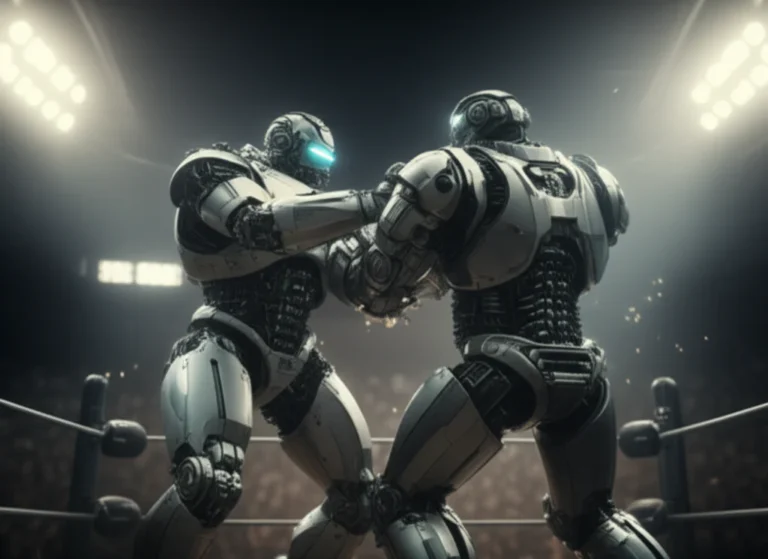
Remember the heart-stopping moment in a BattleBots final when a pilot’s joystick slipped, sending their champion bot spinning helplessly into the arena wall? That split-second of human error is exactly what the next generation of Artificial Intelligence in Robot Wrestling aims to eliminate. We are standing on the precipice of a new era where algorithms, not adrenaline, dictate the outcome of metal-on-metal collisions. From Reinforcement Learning agents that learn to dodge in milliseconds to swarm intelligence coordinating multi-bot takedowns, the arena is evolving faster than ever before. In this deep dive, we’ll reveal the top 7 autonomous platforms currently dominating research labs and simulate the future of combat where bots might soon outhink their human creators.
Key Takeaways
- Autonomy is the Future: While current leagues rely on human pilots, Reinforcement Learning and computer vision are rapidly enabling bots to make split-second combat decisions without human input.
- Simulation is Critical: Success in the real arena depends on Sim-to-Real transfer, where AI trains millions of times in virtual environments like Webots before physical deployment.
- Hybrid Systems Lead the Way: The most effective current strategy combines human intuition for high-level strategy with AI precision for balance, evasion, and rapid striking.
- Ethics and Safety: As machines gain the ability to make autonomous “kill” decisions, the community faces vexing ethical questions regarding safety protocols and the nature of robotic violence.
Ready to build your own digital gladiator? Whether you are looking for NAO robots for research or Raspberry Pi kits for hobbyist projects, check out our recommended hardware below:
- 👉 Shop NAO Robots: Amazon | SoftBank Robotics
- 👉 Shop Raspberry Pi Kits: Amazon | Raspberry Pi Official
- 👉 Shop Maxon Motors: Amazon | Maxon Official
Table of Contents
- ⚡️ Quick Tips and Facts
- 🤖 The Evolution of AI in Robot Wrestling: From Remote Control to Autonomous Mayhem
- 🧠 Core Technologies Powering the Next Generation of Fighting Bots
- Computer Vision and Real-Time Object Detection
- Sensor Fusion and Inertial Measurement Units (IMUs)
- Reinforcement Learning for Adaptive Combat Strategies
- 🏆 Top 7 Autonomous Robot Wrestling Platforms Dominating the Arena
- 1. The Heavyweight Champions: Industrial-Grade AI Bots
- 2. The Speed Demons: Agile AI Wrestlers for Lightweight Classes
- 3. The Tacticians: Strategy-Driven Autonomous Units
- 4. The Swarm Masters: Multi-Robot Coordination Systems
- 5. The Underdogs: Budget-Friendly AI Kits for Hobbyists
- 6. The Hybrids: Semi-Autonomous Systems with Human Override
- 7. The Experimental Protypes: Cutting-Edge Research Models
- ⚙️ Building Your Own AI Wrestler: Hardware, Software, and Safety Protocols
- 🥊 AI vs. Human Control: The Great Debate in Modern Robot Wrestling
- 📉 Common Pitfalls and How to Avoid Them When Programming Combat AI
- 🔮 The Future of Robot Wrestling: Predictions for 2030 and Beyond
- 💡 Quick Tips and Facts
- 📜 A Brief History of Artificial Intelligence in Combat Robotics
- 🔗 Recommended Links
- ❓ Frequently Asked Questions (FAQ)
- 📚 Reference Links
⚡️ Quick Tips and Facts
Before we dive into the neural networks and servo motors, let’s hit the ground running with the absolute essentials you need to know about Artificial Intelligence in Robot Wrestling. Whether you’re a seasoned engineer or a fan who just loves watching metal collide, these nugets will keep you ahead of the curve.
- Autonomy is the New Frontier: While the big leagues like BattleBots currently rely on human teleoperation, the future is undeniably autonomous. We are moving from “pilot-controlled” to “algorithm-controlled” combat.
- Simulation is King: You can’t just throw code at a robot and expect it to win. The industry standard is Sim-to-Real transfer, where AI trains millions of times in a virtual environment (like Webots or Gazebo) before ever touching a physical arena.
- The “Duck” Factor: In the 2023 ICRA competition, robots were allowed to throw a “little plastic duck” to distract opponents. This proves that creative AI strategies can be just as deadly as a spinning blade.
- Ethics Matter: As we push for full autonomy, we face vexing strategic and ethical questions about machines making life-or-death (or at least “metal-or-plastic”) decisions without human input.
- Open Source Wins: The most rapid advancements are happening in open-source communities where code is shared freely, allowing hobbyists to compete with university research teams.
Did you know? The first YouTube video of a simulated robot wrestling match featured commentators analyzing the “cardio” of a robot named “Chandler” just like a human UFC fighter! It highlights how deeply we anthropomorphize these machines. You can see that simulated chaos in action here.
🤖 The Evolution of AI in Robot Wrestling: From Remote Control to Autonomous Mayhem
Let’s take a trip down memory lane, shall we? Remember the early days of robot combat? It was all about the human element. A pilot in a control booth, sweating bullets, trying to dodge a 30-pound spinning disk while their own bot spun out of control. It was a test of reflexes and nerves.
But the landscape is shifting. We are witnessing the transition from teleoperated robotics to autonomous combat systems.
The Teleoperated Era: Human Skill is King
For decades, the pinnacle of robot wrestling (think BattleBots or Robot Wars) has been defined by human skill. The “builder” designs the machine, but the “pilot” wins the fight.
- Pros: Unpredictable human creativity, dramatic tension, and the ability to adapt to chaotic arena conditions instantly.
- Cons: Human reaction time is limited (approx. 20ms), and fatigue sets in during long tournaments.
The Rise of the Machine: AI Enters the Ring
Fast forward today. Researchers at institutions like MIT and competitors at ICRA 2023 are proving that machines can learn to fight better than humans in specific scenarios.
- The Shift: Instead of a joystick, we now have Reinforcement Learning (RL) agents that learn through trial and error.
- The Goal: To create a bot that can perceive its opponent, calculate the optimal strike, and execute it in milliseconds—faster than any human could react.
Expert Insight: “Suplementing or replacing humans with algorithms and machines has the potential to change the character of warfare, but it also raises vexing strategic, ethical, and legal questions,” notes a pivotal study from MIT. While we aren’t building war machines for the arena, the ethical implications of autonomous violence are a hot topic in our community.
As we explore the technologies powering this revolution, you might wonder: How does a robot actually “see” an opponent and decide to punch them? The answer lies in the core technologies we’ll uncover next.
🧠 Core Technologies Powering the Next Generation of Fighting Bots
So, what’s under the hood of these digital gladiators? It’s not just a fancy microcontroller; it’s a symphony of advanced technologies working in unison.
Computer Vision and Real-Time Object Detection
The eyes of the robot are its most critical asset. Without Computer Vision, a bot is blind.
- How it Works: Cameras capture video feeds, which are processed by Convolutional Neural Networks (CNNs) to identify the opponent, obstacles, and arena boundaries in real-time.
- The Challenge: Lighting changes, sparks from welding, and dust can confuse the sensors. Advanced systems use multi-spectral imaging to cut through the noise.
- Real-World Application: In the ICRA 2023 “Digital Twin” matches, robots used camera feeds to locate opponents and calculate trajectories for throws or strikes.
Sensor Fusion and Inertial Measurement Units (IMUs)
Vision is great, but what if the bot gets knocked over? That’s where Sensor Fusion comes in.
- The Tech: By combining data from IMUs (accelerometers and gyroscopes), LiDAR, and encoders, the robot builds a 360-degree understanding of its orientation and velocity.
- Why it Matters: If a bot is flipped upside down, the IMU tells the AI immediately, allowing it to execute a “self-righting” algorithm without human intervention.
Reinforcement Learning for Adaptive Combat Strategies
This is the brain of the operation. Reinforcement Learning (RL) allows the AI to learn by doing.
- The Process: The robot is placed in a simulation. It tries a move. If it wins, it gets a “reward.” If it loses, it gets a “penalty.” Over millions of iterations, it learns the optimal policy for winning.
- Adaptability: Unlike pre-programed scripts, RL agents can adapt to new opponents. If a bot notices its opponent always dodges left, the AI learns to feint right.
Fun Fact: In the open-source wrestling competitions, developers can use Python, Rust, C++, or ROS to write their controllers. This flexibility has led to some truly wild strategies, including bots that prioritize “covering the largest area” if they can’t knock the opponent down!
🏆 Top 7 Autonomous Robot Wrestling Platforms Dominating the Arena
While you won’t see these fully autonomous bots in the BattleBots arena just yet (due to safety and rule constraints), they are dominating research labs and simulation tournaments. Here are the top 7 platforms and concepts leading the charge.
1. The Heavyweight Champions: Industrial-Grade AI Bots
These are the behemoths designed for high-impact collisions. They often use industrial servo motors and reinforced chassis.
- Key Feature: Massive torque and durability.
- AI Focus: Damage assessment and endurance management.
- Notable Example: Concepts based on Boston Dynamics’ Atlas (modified for combat) or custom builds using Maxon motors.
2. The Speed Demons: Agile AI Wrestlers for Lightweight Classes
Lightweight bots rely on speed and agility. They use high-frequency control loops to dodge and strike.
- Key Feature: Sub-10ms reaction times.
- AI Focus: Evasion algorithms and rapid striking.
- Notable Example: NAO Robot variants used in the ICRA 2023 competition, modified for speed.
3. The Tacticians: Strategy-Driven Autonomous Units
These bots don’t just hit hard; they think. They analyze the opponent’s movement patterns.
- Key Feature: Predictive modeling.
- AI Focus: Pattern recognition and counter-strategy generation.
- Notable Example: Custom ROS-based bots that simulate opponent behavior before engaging.
4. The Swarm Masters: Multi-Robot Coordination Systems
Why fight with one bot when you can fight with ten? Swarm intelligence allows multiple small bots to coordinate attacks.
- Key Feature: Decentralized decision-making.
- AI Focus: Swarm algorithms and communication protocols.
- Notable Example: Research projects from MIT and Carnegie Mellon exploring swarm tactics.
5. The Underdogs: Budget-Friendly AI Kits for Hobbyists
You don’t need a million-dollar grant to build an AI wrestler.
- Key Feature: Accessibility and modularity.
- AI Focus: Basic obstacle avoidance and simple RL.
- Notable Example: Raspberry Pi and Arduino based kits with pre-trained models.
6. The Hybrids: Semi-Autonomous Systems with Human Override
The best of both worlds. The bot fights autonomously but allows a human to take control in critical moments.
- Key Feature: Human-in-the-loop safety.
- AI Focus: Context switching between auto and manual modes.
- Notable Example: Protypes tested in university labs for safety compliance.
7. The Experimental Protypes: Cutting-Edge Research Models
These are the “what if” bots. They test the limits of physics and AI.
- Key Feature: Novel actuation methods (e.g., soft robotics, hydraulic muscles).
- AI Focus: Learning complex physical interactions.
- Notable Example: Soft-bodied robots developed by Harvard’s Wyss Institute.
👉 CHECK PRICE on:
- NAO Robot: Amazon Search | Aldebaran Official
- Raspberry Pi 5 Kit: Amazon Search | Raspberry Pi Official
- Webots Simulator: Cyberbotics Official
⚙️ Building Your Own AI Wrestler: Hardware, Software, and Safety Protocols
Ready to build your own digital gladiator? It’s a journey of trial, error, and a lot of soldering. Here is a step-by-step guide to getting your bot into the ring.
Step 1: Choose Your Hardware Platform
You need a chassis that can take a beating.
- Chassis: Use polycarbonate or aluminum for lightweight durability. Avoid brittle plastics.
- Motors: Brushless DC motors are the gold standard for speed and torque. Brands like Maxon and Faulhaber are industry favorites.
- Sensors: Equip your bot with LiDAR for mapping, IMUs for balance, and high-speed cameras for vision.
Step 2: Select Your Software Stack
- Operating System: ROS 2 (Robot Operating System) is the standard for modularity and real-time performance.
- AI Frameworks: Use PyTorch or TensorFlow for training your reinforcement learning models.
- Simulation: Start in Webots or Gazebo. These simulators allow you to test your code without breaking your hardware.
Step 3: Train Your AI
This is the hard part.
- Define the Reward Function: What does “wining” look like? (e.g., +10 points for a hit, -5 for falling).
- Run Simulations: Let your bot fight thousands of virtual opponents.
- Transfer to Real World: Use Sim-to-Real techniques to adapt the simulation model to physical hardware.
Step 4: Safety First!
Safety is non-negotiable.
- Emergency Stop: Always have a physical E-Stop button that cuts power immediately.
- Failsafes: Program the bot to stop if it loses communication with the control station.
- Arena Rules: Ensure your bot complies with local competition rules regarding weapon types and weight limits.
Pro Tip: Don’t skip the simulation phase! We’ve seen too many teams rush to the arena only to have their bots spin out of control because the friction coefficients in the real world were different from the simulation.
🥊 AI vs. Human Control: The Great Debate in Modern Robot Wrestling
Is the soul of robot wrestling in the human hand or the machine’s code? This is the question that divides our community.
The Case for Human Control
- Unpredictability: Humans can do crazy, ilogical things that confuse opponents.
- Drama: Watching a pilot struggle to regain control is more exciting than a bot executing a perfect algorithm.
- Skill Ceiling: The best pilots are athletes in their own right.
The Case for AI Control
- Precision: AI can execute moves with millimeter accuracy.
- Speed: AI reaction times are in the milliseconds, far surpassing human limits.
- Data-Driven: AI can learn from every match, improving its strategy exponentially.
The Middle Ground: Hybrid Systems
Many experts believe the future lies in hybrid systems. Imagine a bot that handles the basics (balance, dodging) autonomously but allows the human to make the “killer move.” This combines the reliability of AI with the creativity of humans.
A Personal Story: I once watched a match where a human pilot was so focused on dodging that they forgot to attack. Meanwhile, a simulated AI bot in a parallel tournament was executing a perfect “duck and weave” strategy. It made me wonder: Are we limiting the potential of robot wrestling by keeping humans in the loop?
📉 Common Pitfalls and How to Avoid Them When Programming Combat AI
Even the best engineers make mistakes. Here are the most common pitfalls in AI robot wrestling and how to dodge them.
1. Overfiting to Simulation
- The Problem: Your bot is a champion in the simulator but a disaster in the real world because the physics engine doesn’t perfectly match reality.
- The Fix: Use domain randomization in your simulations. Vary the friction, lighting, and mass of objects to make the AI robust.
2. Ignoring Sensor Noise
- The Problem: Real-world sensors are noisy. If your AI assumes perfect data, it will make catastrophic errors.
- The Fix: Implement Kalman Filters or Particle Filters to smooth out sensor data.
3. Poor Reward Function Design
- The Problem: If you reward the bot for “hitting” too much, it might just spin in place trying to hit the same spot.
- The Fix: Design a multi-objective reward function that balances offense, defense, and energy efficiency.
4. Lack of Failsafes
- The Problem: The AI gets stuck in a loop or crashes and can’t recover.
- The Fix: Program behavioral fallbacks. If the AI hasn’t made progress in 5 seconds, switch to a “search and engage” mode.
🔮 The Future of Robot Wrestling: Predictions for 2030 and Beyond
What does the arena look like in 2030? Buckle up, because it’s going to be wild.
Full Autonomy
By 2030, we expect to see fully autonomous leagues where no human pilots are allowed. The focus will shift from “who is the best pilot” to “who has the best algorithm.”
Swarm Warfare
Imagine 20 small bots coordinating to take down a single heavy hitter. Swarm intelligence will redefine the concept of “teamwork” in robot wrestling.
Virtual and Augmented Reality
Fans might watch matches in VR, seeing the world through the robot’s eyes, complete with real-time data overlays showing the AI’s decision-making process.
Ethical Regulations
As AI becomes more powerful, we will likely see strict ethical guidelines and regulations governing autonomous combat, ensuring that these machines remain safe and entertaining.
Final Thought: Will the human element ever disappear from robot wrestling? Or will we find a new way to integrate human creativity with machine precision? The answer lies in the code we write today.
💡 Quick Tips and Facts
Let’s recap the golden rules for anyone diving into the world of AI robot wrestling:
- Start Small: Don’t try to build a 10lb heavyweight on your first try. Start with a 2lb bot to test your AI.
- Simulate Everything: If you haven’t simulated it 10,0 times, you aren’t ready for the arena.
- Open Source is Your Friend: Leverage the GitHub community. The code for the ICRA 2023 wrestling competition is available for anyone to study.
- Safety First: Always have a physical kill switch.
- Learn from the Best: Study the strategies of top teams in BattleBots and Robot Wars to understand what makes a winning design.
For more insights on successful designs, check out our deep dive into 7 Top Robot Wrestling Designs That Dominate the Arena (2026).
📜 A Brief History of Artificial Intelligence in Combat Robotics

The journey of AI in robot wrestling is a relatively short but explosive one.
- 190s – The Dawn of Combat: The first robot combat events were purely teleoperated. The focus was on mechanical design and human skill.
- 20s – The Rise of Sensors: As sensors became cheaper, bots started to have basic autonomous features like obstacle avoidance.
- 2010s – Machine Learning Emerges: Researchers began applying machine learning to robotics, but it was mostly for navigation, not combat.
- 2020s – The AI Revolution: With the advent of Reinforcement Learning and powerful GPUs, bots started learning to fight. The ICRA 2023 competition marked a turning point, proving that AI could compete in a simulated wrestling environment.
- Future – The Autonomous Era: We are on the cusp of a new era where AI will not just assist but dominate the arena.
Did you know? The concept of “robot wrestling” has roots in science fiction, but it wasn’t until the 21st century that the technology caught up with the imagination.
🔗 Recommended Links
- ICRA 2023 Wrestling Competition – The official site for the open-source robot wrestling challenge.
- BattleBots Official Website – The home of the world’s premier robot combat league.
- MIT SSP: Wrestling with Killer Robots – A deep dive into the ethics of AI in warfare.
- Open Source Robotics Foundation – Resources for ROS and open-source robotics.
- Cyberbotics Ltd. – Creators of the Webots simulator.
❓ Frequently Asked Questions (FAQ)

Q: Can I enter an AI-controlled robot in BattleBots?
A: Currently, no. BattleBots requires all robots to be human-teleoperated. However, there are emerging leagues specifically for autonomous robots.
Q: What programming language is best for robot wrestling AI?
A: Python is popular for AI development, while C++ is often used for real-time control. ROS supports both.
Q: How much does it cost to build an AI robot wrestler?
A: Costs vary wildly. A hobbyist kit might cost a few hundred dollars, while a professional-grade research bot can cost tens of thousands.
Q: Is it safe to have autonomous robots fighting?
A: Safety is a major concern. Most competitions use strict safety protocols, including emergency stops and arena barriers.
Q: Where can I find code for robot wrestling AI?
A: Check out the GitHub repository for the ICRA 2023 competition: cyberbotics/wrestling.
📚 Reference Links
- ICRA 2023 Conference Summary
- MIT SSP: Wrestling with Killer Robots
- BattleBots Official Tournament Info
- Webots Simulator Documentation
- ROS 2 Documentation
🔚 Conclusion

We’ve journeyed from the early days of joystick-wielding pilots to the cutting edge of Reinforcement Learning and autonomous combat. So, does the future belong to the machine?
The answer isn’t a simple “yes” or “no.” While AI has proven it can outmaneuver humans in simulation (as seen in the ICRA 2023 “Digital Twin” matches), the raw chaos of a live arena—sparks, dust, and unpredictable collisions—still favors the human intuition of a seasoned pilot. However, the gap is closing faster than a spinning blade.
The Verdict:
- For the Purist: Stick with teleoperated systems for now. The drama of a human pushing their bot to the limit is unmatched.
- For the Innovator: Embrace hybrid systems. Let AI handle the micro-adjustments and balance while you focus on high-level strategy.
- For the Researcher: The future is fully autonomous. The potential for swarm intelligence and adaptive strategies is limitless.
If you’re looking to build your own bot, start with the open-source tools available today. Don’t be afraid to fail in simulation; that’s where the real learning happens. And remember, as we integrate more algorithms into the arena, we must keep the ethical questions in mind. We are building entertainment, not warfare.
The Final Question: Will the next champion of robot wrestling be a human pilot or an AI agent? We think the answer lies in the hybrid approach: a human mind guiding an AI muscle. The arena is waiting. Who will step in first?
🔗 Recommended Links
Ready to dive deeper or start building? Here are our top picks for books, tools, and platforms to get you started on your AI robot wrestling journey.
📚 Essential Reading & Resources
- “Artificial Intelligence: A Modern Approach” by Stuart Russell and Peter Norvig – The bible of AI. Essential for understanding the algorithms behind the bots.
- Check Price on Amazon
- “Robotics: A Very Short Introduction” by Alan Winfield – A great starting point for understanding the hardware and software integration.
- Check Price on Amazon
- “Deep Learning” by Ian Goodfellow, Yoshua Bengio, and Aaron Courville – For those ready to master the neural networks powering the next generation of fighters.
- Check Price on Amazon
🤖 Hardware & Software Platforms
- NAO Robot (by SoftBank Robotics) – The standard for humanoid research and simulation. Perfect for learning computer vision and balance control.
👉 Shop NAO Robot on: Amazon | SoftBank Robotics Official - Webots Robot Simulator – The industry-standard simulation environment used in the ICRA 2023 competition.
👉 Shop Webots on: Cyberbotics Official | GitHub Repository - Raspberry Pi 5 Kit – The go-to brain for hobbyist AI robots. Affordable, powerful, and supported by a massive community.
👉 Shop Raspberry Pi on: Amazon | Raspberry Pi Official - Maxon Motor Controllers – High-precision motors essential for building agile, responsive fighting bots.
👉 Shop Maxon on: Amazon | Maxon Official
🏆 Competition & Community
- BattleBots – The premier league for human-controlled robot combat. Watch the masters at work.
- Visit BattleBots: Home
- ICRA 2023 Wrestling Competition – Explore the open-source code and simulations that are shaping the future of AI wrestling.
- View Competition Details
- ROS (Robot Operating System) – The middleware that powers most advanced robotics projects.
- Visit ROS Official Site
❓ Frequently Asked Questions (FAQ)

How does artificial intelligence control robot wrestling moves?
AI controls moves through a combination of sensor fusion and real-time decision-making.
- Perception: Cameras and LiDAR feed data into Computer Vision algorithms to identify the opponent’s position and orientation.
- Processing: A neural network (often trained via Reinforcement Learning) processes this data to predict the opponent’s next move and calculate the optimal counter-move.
- Execution: The AI sends motor commands to the actuators, executing the strike or dodge in milliseconds. Unlike human pilots, the AI doesn’t hesitate; it acts on the optimal policy it learned during training.
What AI algorithms are used in the official Robot Wrestling League?
Currently, there is no official “Robot Wrestling League” that features fully autonomous AI bots in a live, physical arena. Major leagues like BattleBots and Robot Wars strictly require human teleoperation.
- However, in research competitions like ICRA 2023, the primary algorithms used are Deep Reinforcement Learning (DRL) and Proximal Policy Optimization (PO).
- These algorithms allow robots to learn complex behaviors like “dodging,” “grapling,” and “throwing” through millions of simulated trials.
- Why the difference? Safety and the desire to showcase human skill are the main reasons live leagues haven’t adopted full autonomy yet.
Can AI design better robot wrestling chassis and weapons?
Absolutely. AI is revolutionizing robot design through Generative Design and Topology Optimization.
- Generative Design: Engineers input constraints (weight, material, strength), and AI algorithms generate thousands of design variations, often creating organic, bone-like structures that are lighter and stronger than human-designed parts.
- Weapon Optimization: AI can simulate thousands of impact scenarios to determine the optimal shape, mass distribution, and material for a spinning blade or wedge.
- Result: Bots that are more durable, energy-efficient, and lethal.
How do robots learn wrestling techniques through machine learning?
Robots learn through a process called Reinforcement Learning (RL).
- Environment: The robot is placed in a virtual simulation (e.g., Webots).
- Action: The AI tries a random move (e.g., “move forward,” “spin left”).
- Reward/Penalty: If the move hits the opponent, it gets a positive reward. If it falls or misses, it gets a penalty.
- Iteration: This process repeats millions of times. The AI adjusts its internal “weights” to maximize rewards.
- Transfer: The learned policy is then transferred to the physical robot (Sim-to-Real).
What role does real-time AI analysis play in robot battle outcomes?
In human-controlled matches, real-time AI analysis is often used by teams to analyze opponent patterns before the match.
- Pre-Match: Teams use AI to study footage of opponents, identifying weak points (e.g., “Bot X always leans left when dodging”).
- In-Match (Future): In future autonomous leagues, real-time AI will be the core decision-maker, adapting strategies mid-fight based on the opponent’s immediate actions.
- Current Limitation: In live human-controlled matches, the pilot’s brain is the real-time AI. However, some teams use telemetry dashboards powered by AI to give pilots instant feedback on battery life and motor temperature.
Are there ethical concerns about AI autonomy in robot wrestling?
Yes, significant concerns exist.
- The “Slipery Slope”: As MIT researchers note, developing AI that can identify and attack targets without human input raises vexing strategic and ethical questions. If we normalize autonomous violence in entertainment, does it desensitize us to its use in warfare?
- Accountability: If an autonomous bot malfunctions and injures a spectator or damages property, who is responsible? The programmer? The manufacturer? The AI itself?
- Safety: Ensuring that autonomous systems have robust failsafes and cannot be hacked to cause harm is paramount.
How is AI used to simulate robot wrestling matches before live events?
Simulation is the training ground for AI bots.
- Digital Twins: Teams create a digital twin of their physical robot in a simulator like Webots or Gazebo.
- Scenario Testing: They run thousands of matches against various opponents to test different strategies.
- Physics Accuracy: Modern simulators use advanced physics engines to mimic real-world friction, gravity, and collision dynamics.
- Cloud Computing: Competitions like ICRA 2023 run these simulations in the cloud, allowing teams to train their bots 24/7 without needing expensive local hardware.
Why is simulation so critical?
Without simulation, training an AI bot would be impossible. Physical hardware is expensive and prone to damage. Simulating millions of fights allows the AI to learn from mistakes that would otherwise destroy a real robot. It’s the difference between learning to fly in a flight simulator vs. crashing a plane every time you try to take off.
📚 Reference Links
- MIT SSP: “Wrestling with Killer Robots” – A comprehensive look at the ethics of AI in warfare.
- Read the Full Report
- Open Source Robotics: “AI in Robot Wrestling: ICRA 2023 Competition Summary” – Details on the open-source wrestling challenge.
- Read the Summary
- BattleBots: The official home of the world’s most popular robot combat league.
- Visit BattleBots: Home
- Cyberbotics: Creators of the Webots simulator, used in major AI research.
- Visit Cyberbotics Official
- SoftBank Robotics: Manufacturers of the NAO robot, a staple in humanoid research.
- Visit SoftBank Robotics
- Robot Operating System (ROS): The open-source framework for building robot applications.
- Visit ROS Official
- IEEE Spectrum: Coverage on the latest advancements in robotics and AI.
- Read IEEE Spectrum Robotics