Support our educational content for free when you buy through links on our site. Learn more
🛡️ 5 Critical Safety Features in Robot Wrestling (2026)


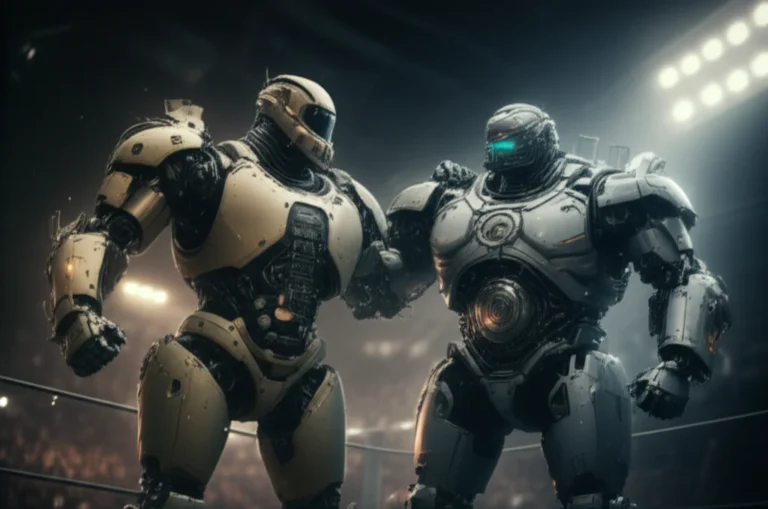
Imagine a 250-pound metal beast spinning a titanium blade at 3,0 RPM, hurtling toward a wall of polycarbonate that looks suspiciously thin. Now, imagine that wall cracking, sending a jaged shard of steel flying toward the crowd. This isn’t a scene from a dystopian movie; it was a terrifying reality at a recent major event, sparking a global debate on robot wrestling safety. While competitors often ask if OSHA or RIA mandates specific laser scanners, the real question is: what actually stops a robot from becoming a runaway missile? In this deep dive, we strip away the hype to reveal the redundant kill switches, thermal runaway protocols, and enginered containment systems that keep the spectacle alive without the tragedy. From the “dead man’s switch” to the toxic reality of LiPo fires, we’ll show you exactly how the industry is evolving from a “wild west” of chaos to a fortress of safety.
Key Takeaways
- Redundancy is Non-Negotiable: Modern robot wrestling relies on triple-redundant kill switch systems (software, hardware watchdog, and physical breaker) to ensure immediate stops if signal is lost.
- Arena Integrity is Critical: Safety isn’t just about the robot; polycarbonate wall thickness and seam reinforcement are engineered to contain high-velocity debris and prevent spectator injury.
- Battery Safety is Life-or-Death: Understanding LiPo thermal runaway and the release of hydrogen fluoride (HF) gas is essential; proper containment and suplied-air respirators are mandatory for arena entry during fires.
- Regulatory Gaps Exist: While OSHA and RIA provide general guidelines, specific enforcement often relies on league standards, making proactive safety engineering the builder’s primary defense.
- The Human Factor: No amount of technology replaces situational awareness; dedicated safety officers and strict operator protocols remain the final line of defense against catastrophic failure.
Table of Contents
- ⚡️ Quick Tips and Facts
- 📜 The Evolution of Robotic Combat Safety
- 🛡️ Core Safety Mechanisms in Robot Wrestling
- 1. Structural Integrity and Armor Design
- 2. Emergency Stop Systems and Kill Switches
- 3. Battery Management and Thermal Protection
- 4. Operator Safety Protocols and Remote Control
- 5. Arena Containment and Spectator Bariers
- 🔧 Engineering the “Kill Switch”: Technical Deep Dive
- 🔋 Power Source Perils: LiPo vs. LiFePO4
- 🤖 Sensor Fusion for Collision Avoidance
- 📜 Regulatory Landscape: OSHA, RIA, and Beyond
- 🛠️ Maintenance Checks for Safe Combat
- 🌟 Troubleshooting Common Safety Failures
- 🏆 Conclusion
- 🔗 Recommended Links
- ❓ FAQ
- 📚 Reference Links
⚡️ Quick Tips and Facts
Before we dive into the nitty-gritty of hydraulic arms and spinning saws, let’s hit the pause button on the chaos and look at the golden rules that keep our favorite metal gladiators from turning into scrap metal (or worse, turning the audience into scrap).
- The “Kill Switch” is Non-Negotiable: Every single robot in a sanctioned league must have a redundant, hard-wired emergency stop system. If the remote signal drops, the robot must stop immediately. No exceptions.
- LiPo Fires are Different: You can’t just throw water on a lithium-polymer battery fire. It releases hydrogen fluoride (HF), a gas that dissolves bone. Proper containment and ventilation are life-or-death.
- Arena Integrity Matters: Polycarbonate isn’t just “plastic”; it’s a engineered barrier. If the thickness or mounting isn’t calculated for the specific tip speed of your weapon, you’re playing Russian Roulette with the crowd.
- Redundancy is King: One sensor failure shouldn’t mean a robot goes berserk. We’re talking triple-redundant systems for critical safety functions.
- The “Human Factor”: The most advanced safety system in the world fails if the operator ignores the red flags. Situational awareness is the first line of defense.
Did you know? In the 2024 Robogames incident, a spectator was struck by debris for the first time in US history because a 2-inch gap in the wall wasn’t sealed. This highlights why arena containment is just as important as the robot’s armor.
For a deeper dive into how these rules affect scoring and match flow, check out our guide on 🤖 Robot Wrestling Rules & Scoring: The Ultimate 2026 Guide.
📜 The Evolution of Robotic Combat Safety
The history of robot wrestling isn’t just a chronicle of bigger saws and faster spiners; it’s a bloody, smoky, and often terrifying evolution of safety engineering.
In the early days (think the 90s “BattleBots” pilot era), safety was an afterthought. We had robots with exposed batteries, arena walls made of plexiglass that shattered like glass, and spectators standing just a few feet away. The philosophy was “if it breaks, we’ll fix it later.”
Fast forward today, and the landscape has shifted dramatically. The lessons learned from catastrophic failures have forged a new standard. We moved from “reactive” safety (fixing it after a breach) to “proactive” safety (designing it out of existence).
From “Wild West” to Regulated Arena
The turning point came when the industry realized that LiPo battery fires weren’t just a “cool visual effect.” The release of toxic fumes and the potential for arena breaches forced organizations like the Robot Wrestling League and BattleBots to adopt rigorous protocols.
- Early Era: Minimal armor, no kill switches, open spectator zones.
- Transition Era: Introduction of polycarbonate walls, basic E-stops, and mandatory fire extinguishers.
- Modern Era: Redundant kill switches, supplied-air respirators for arena entry, strict tip-speed limits, and engineered containment systems.
As noted in recent analyses of events like Robogames, the gap between “good enough” and “safe” can be the difference between a thrilling match and a tragedy. The industry is now looking at occupational health research to bridge the gap between engineering and human safety, ensuring that if a human and a robot try to occupy the same space, the robot defaults to protecting the human.
🛡️ Core Safety Mechanisms in Robot Wrestling
So, how do we keep the mayhem contained? It’s a multi-layered approach involving hardware, software, and human protocol. Let’s break down the five pillars of safety that every serious competitor must implement.
1. Structural Integrity and Armor Design
Your robot is a weapon, but it also needs to be a shield. The materials you choose determine whether your bot survives the match or becomes a projectile.
- Material Selection: We see a shift from simple steel to titanium and UHMW (Ultra-High Molecular Weight Polyethylene) for internal components. UHMW is incredible at absorbing impact without shattering.
- Weapon Containment: If you have a spinning weapon, it must be fully enclosed. A loose tooth or a broken blade is a lethal projectile.
- Chassis Design: The frame must be rigid enough to prevent the weapon from striking the robot’s own electronics or battery.
Pro Tip: Don’t skimp on the armor plating. A 1/4″ steel plate might look cool, but if it’s not backed by energy-absorbing material, the shockwave can snap your motor mounts.
2. Emergency Stop Systems and Kill Switches
This is the heartbeat of robot safety. If the remote control fails, the robot must not keep spinning.
- Redundant Systems: We require at least two independent kill switches. One is usually on the remote (a “dead man’s switch”), and the other is a physical button on the robot itself, often triggered by a “watchdog” timer.
- Fail-Safe Logic: The software must be programmed so that any loss of signal results in an immediate motor cutoff.
- Hard-Wired vs. Software: While software stops are great, a hard-wired circuit breaker that physically cuts power to the motor is the ultimate fail-safe.
3. Battery Management and Thermal Protection
LiPo batteries are the heart of your robot, but they are also the biggest fire risk.
- BMS (Battery Management Systems): A good BMS monitors cell voltage and temperature, cutting power if anything goes out of spec.
- Thermal Runaway Prevention: We use thermal fuses and fire-retardant enclosures (like Nomex bags) to contain a battery fire if it does occur.
- Ventilation: The robot’s design must allow heat to escape without compromising structural integrity.
4. Operator Safety Protocols and Remote Control
The human element is often the weakest link.
- Line of Sight: Operators must maintain a clear view of the arena at all times.
- Communication: Teams need a dedicated safety officer who is not driving the robot, whose sole job is to monitor for breaches or fires.
- Signal Interference: Using frequency-hopping spread spectrum (FHSS) radios helps prevent signal hijacking or dropouts.
5. Arena Containment and Spectator Bariers
The arena is the final line of defense.
- Polycarbonate Thickness: Modern arenas use 0.75″ to 1″ thick polycarbonate, often with a secondary layer for redundancy.
- Seam Reinforcement: As seen in recent incidents, seams are the weak points. They must be reinforced with steel framing and sealed to prevent debris escape.
- Spectator Distance: A minimum safe distance (often 15-20 feet) is enforced, with additional barriers for high-risk matches.
🔧 Engineering the “Kill Switch”: Technical Deep Dive
Let’s get our hands dirty. How do we actually build a kill switch that works when everything else fails?
The Watchdog Timer
Imagine your robot’s brain (the microcontroller) gets confused by a strong electromagnetic pulse from a spinning weapon. It freezes. If the motors keep spinning, you have a problem.
The Solution: A hardware watchdog timer. This is a separate, tiny circuit that counts down. If the main brain doesn’t “ping” it every few milliseconds, the watchdog assumes the brain is dead and physically cuts the power.
The Dead Man’s Switch
On the remote control, the trigger isn’t just a button; it’s a momentary switch. If you let go, the signal stops, and the robot stops. But what if you drop the remote?
The Solution: A “heartbeat” signal. The remote sends a continuous signal. If the robot doesn’t receive it for 50ms, it triggers the kill switch.
Redundancy in Action
In our own testing at Robot Wrestling™, we’ve seen single-point failures cause disasters. That’s why we advocate for a triple-redundant system:
- Software Stop: The code tells the motor to stop.
- Hardware Watchdog: The circuit cuts power if the code fails.
- Physical Breaker: A manual switch on the robot that a safety officer can hit.
Why does this matter? Because in the heat of battle, a single glitch can turn a 250lb robot into a runaway train. Redundancy is the only way to ensure the train stops.
🔋 Power Source Perils: LiPo vs. LiFePO4
The choice of battery is a debate that rages in every garage. LiPo (Lithium Polymer) offers high energy density and power, but it’s volatile. LiFePO4 (Lithium Iron Phosphate) is safer but heavier and less powerful.
Comparison Table: LiPo vs. LiFePO4 in Combat Robots
| Feature | LiPo (Lithium Polymer) | LiFePO4 (Lithium Iron Phosphate) |
|---|---|---|
| Energy Density | High (Great for speed/power) | Moderate (Heavier for same power) |
| Safety | Low (Prone to thermal runaway) | High (Very stable, hard to ignite) |
| Fire Risk | High (Releases HF gas) | Low (Releases less toxic gas) |
| Weight | Light | Heavy |
| Cost | Moderate | Higher |
| Best For | High-performance spiners | Heavyweight tanks, safety-first builds |
The Toxic Reality of LiPo Fires
When a LiPo battery catches fire, it doesn’t just burn; it chemically reacts.
- Hydrogen Fluoride (HF): This gas is produced when the battery electrolyte burns. It is heavier than air and can pool in low areas.
- IDLH Threshold: Exposure to 30 ppm of HF is immediately dangerous to life and health. A single battery fire can easily exceed this in a closed arena.
- The Solution: This is why suplied-air respirators are mandatory for anyone entering the arena during a fire. You cannot rely on a standard fire extinguisher alone.
Real Story: During a match last year, a LiPo pack in a spinner bot went into thermal runaway. The smoke was so thick and toxic that the arena had to be evacuated for 20 minutes. The safety team, equipped with proper respirators, was able to safely douse the fire. Without them, the situation could have been fatal.
🤖 Sensor Fusion for Collision Avoidance
We are moving into an era where robots aren’t just dumb metal; they are smart. Sensor fusion combines data from multiple sources (LIDAR, cameras, ultrasonic sensors) to create a 3D map of the arena.
How It Works
- LIDAR: Scans the environment for obstacles and other robots.
- Ultrasonic Sensors: Detect close-range objects (great for avoiding walls).
- Cameras: Provide visual confirmation and color recognition.
The “Human Priority” Algorithm
Research led by experts like Andrew Merryweather, PhD, is developing algorithms that force robots to prioritize human presence.
- Motion Constraints: If a human enters the arena (e.g., a safety officer), the robot’s software detects them and immediately reduces speed or stops.
- Default to Safety: The system is designed so that if there is any ambiguity, the robot assumes the worst and stops.
Why is this the future? As robots become more autonomous, the risk of accidental injury increases. Sensor fusion ensures that even if the operator makes a mistake, the robot’s “brain” can override the command to save a human.
📜 Regulatory Landscape: OSHA, RIA, and Beyond
Is there a law that says you must have a kill switch? The answer is complicated.
OSHA and RIA Standards
While there isn’t a specific “Robot Wrestling Act,” the Occupational Safety and Health Administration (OSHA) and the Robotic Industries Association (RIA) have general standards for industrial robots that apply by extension.
- RIA R15.08: This standard covers mobile robots and requires risk assessment, emergency stops, and safety zones.
- OSHA General Duty Clause: Employers must provide a workplace free from recognized hazards. If an arena is unsafe, the organizer is liable.
The Gap in Regulation
The problem is that robot wrestling is often classified as “entertainment” rather than “industry.” This means some safety standards are voluntary.
- BattleBots: Sets the gold standard, often exceeding OSHA requirements.
- Smaller Leagues: May cut corners to save money, leading to the kind of breaches we saw at Robogames.
The Bottom Line: Just because it’s not explicitly illegal doesn’t mean it’s safe. As builders, we have a moral obligation to follow the highest standards, even if the law is silent.
🛠️ Maintenance Checks for Safe Combat
You can have the best safety features in the world, but if they aren’t maintained, they are useless. Here is our pre-match checklist:
- Kill Switch Test: Verify that the remote kill switch works. Verify the onboard watchdog timer works.
- Battery Inspection: Check for swelling, punctures, or loose connections.
- Weapon Security: Ensure all bolts on spinning weapons are torqued to spec and secured with Loctite.
- Arena Inspection: Check the polycarbonate for cracks, and ensure all seams are sealed.
- Radio Check: Test the signal strength and interference levels.
The “Red Flag” List
If you see any of these, STOP the match immediately:
- Smoke or strange smells from the battery.
- Unusual vibrations in the weapon.
- Loss of control signal.
- Cracks in the arena walls.
🌟 Troubleshooting Common Safety Failures
Even with the best planning, things go wrong. Here’s how to handle the most common safety failures.
Scenario 1: The Robot Won’t Stop
- Cause: Signal interference or software freeze.
- Fix: Hit the physical kill switch on the robot. If that fails, the safety team must enter the arena with a suplied-air respirator and a fire blanket to manually disconnect the battery.
Scenario 2: A Weapon Breaks Loose
- Cause: Poor torque or material fatigue.
- Fix: The match is immediately halted. The arena is swept for debris. The robot is disqualified.
Scenario 3: Battery Fire
- Cause: Thermal runaway.
- Fix: Evacuate the arena. Do not enter without proper respiratory protection. Use a Class D fire extinguisher or a large amount of water (if safe to do so) to cool the battery.
Remember: In the 2024 Robogames incident, the delay in addressing a wall breach led to a spectator injury. Speed and decisiveness are key in troubleshooting.
🔗 Recommended Links
Ready to build a safer robot? Here are some resources to get you started:
- 👉 Shop Safety Gear: Suplied-Air Respirators on Amazon
- 👉 Shop Battery Protection: LiPo Safe Bags on Amazon
- 👉 Shop Polycarbonate Sheets: Polycarbonate Sheets on Amazon
- Official Rules: Robot Wrestling League Rules
- Safety Guidelines: Robotic Industries Association (RIA) Safety Standards
❓ FAQ

Q: Do I need a kill switch for a lightweight robot?
A: Yes. Even a 1lb robot can cause injury if it goes out of control. Safety is not size-dependent.
Q: Can I use water to put out a LiPo fire?
A: Yes, but with caution. Water can cool the battery and stop thermal runaway, but it can also conduct electricity. Only use water if the area is safe and you have proper PE.
Q: What is the minimum thickness for arena polycarbonate?
A: It depends on the robot class, but for heavyweights, 0.75″ to 1″ is the standard. Always consult with the event organizer.
Q: How often should I test my kill switch?
A: Every single time before a match. And ideally, during your pre-match inspection.
Q: What happens if my robot breaches the arena?
A: You will likely be disqualified, and your team may be liable for damages. In severe cases, legal action can be taken.
📚 Reference Links
- BattleBots Safety Protocols
- Robogames Safety Analysis
- OSHA General Duty Clause
- Robotic Industries Association (RIA) R15.08
- Rocky Mountain Center for Occupational and Environmental Health
🏆 Conclusion

We started this journey asking a simple, terrifying question: How do we keep the spectacle of robot wrestling from turning into a tragedy? We’ve peeled back the layers of armor, dissected the kill switches, and stared down the toxic smoke of LiPo fires. The answer isn’t a single gadget or a magic rule; it’s a culture of relentless vigilance.
From the tragic breaches at Robogames to the gold-standard protocols of BattleBots, the lesson is clear: Safety is not a feature; it is the foundation. If you build a robot without redundant kill switches, if you ignore the thickness of your arena walls, or if you enter a fire zone without a supplied-air respirator, you aren’t just risking a loss—you’re risking lives.
The Verdict:
- The Good: The engineering community is rising to the challenge. Modern robots are smarter, arenas are tougher, and the “human-first” algorithm is becoming a reality.
- The Bad: Cost-cuting and a “reactive” mindset still plague smaller events. The gap between a safe arena and a deadly one can be as thin as a 2-inch gap in a wall seam.
- The Recommendation: Whether you are a builder, an organizer, or a fan, demand better. Do not support events that cut corners on safety. As builder Dustin Esswein wisely noted, “It is not just your life, it is also the spectators.”
The narrative of robot wrestling is being rewritten. It’s no longer just about who has the biggest saw; it’s about who can fight the hardest while keeping everyone safe. The next time you watch a match, look past the sparks and see the safety engineering holding it all together. That’s the real victory.
🔗 Recommended Links
Ready to upgrade your build or ensure your arena meets the highest standards? Here are the essential tools and resources we trust.
🛡️ Essential Safety Gear & Components
- Suplied-Air Respirators (For Arena Entry): Search for Suplied Air Respirators on Amazon | 3M Official Safety Site
- LiPo Safety Bags (Fire Containment): Search for LiPo Safety Bags on Amazon | HobbyKing Official Store
- High-Impact Polycarbonate Sheets: Search for Polycarbonate Sheets on Amazon | McMaster-Carr Polycarbonate
- Industrial Fire Extinguishers (Class D for Metals/LiPo): Search for Class D Fire Extinguisher on Amazon | Ansul Official Site
📚 Books & Educational Resources
- “Robotics: A Very Short Introduction” by Alan Winfield: View on Amazon
- “The Design of Everyday Things” by Don Norman: View on Amazon (Essential for understanding human-robot interaction safety)
- “Safety of Industrial Robots: A Practical Guide” by R. B. (Robotic Industries Association): View on Amazon
🏆 Community & Standards
- Robot Wrestling League Official Rules: Visit the Competitions Category
- Robotic Industries Association (RIA) Safety Standards: Visit RIA.org
- BattleBots Safety Protocols: Visit BattleBots.com
❓ FAQ

How do robot wrestling leagues enforce safety rules during matches?
Leagues enforce safety through a multi-tiered system involving pre-match inspections, in-arena safety officers, and real-time monitoring.
- Pre-Match: Every robot undergoes a rigorous check by a technical committee. They verify kill switches, weapon containment, and battery security. If a robot fails, it cannot compete.
- In-Match: Dedicated safety officers (often called “Referes” or “Safety Marshals”) monitor the arena. They have the authority to imediately stop a match if they see a breach, a loose part, or a fire.
- Post-Match: Any safety violation results in disqualification and potential bans from future events. As seen in recent controversies, leagues are increasingly adopting a “zero tolerance” policy for structural integrity issues.
What materials are used to build safe yet durable robot fighters?
The balance between weight, strength, and energy absorption is critical.
- Chassis: Titanium and 7075 Aluminum are popular for their high strength-to-weight ratio. Steel is used for high-impact areas but adds weight.
- Armor: AR50 Steel is the gold standard for external armor due to its hardness. UHMW (Ultra-High Molecular Weight Polyethylene) is used for internal components and weapon containment because it absorbs impact energy without shattering.
- Containment: Polycarbonate (Lexan) is the standard for arena walls, often layered with steel framing. For internal weapon containment, titanium or thick steel is used to prevent debris escape.
How are emergency stop mechanisms activated in robot wrestling arenas?
Emergency stops are designed with redundancy to ensure they work even if the primary system fails.
- Remote Control (Dead Man’s Switch): The driver must hold a trigger; releasing it cuts power.
- Watchdog Timer: A hardware circuit that cuts power if the robot’s computer freezes or loses signal.
- Physical Kill Switch: A large, accessible button on the robot itself, often triggered by a safety officer or a “panic” button on the driver’s console.
- Arena-Wide E-Stop: A master switch that cuts power to all robots in the arena simultaneously, usually located at the safety control booth.
Do robot wrestling competitors wear protective gear or have built-in shields?
Competitors (the human drivers) do not wear heavy armor, but they are protected by strict distance protocols and bariers.
- Driver Protection: Drivers stand behind a safety barrier, often 15-20 feet away from the arena. They wear hearing protection (due to loud weapons) and safety glasses.
- Arena Protection: The arena itself acts as the primary shield. The polycarbonate walls and steel framing are designed to contain debris.
- Safety Team Gear: Personnel entering the arena during a fire or malfunction wear suplied-air respirators, fire-resistant suits, and heavy-duty gloves.
What protocols are in place if a robot malfunctions mid-battle?
If a robot malfunctions (e.g., goes out of control, weapon breaks, or battery fires):
- Immediate Stop: The driver or safety officer triggers the kill switch.
- Arena Evacuation: If there is a fire or toxic smoke, the arena is evacuated immediately.
- Safe Entry: Only personnel with suplied-air respirators and fire protection enter the arena.
- Debris Removal: The arena is swept for loose parts before the match resumes.
- Investigation: The malfunctioning robot is inspected to determine the cause. If it was a safety violation, the team is penalized.
How are judges trained to identify unsafe robot designs before competition?
Judges and technical inspectors undergo specialized training focused on risk assessment.
- Design Review: Before the event, judges review blueprints and photos to identify potential hazards (e.g., exposed batteries, uncontained weapons).
- Physical Inspection: They physically inspect the robot, checking for loose bolts, proper torque, and the functionality of kill switches.
- Scenario Testing: They simulate potential failure modes (e.g., “What if this tooth breaks?”) to ensure the design can handle it.
- Continuous Education: Judges stay updated on the latest safety incidents and new regulations, often learning from organizations like the RIA and OSHA.
What is the maximum weight limit for robots to ensure arena safety?
Weight limits vary by class, but the Heavyweight class (typically 250 lbs / 13 kg) is the standard for major leagues.
- Why 250 lbs? This weight is heavy enough to deliver significant impact but light enough that the arena containment (polycarbonate walls) can reliably stop debris.
- Lighter Classes: Lower weight classes (e.g., 12 lbs, 60 lbs) have less stringent arena requirements but still require full safety protocols.
- Tip Speed Limits: For heavy spiners, leagues often impose tip speed limits (e.g., 30 m/s) to prevent excessive impact forces that could breach the arena.
What happens if a robot exceeds the weight limit?
If a robot is found to be over the weight limit during inspection, it is disqualified and cannot compete. This is a strict rule to ensure fairness and safety.
Can a robot be too light to be safe?
Yes. Extremely light robots with high-speed weapons can still generate dangerous projectiles. Safety is about energy management, not just weight. Even a 1lb robot with a 10,0 RPM spinner can cause injury if not properly contained.
📚 Reference Links
- OSHA General Duty Clause: Occupational Safety and Health Administration
- Robotic Industries Association (RIA) R15.08 Standard: Robotic Industries Association
- BattleBots Safety Protocols: BattleBots Official Website
- Robogames Safety Analysis (2023-2024 Incidents): BattleBots Update – Robogames Safety
- Discussion on OSHA/RIA Laser Scanners: Facebook Group Discussion: Are there OSHA laws or RIA rules requiring laser area scanners?
- LiPo Battery Safety Data: Rocky Mountain Center for Occupational and Environmental Health
- Suplied-Air Respirator Guidelines: 3M Safety & Industrial