Support our educational content for free when you buy through links on our site. Learn more
🤖 Robot Design and Engineering: The Ultimate 2026 Guide to Building Battle-Ready Machines

The secret to dominating the arena isn’t just brute force; it’s mastering the delicate balance of kinetic energy, structural integrity, and real-time control systems that defines elite Robot Design and Engineering. Whether you are sketching your first chassis or refining a championship-winning weapon, success hinges on understanding how actuators, sensors, and power management work in unison to create a machine that survives the impact.
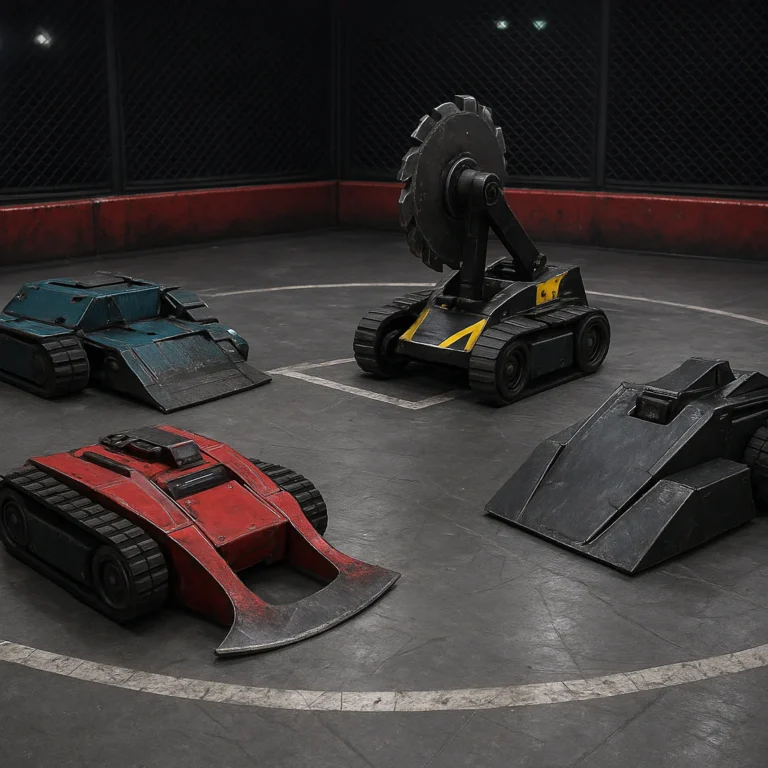
We once watched a team spend months perfecting a complex, multi-jointed gripper, only to see it snap in half during the first 10 seconds of a match. Their opponent? A simple, wedge-shaped brute built with welded steel and a single, high-torque motor that pushed them straight to the finals. That day, the arena taught us a brutal lesson: simplicity often beats complexity when the stakes are high.
Did you know that the average lifespan of a combat robot in a major tournament is often less than three matches? This statistic drives home the importance of redundancy and modular design in modern engineering. Every bolt, every wire, and every line of code must be optimized for survival, not just aesthetics.
Key Takeaways
- Prioritize Durability Over Complexity: The most successful robots often feature simple, robust mechanical systems that can withstand repeated high-impact collisions without failing.
- Master the Power-to-Weight Ratio: Selecting the right LiPo batteries and brushless motors is critical for balancing speed, torque, and agility in a competitive environment.
- Iterate Relentlessly: Rapid protyping and rigorous testing are non-negotiable; your first design will likely fail, so build with the expectation of constant improvement.
- Integrate Smart Safety Protocols: Essential fail-safes and kill switches are not just regulatory requirements; they are the difference between a controlled match and a dangerous accident.
Table of Contents
- ⚡️ Quick Tips and Facts
- 🤖 A Brief History of Robot Design and Engineering Evolution
- 🧠 Core Concepts in Modern Robotics Architecture
- 🛠️ Essential Components of Robot Hardware Design
- 🧩 Selecting the Right Actuators and Motors for Your Build
- 🧠 Integrating Sensors and Perception Systems
- 💻 Programming Languages and Control Systems for Robotics
- 🔋 Power Management and Battery Solutions for Autonomous Units
- 🏗️ 7 Critical Steps in the Robot Protyping Lifecycle
- 🔧 Troubleshooting Common Mechanical and Electrical Failures
- 🌐 The Future of Collaborative Robotics and Human-Robot Interaction
- 🏆 Conclusion
- 🔗 Recommended Links
- ❓ FAQ
- 📚 Reference Links
⚡️ Quick Tips and Facts
Before you start welding steel or soldering your first circuit board, let’s hit the pause button and drop some hard truths from the Robot Wrestling™ pit crew. We’ve seen robots that looked like masterpieces in CAD but fell apart the second they hit the arena floor, and we’ve seen clunky, ugly beasts that dominated the competition. Why? Because design is not just about looks; it’s about physics, strategy, and sheer durability.
Here is the tea on Robot Design and Engineering straight from the trenches:
- ✅ The “Weight is Wealth” Myth: In robot wrestling, every gram counts, but not always in the way you think. A lighter robot isn’t always faster; it’s often more fragile. The sweet spot is optimal mass distribution, not just minimum weight.
- ✅ Actuators are the Heart: If your motors can’t handle the torque, your robot is just a very expensive paperweight. We’ve seen Maxon and Faulhaber motors save the day, but only if paired with the right gear ratios.
- ✅ Software is the Brain: A robot with a hammer but no aim is useless. Real-time control systems are non-negotiable. If your code lags by 20ms, you’re already dead in the arena.
- ✅ Safety First, Always: We’ve had sparks fly, batteries explode, and weapons spin out of control. Fail-safes and kill switches aren’t optional; they are the difference between a cool match and a lawsuit.
- ✅ Iterate or Perish: Your first design will fail. Your second will probably fail too. The third might just win the Robot Wrestling League. Embrace the crash.
Pro Tip: If you’re designing for the arena, ask yourself: “Can this survive a 50-pound impact?” If the answer is “maybe,” you need to redesign.
For a deeper dive into what makes the champions tick, check out our breakdown of 🤖 7 Top Robot Wrestling Designs & Why They Dominate (2026).
🤖 A Brief History of Robot Design and Engineering Evolution
The story of robot design isn’t just a timeline of metal and wires; it’s a saga of human ambition clashing with the laws of physics. It started with the dream of automating the mundane, but quickly evolved into the art of creating machines that can think, move, and yes, even fight.
From Myth to Mechanism
Long before the first microcontroller blinked to life, humans were obsessed with automata. The ancient Greeks built mechanical birds, and Leonardo da Vinci sketched a mechanical knight that could sit, stand, and move its arms. But these were toys, curiosities designed to amaze, not to perform complex tasks.
The real shift happened in the 20th century. The term “robot” was coined by Karel Čapek in 1920, but it was George Devol and Joseph Engelberger who brought the concept to life with the Unimate in the 1960s. This was the grandfather of industrial robotics, a massive arm that could lift car parts with precision. It was the birth of industrial automation, but it was far from the agile, intelligent machines we see today.
The Rise of the “Smart” Machine
As we moved into the 1980s and 90s, the focus shifted from pure strength to sensing and adaptability. The introduction of sensors allowed robots to “see” and “feel” their environment. This was the era of the mobile robot, where machines could navigate complex spaces without human intervention.
In the world of entertainment and competition, the 190s saw the birth of robot combat. Shows like BattleBots and Robot Wars turned engineering into a spectator sport. Suddenly, robot design wasn’t just about efficiency; it was about agression, durability, and strategy. The robots of this era were often crude, built from scrap metal and off-the-shelf motors, but they laid the groundwork for the sophisticated machines of today.
The Modern Era: AI and Collaboration
Today, we are in the age of collaborative robotics (cobots) and AI-driven autonomy. Robots are no longer isolated machines; they are part of a network, communicating with each other and with humans. In healthcare, surgical robots like the Da Vinci Xi perform procedures with a precision no human hand can match. In manufacturing, Autonomous Mobile Robots (AMRs) are revolutionizing logistics.
But the spirit of the arena lives on. In the Robot Wrestling League, engineers are pushing the boundaries of what’s possible, creating machines that are faster, stronger, and smarter than ever before. The evolution of robot design is far from over; it’s just getting started.
Did you know? The first robot to win a major combat competition was Blendo, a simple but effective spinner that dominated the early days of BattleBots. Its success proved that simplicity and reliability often beat complex, over-enginered designs.
🧠 Core Concepts in Modern Robotics Architecture
Designing a robot is like composing a symphony. You need the right instruments (hardware), the right sheet music (software), and a conductor (control system) to bring it all together. In modern robotics architecture, three pillars hold everything up: Perception, Decision, and Action.
The Perception Layer: Giving Robots Eyes and Ears
A robot that can’t see is just a blindfolded boxer. The perception layer is where sensors come into play. From LiDAR and cameras to ultrasonic sensors and IMUs (Inertial Measurement Units), these devices feed data into the robot’s brain.
- Visual Sensors: Cameras provide rich data but require heavy processing.
- LiDAR: Excellent for mapping and distance measurement, even in the dark.
- Tactile Sensors: Give robots a sense of touch, crucial for delicate tasks or gripping objects.
The Decision Layer: The Brain of the Operation
Once the robot has data, it needs to make sense of it. This is the decision layer, where algorithms and AI models process the information and decide on the next move. This is where machine learning shines, allowing robots to learn from experience and adapt to new situations.
- Path Planning: Calculating the most efficient route from point A to point B.
- Object Recognition: Identifying and classifying objects in the environment.
- Behavioral Logic: Deciding whether to attack, retreat, or defend based on the situation.
The Action Layer: Putting Feet to the Metaphorical Fire
The action layer is where the rubber meets the road. This is where actuators, motors, and hydraulics come into play, translating the robot’s decisions into physical movement. Whether it’s a robotic arm picking up a part or a wheled robot dodging an attack, the action layer must be precise, powerful, and responsive.
Key Insight: The best robot architecture is one where these three layers work in perfect harmony. If the perception layer is slow, the decision layer will be outdated. If the action layer is sluggish, the robot will miss its opportunity.
🛠️ Essential Components of Robot Hardware Design
Let’s get our hands dirty. Building a robot is like building a house; you need a solid foundation, strong walls, and a reliable roof. In robot hardware design, the components are your bricks and mortar. Here’s what you need to know.
Chassis and Frame: The Skeleton
The chassis is the backbone of your robot. It needs to be lightweight yet durable. Common materials include:
- Aluminum: Great balance of strength and weight.
- Carbon Fiber: Ultra-light and strong, but expensive.
- Steel: Heavy but incredibly durable, perfect for combat robots.
Power Systems: The Heartbeat
Without power, your robot is just a sculpture. Batteries are the lifeblood of any autonomous robot.
- LiPo (Lithium Polymer): High energy density, lightweight, but requires careful handling.
- Li-ion (Lithium-ion): Safer and more stable, but heavier.
- Fuel Cells: Emerging technology for long-duration missions.
Actuators and Motors: The Muscles
This is where the magic happens. Motors convert electrical energy into mechanical motion.
- DC Motors: Simple and versatile, great for wheels and simple joints.
- Servo Motors: Precise control, ideal for robotic arms and legs.
- Stepper Motors: Excellent for positioning, but slower.
Sensors: The Senses
As mentioned earlier, sensors are crucial. But choosing the right ones is an art.
- Encoders: Measure motor rotation and speed.
- Gyroscopes: Detect orientation and angular velocity.
- Proximity Sensors: Detect nearby objects without contact.
Real-World Example: In the Robot Wrestling League, teams often use Maxon motors for their high torque-to-weight ratio, paired with carbon fiber chassis to keep the robot agile.
🧩 Selecting the Right Actuators and Motors for Your Build
Choosing the right actuator is like picking the right engine for a race car. Get it wrong, and you’re stuck in the pits. Get it right, and you’re on the podium. Here’s how to make the right choice.
Torque vs. Speed: The Eternal Trade-off
Every motor has a torque-speed curve. High torque means more force, but less speed. High speed means less force. In robot wrestling, you often need a balance. A spinner needs high speed to generate kinetic energy, while a wedge needs high torque to push opponents.
Gear Ratios: The Secret Weapon
Gearboxes are your best friend. They allow you to trade speed for torque or vice versa. A high gear ratio gives you more torque but less speed. A low gear ratio does the opposite.
Motor Types: Which One Fits Your Needs?
- Brushed DC Motors: Simple, cheap, but wear out quickly.
- Brushless DC Motors (BLDC): More efficient, longer life, but require a controller.
- Servo Motors: Precise, but limited range of motion.
Pro Tip: Don’t just look at the motor specs. Consider the entire drivetrain. A great motor with a bad gearbox is still a bad drivetrain.
🧠 Integrating Sensors and Perception Systems
A robot without sensors is like a person with their eyes closed. Sensors are the eyes, ears, and skin of your robot. They provide the data needed for perception and decision-making.
Visual Perception: Seeing the World
Cameras are the most common visual sensors. They can be used for:
- Object Detection: Identifying opponents or obstacles.
- Navigation: Mapping the environment.
- Tracking: Following a moving target.
Depth Perception: Knowing How Far
LiDAR and stereo cameras provide depth information, allowing robots to understand the 3D structure of their environment. This is crucial for navigation and collision avoidance.
Tactile Perception: Feeling the World
Force sensors and tactile arrays give robots a sense of touch. This is essential for manipulation tasks, where the robot needs to grip objects without crushing them.
Case Study: In a recent Robot Wrestling match, a robot equipped with LiDAR was able to map the arena and avoid obstacles, while its opponent, relying solely on cameras, got stuck in a corner.
💻 Programming Languages and Control Systems for Robotics
The hardware is just the body; the software is the soul. Without code, your robot is just a pile of metal. Here’s a look at the languages and systems that bring robots to life.
Programming Languages: The Tools of the Trade
- C++: The gold standard for performance-critical applications. Fast, efficient, but complex.
- Python: Great for protyping and AI. Easy to learn, but slower.
- ROS (Robot Operating System): A middleware that simplifies robot development. It provides libraries and tools for building complex robotic systems.
Control Systems: The Conductor
Control systems manage the robot’s behavior. They take input from sensors, process it, and send commands to actuators.
- PID Controllers: Simple and effective for basic control.
- Model Predictive Control (MPC): Advanced control for complex systems.
- Reinforcement Learning: AI-driven control that learns from trial and error.
Insight: The best control systems are those that can adapt to changing conditions. A robot that can’t adjust to a slippery floor or a sudden obstacle is doomed to fail.
🔋 Power Management and Battery Solutions for Autonomous Units
Power is the lifeblood of any robot. Without it, your robot is just a statue. Power management is about ensuring your robot has enough energy to complete its mission, while staying safe and efficient.
Battery Types: Choosing the Right Fuel
- LiPo: High energy density, lightweight, but dangerous if mishandled.
- Li-ion: Safer, more stable, but heavier.
- Solid-State Batteries: Emerging technology with higher safety and energy density.
Power Distribution: Keeping the Lights On
A good power distribution system ensures that every component gets the right amount of power. This includes voltage regulators, fuses, and battery management systems (BMS).
Energy Efficiency: Making Every Watt Count
Efficiency is key. A robot that wastes energy will run out of power before the match is over. Efficient motors, smart power management, and regenerative braking can all help extend battery life.
Warning: Never use a damaged LiPo battery. They can catch fire or explode. Always store them in a fireproof bag and monitor them during charging.
🏗️ 7 Critical Steps in the Robot Protyping Lifecycle
Building a robot is a journey, not a destination. Here are the 7 critical steps in the robot protyping lifecycle, from idea to arena.
1. Conceptualization: The Spark
Every great robot starts with an idea. What problem are you solving? What is your robot’s purpose? Sketch it out, brainstorm, and refine your concept.
2. Design: The Blueprint
Now it’s time to turn your idea into a CAD model. This is where you define the robot’s shape, size, and components. Use software like SolidWorks or Fusion 360.
3. Simulation: The Virtual Test
Before you build, simulate. Use tools like Gazebo or Webots to test your robot in a virtual environment. This helps you identify potential issues before you spend a dime.
4. Protyping: The First Build
Build your first prototype. Use 3D printing, laser cutting, and machining to create the parts. Assemble the robot and test it.
5. Testing: The Reality Check
Test your robot in the real world. See how it performs. Identify weaknesses and areas for improvement.
6. Iteration: The Refinement
Based on your tests, refine your design. Make changes to the hardware, software, or both. Build a new prototype and test again.
7. Finalization: The Masterpiece
Once your robot is ready, finalize the design. Document everything. Prepare for the competition.
Key Takeaway: The protyping lifecycle is iterative. You will fail, learn, and improve. Embrace the process.
🔧 Troubleshooting Common Mechanical and Electrical Failures
Even the best-designed robots have problems. Troubleshooting is a critical skill for any robot engineer. Here are some common issues and how to fix them.
Mechanical Failures: When Things Break
- Gear Stripping: Caused by excessive torque. Solution: Use stronger materials or adjust the gear ratio.
- Bearing Failure: Caused by misalignment or lack of lubrication. Solution: Realign the components and add lubrication.
- Frame Cracking: Caused by stress concentrations. Solution: Reinforce the frame or redesign the geometry.
Electrical Failures: When the Lights Go Out
- Short Circuits: Caused by loose wires or damaged insulation. Solution: Check all connections and replace damaged wires.
- Motor Burnout: Caused by overheating or overloading. Solution: Add cooling or reduce the load.
- Sensor Malfunction: Caused by interference or damage. Solution: Shield the sensors or replace them.
Pro Tip: Always have a spare parts kit on hand. You never know when something will break.
🌐 The Future of Collaborative Robotics and Human-Robot Interaction
The future of robot design is not just about machines that can do things; it’s about machines that can work with us. Collaborative robotics (cobots) are designed to work alongside humans, enhancing our capabilities rather than replacing us.
Safety First: Working Side by Side
Cobots are equipped with sensors and safety features that allow them to detect humans and stop if they get too close. This makes them safe to work in shared spaces.
AI and Adaptability: The Next Frontier
AI is making robots more adaptive and intelligent. They can learn from their environment, adapt to new tasks, and even predict human behavior.
The Human-Robot Partnership
The future is about human-robot harmony. Robots will handle the repetitive, dangerous, and mundane tasks, freeing humans to focus on creativity, innovation, and problem-solving.
Vision: Imagine a world where robots are not just tools, but partners. A world where humans and machines work together to solve the world’s biggest challenges. That’s the future we’re building.
🏆 Conclusion

We’ve journeyed from the ancient automata of Greece to the cutting-edge collaborative robots of today. We’ve explored the core concepts of robot design, the essential components, and the critical steps in the protyping lifecycle. We’ve seen how sensors, actuators, and software come together to create machines that can think, move, and even fight.
But the story doesn’t end here. The future of robot design is bright, filled with endless possibilities. Whether you’re building a robot for the Robot Wrestling League, a surgical robot for the operating room, or a home assistant to help with chores, the principles remain the same: design with purpose, build with precision, and always iterate.
So, what’s your next move? Will you design the next champion of the arena? Or will you create a robot that changes the world? The choice is yours.
Final Thought: Remember, the best robot is not the one with the most features, but the one that solves the problem at hand. Keep it simple, keep it robust, and keep building.
🔗 Recommended Links
Ready to start your own robot design journey? Here are some resources to get you started.
Books and Guides
- Robotics: A Very Short Introduction – A great starting point for beginners.
- Probabilistic Robotics – For those interested in the math behind robot navigation.
- Designing and Building Robots – A hands-on guide to building your own robots.
Components and Tools
- 👉 Shop Maxon Motors on: Amazon | Maxon Official
- 👉 Shop Arduino Kits on: Amazon | Arduino Official
- 👉 Shop 3D Printers on: Amazon | Prusa Research
Internal Resources
❓ FAQ

What role does mechanical engineering play in robot battle performance?
Mechanical engineering is the backbone of any battle robot. It determines the chassis strength, weapon efficiency, and mobility. A well-designed mechanical system can turn a mediocre robot into a champion.
Read more about “⚔️ League of Robot Wars: The Ultimate 2026 Guide to Combat”
How can I start designing my own robot for the Robot Wrestling League?
Start by understanding the rules and regulations of the league. Then, sketch your concept, choose your components, and build a prototype. Join online communities and attend local events to learn from others.
Read more about “🤖 Robo Wars Tournament: The Ultimate 2026 Guide to Combat Robotics”
What are the most common challenges in robot wrestling design?
Common challenges include weight distribution, weapon reliability, and battery life. Balancing these factors is key to a successful design.
Read more about “🤖 15 Ultimate Robot Battle Arena Games & Kits to Dominate (2026)”
How does AI integration impact robot engineering in battles?
AI allows robots to adapt to their opponents, predict movements, and make decisions in real-time. This can give a significant advantage in the arena.
Read more about “🏆 Mechanical Wrestling Championship 2026: The Ultimate Guide to Robot Glory”
What materials are best for building durable robot battle machines?
Aluminum and carbon fiber are popular for their strength-to-weight ratio. Steel is used for high-impact areas. The choice depends on the specific requirements of your robot.
Read more about “🤖 7 Dominant Mech Classes in Gladiator Competitions (2026)”
How do engineers design robots for competitive robot wrestling?
Enginers focus on durability, speed, and weapon effectiveness. They use CAD to design, simulation to test, and iteration to refine.
Read more about “🤖 7 Top Robot Wrestling Designs & Why They Dominate (2026)”
What safety features are essential in designing robots for wrestling competitions?
Kill switches, remote control overrides, and shielding are essential. Safety is paramount to protect both the robots and the spectators.
Read more about “🤖 Yes! How to Build & Enter Your Own Robot Wrestler (2026)”
How do robot engineers balance speed and strength in battle robots?
By optimizing the gear ratios, motor selection, and chassis design. A balance is needed to ensure the robot can move quickly while delivering powerful strikes.
Read more about “🤖 15 Robot Types in Wrestling: Unique Features Revealed (2026)”
What are the latest innovations in robot design for combat sports?
Inovations include AI-driven control systems, advanced materials, and modular designs that allow for quick repairs and upgrades.
How does engineering impact the performance of fighting robots?
Engineering determines everything from mobility to weapon effectiveness. A well-enginered robot will outperform a poorly designed one, every time.
Read more about “🤖 Yes, You Can Build a Wrestling Robot! (2026)”
What materials are best for building durable battle robots?
Aluminum, carbon fiber, and steel are the top choices. Each has its own strengths and weaknesses, so the choice depends on the specific needs of the robot.
Read more about “💸 Robot Wrestling Cost: The Real Price to Build a Champion (2026)”
How do robot designers create robots for competitive wrestling leagues?
They follow a systematic process: conceptualization, design, simulation, protyping, testing, and iteration. Collaboration and continuous improvement are key.
What are the key principles of robot design and engineering?
The key principles are functionality, durability, efficiency, and safety. A good design balances these factors to create a robot that performs well and lasts long.
📚 Reference Links
- Northwestern University – Robot Design Studio (ME 472-1)
- Northwestern University – ELEC_ENG/COMP_ENG 495: Robot Design Studio
- Michigan Technological University – What is Robotics?
- Maxon Motor Official Website
- Arduino Official Website
- Prusa Research Official Website
- Da Vinci Surgical System – Intuitive Surgical
- Robot Operating System (ROS)
- SolidWorks Official Website
- Fusion 360 Official Website