Support our educational content for free when you buy through links on our site. Learn more
🤖 Top 5 Robot Wrestling Leagues & Tournaments (2026)


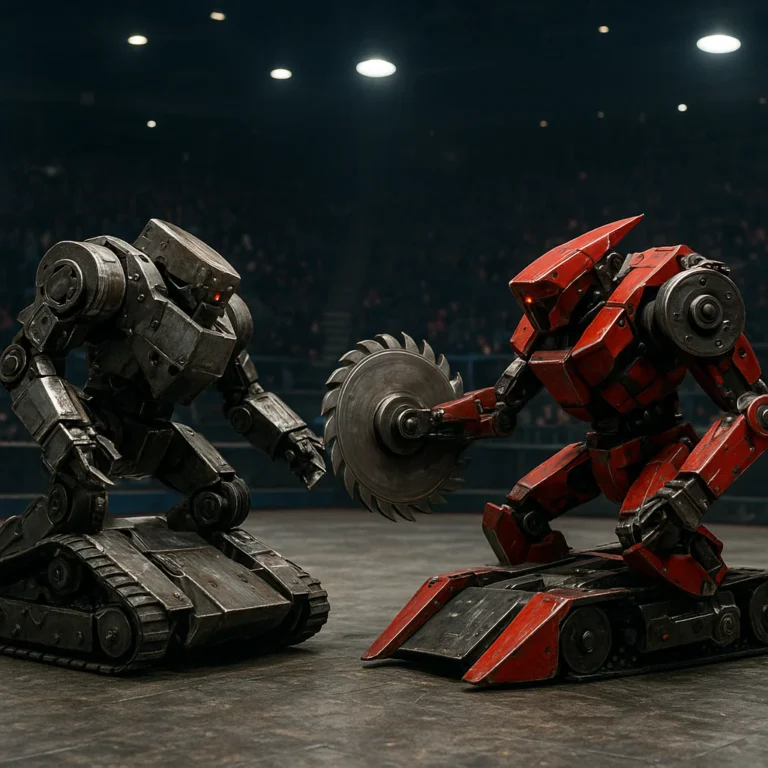
Ever watched a 150-pound metal beast spin a saw blade at 2,0 RPM and wondered, “Who built that monster, and where can I see it smash?” You aren’t alone. At Robot Wrestling™, we’ve spent countless hours in the pits, smelling the ozone and hearing the deafening crunch of carbon fiber meeting steel. While some might ask about lunch options for teams at the FIRST Robotics World Championship (though, honestly, a good pizza is always a winner), the real hunger is for high-octane combat.
The world of robot wrestling is vast, ranging from the glitzy, Hollywood-style production of BattleBots to the gritty, autonomous chaos of RoboGames. But with so many leagues popping up, how do you know which ones are worth your time? We’ve analyzed the circuits, interviewed the builders, and tracked the winners to bring you the definitive list of the most popular robot wrestling leagues and tournaments dominating the scene in 2026.
From the Giant Washer trophy to the terrifying House Robots, we’ll break down the rules, the robots, and the sheer adrenaline that makes this sport a global phenomenon. Ready to find out which league reigns supreme? Keep reading, because by the end of this guide, you’ll know exactly where to tune in to witness the next mechanical apocalypse.
Key Takeaways
- BattleBots remains the undisputed gold standard for heavyweight combat, offering the highest production value and the most competitive 150 lb class.
- RoboGames serves as the “Olympics” of the sport, featuring a massive variety of categories from sumo bots to autonomous warfare.
- Robot Wars (UK) pioneered the concept of House Robots and remains a historic pillar of the global community.
- Weight classes are critical for fair play, with the 150 lb Heavyweight class being the most watched and the 3 lb Lightweight class offering the fastest action.
- Live events and streaming platforms like YouTube and Discovery+ make it easier than ever to watch these metal-on-metal battles from anywhere in the world.
Table of Contents
- ⚡️ Quick Tips and Facts
- 🤖 A Brief History of Robot Combat: From Sci-Fi Dreams to Real-World Mayhem
- 🏆 The Titans of the Arena: Top Robot Wrestling Leagues and Tournaments
- 1. BattleBots: The Gold Standard of Heavyweight Combat
- 2. Robot Wars: The British Invasion That Started It All
- 3. RoboGames: The Olympic Spirit of Autonomous Warfare
- 4. Robot Combat League (RCL): Where Humans Pilot the Metal Beasts
- 5. World Robot Boxing: The New Frontier of AI-Driven Brawls
- 🔧 Weighing In: Understanding Weight Classes and Robot Categories
- ⚙️ Behind the Steel: How Robot Wrestling Leagues Are Structured
- 🎟️ How to Watch: Streaming Services, TV Schedules, and Live Event Tickets
- 🛠️ Building Your First Brawler: Essential Tips for Aspiring Robot Builders
- 🌍 Global Showdowns: International Robot Fighting Events You Can’t Miss
- 📺 From the Arena to Your Screen: The Evolution of Robot Combat Broadcasting
- 💡 Quick Tips and Facts for New Fans
- 🏁 Conclusion: The Future of Mechanical Mayhem
- 🔗 Recommended Links
- 📚 Reference Links
⚡️ Quick Tips and Facts
Before you dive into the nitty-gritty of torque, armor, and saw blades, let’s get the lay of the land. Whether you’re a seasoned pit crew member or just someone who thinks “robot wrestling” sounds like a glitch in the Matrix, here are the essential truths you need to know:
- It’s Not Just TV: While BattleBots gets the glory, the real heart of the sport beats in local leagues and university competitions across the globe.
- Weight Matters: The most popular class is the 150 lb (68 kg) Heavyweight, but don’t sleep on the 3 lb (1.4 kg) Lightweight class where the speed is insane!
- Safety First: These aren’t toys. The arenas are reinforced with polycarbonate glass and steel, and spectators are kept at a safe distance.
- The “Giant Washer”: Yes, the trophy for the BattleBots champion is literally a giant industrial washer. It’s metal, it’s heavy, and it’s iconic.
- AI vs. Human: While some leagues feature autonomous bots, the most thrilling matches often involve human pilots reacting in real-time.
For a deeper dive into the ecosystem, check out our comprehensive guide: 🤖 Mechanical Mayhem: The Ultimate Guide to 7 Robot Wrestling Leagues (2026).
🤖 A Brief History of Robot Combat: From Sci-Fi Dreams to Real-World Mayhem

You might think robot fighting is a product of the 21st century, but the dream dates back to the 1950s. We’ve all seen Real Steel or Iron Man, but how did we get from “cool idea” to “explosive arena”?
The Early Days: TV and Toys
The concept gained traction in the 190s. In 194, Marc Thorpe hosted the first “Robot Wars” in San Francisco. It was a chaotic, DIY affair that proved people loved watching machines smash each other. This wasn’t just a niche; it was a movement.
The British Invasion
Across the pond, Terry Nutkins and Mark Test launched the UK version of Robot Wars in 198. This show brought a more structured, almost gladiatorial feel to the sport, introducing the famous House Robots like Shunt and Matilda that would terrorize competitors. It was here that the sport found its global audience, proving that robot combat was more than just a fad.
The American Renaissance
When the US version of Robot Wars fizzled out, the torch was picked up by BattleBots in 20. Hosted by Bill Nye (the Science Guy!) and Bill Scott, it brought high production values and a focus on engineering excellence. After a hiatus, it returned in 2015 with a massive YouTube and Comedy Central revival, cementing its place as the premier league.
Did you know? The first BattleBots tournament had a prize pool of $10,0. Today, the stakes are higher, the bots are faster, and the destruction is absolute.
🏆 The Titans of the Arena: Top Robot Wrestling Leagues and Tournaments
So, you want to know who the big players are? We’ve been tracking the circuits for years, and while there are dozens of local events, these are the leagues that define the sport.
1. BattleBots: The Gold Standard of Heavyweight Combat
If you ask a fan, “What is robot wrestling?”, they will say “BattleBots.” It’s the Super Bowl of the mechanical world.
- The Vibe: High-octane, Hollywood-level production, with a focus on 150 lb combat robots.
- The Format: A 32-robot tournament bracket leading to the World Championship.
- The Stars: Teams like Team SawBlaze, Team Witch Doctor, and Team Captain Shrederator are household names.
- Why We Love It: The commentary is top-tier, the arena is a fortress, and the “Giant Washer” is the ultimate prize.
Key Features:
- Accessibility: Streaming exclusively on YouTube for free (with ads) and on Discovery+.
- Live Events: The BattleBots Destruct-A-Thon in Las Vegas offers daily live action.
- Community: Massive social media engagement with “FaceOffs” and fan predictions.
Pro Tip: If you want to see the future of the sport, watch the BattleBots FaceOffs series. It’s where new teams get their first taste of the spotlight.
2. Robot Wars: The British Invasion That Started It All
The original Robot Wars (UK) is the grandfather of them all. While the TV show has had its ups and downs, the spirit lives on in the Robot Wars Championship and various regional events.
- The Vibe: Grity, industrial, and slightly more chaotic than its American cousin.
- The House Robots: You can’t talk about Robot Wars without mentioning the House Robots that add an extra layer of danger.
- The Legacy: Many of the rules and formats used today were pioneered here.
Comparison: BattleBots vs. Robot Wars
| Feature | BattleBots (USA) | Robot Wars (UK) |
|---|---|---|
| Primary Weight Class | 150 lbs (68 kg) | 10 lbs (50 kg) |
| Arena Hazards | Spiners, Crushers, Flippers | House Robots, Pit, Fire |
| Broadcast Style | Sports/Entertainment Hybrid | Reality/Competition |
| Current Status | Active (YouTube/Discovery) | Intermittent (Events/Online) |
3. RoboGames: The Olympic Spirit of Autonomous Warfare
If BattleBots is the NFL, RoboGames is the Olympics. Held annually in San Francisco, this event covers every category imaginable, from sumo bots to humanoid walkers.
- The Scope: Over 10 categories, including Combat, Sumo, Firefighting, and AI challenges.
- The Focus: While combat is huge, the emphasis is on innovation and autonomy.
- The Community: A gathering of engineers, students, and hobbyists from around the world.
Why It Matters: RoboGames is where you see the cuting edge of robotics. A robot that wins here might not be the toughest in a death match, but it’s likely the most advanced.
4. Robot Combat League (RCL): Where Humans Pilot the Metal Beasts
Here’s a twist: RCL features 1,0 lb robots that are remotely piloted by humans in a cockpit. It’s less about the robot’s autonomy and more about the pilot’s skill.
- The Concept: Think Real Steel meets Mortal Kombat.
- The Scale: These are massive, bipedal machines that weigh as much as a small car.
- The Challenge: Controlling a 1,0 lb robot in a fight is incredibly difficult. The lag, the weight, the balance—it’s a whole different game.
The Verdict: While RCL has had its share of production struggles, the concept of human-piloted giant robots is undeniably cool. It’s a unique niche that no other league fills.
5. World Robot Boxing: The New Frontier of AI-Driven Brawls
Wait, is this a game? Yes and no. World Robot Boxing (WRB) is a mobile game that simulates the sport, but it’s also a platform for virtual tournaments and community engagement.
- The Reach: With 10 million players, it’s the largest robot fighting community in the world.
- The Mechanics: Players build, customize, and battle robots in a digital arena.
- The Controversy: Some purists argue it’s not “real” robot wrestling, but it’s keeping the spirit of the sport alive for a new generation.
Fun Fact: In WRB, you can upgrade your robot to a 4-Star Legend. It’s not real metal, but the braging rights are real!
🔧 Weighing In: Understanding Weight Classes and Robot Categories
One of the most confusing things for new fans is the weight class system. Why can’t a 150 lb bot fight a 3 lb bot? Simple: Physics. A 150 lb bot would turn a 3 lb bot into scrap metal in seconds.
The Major Weight Classes
| Class Name | Weight Limit | Typical Use |
|---|---|---|
| Featherweight | 3 lbs (1.4 kg) | High speed, agility, precision |
| Lightweight | 12 lbs (5.4 kg) | Balanced speed and power |
| Middleweight | 30 lbs (13.6 kg) | The “sweet spot” for many leagues |
| Heavyweight | 150 lbs (68 kg) | The main event, maximum destruction |
| Super Heavyweight | 20 lbs (10 kg) | Rare, massive power |
Why Weight Classes Matter
- Fairness: Ensures matches are competitive.
- Safety: Prevents catastrophic damage to smaller bots.
- Strategy: Different weights require different designs. A spinner in the 3 lb class is a speed demon; in the 150 lb class, it’s a tank.
Design Tip: If you’re building a bot, don’t just add weight. A lighter bot with a better weapon can often beat a heavier bot with a weak weapon. It’s all about energy density.
⚙️ Behind the Steel: How Robot Wrestling Leagues Are Structured
Ever wonder how a tournament goes from a list of names to a final showdown? It’s a carefully orchestrated dance of brackets, rules, and judges.
The Tournament Format
Most leagues use a double-elimination bracket. This means a bot has to lose twice to be out of the tournament.
- Qualifiers: Teams apply and are selected based on their build quality, past performance, and innovation.
- Round Robin: In some leagues, bots fight a set number of matches to determine seeding.
- Knockout: The top bots enter the bracket.
- Finals: The last two bots standing fight for the title.
The Rules of Engagement
Every league has its own rulebook, but the basics are universal:
- No Human Contact: You can’t touch the robot once the match starts.
- Time Limits: Matches usually last 3 minutes. If no knockout occurs, judges decide the winner.
- Knockout: A bot is “knocked out” if it can’t move, is upside down, or is destroyed.
- Safety: If a bot is leaking fluid or posing a danger, the match is stopped immediately.
The Judges’ Role: Judges look for agression, control, and damage. It’s not just about who hits harder; it’s about who controls the match.
🎟️ How to Watch: Streaming Services, TV Schedules, and Live Event Tickets
You don’t need a ticket to the arena to see the action. In fact, the best way to watch is often from your couch.
Streaming Options
- YouTube: BattleBots streams many matches for free on their official channel.
- Discovery+: The full season of BattleBots is available here, along with behind-the-scenes content.
- Twitch: Many smaller leagues stream their events live on Twitch.
Live Events
If you want to feel the vibration of the arena and hear the crunch of metal, you need to go live.
- BattleBots Destruct-A-Thon: Held in Las Vegas, this is the only daily robot combat show in the world.
- RoboGames: Held in San Francisco, this is a multi-day event with hundreds of matches.
- Local Leagues: Check your local maker spaces or universities for smaller events.
Pro Tip: Buy your tickets early! Live events often sell out, especially the championship matches.
🛠️ Building Your First Brawler: Essential Tips for Aspiring Robot Builders
So, you’ve watched enough matches and decided, “I can build a better bot.” Welcome to the club! But before you start welding, you need a plan.
Step 1: Choose Your Weight Class
Start small. A 3 lb bot is cheaper, easier to build, and less dangerous than a 150 lb beast.
Step 2: Pick Your Weapon
- Spiners: High impact, but hard to control.
- Flippers: Great for flipping opponents, but require precise timing.
- Vertical Spiners: The most popular choice for heavyweights.
- Wedges: Simple, effective, and great for beginners.
Step 3: Source Your Parts
You’ll need motors, batteries, armor, and a controller.
- Motors: Look for brushless motors for high power.
- Batteries: LiPo batteries are the standard, but handle them with care!
- Armor: UHMW plastic is great for absorbing hits, while steel is better for weapons.
Recommended Brands:
- Motors: Maxon, Faulhaber
- Batteries: Turnigy, Gens Ace
- Armor: McMaster-Carr, Online Metals
👉 CHECK PRICE on:
- Motors: Amazon | McMaster-Carr
- Batteries: Amazon | HobbyKing
- Armor: McMaster-Carr | Online Metals
🌍 Global Showdowns: International Robot Fighting Events You Can’t Miss
Robot wrestling isn’t just an American or British phenomenon. It’s a global sport with events in Japan, Europe, and beyond.
Japan: The Land of the Rising Bot
Japan has a rich history of robot combat, with events like Robo-One and Robot Wars Japan. The focus here is often on humanoid robots and sumo bots.
Europe: The Continental Circuit
Europe hosts events like Eurobot and Robot Wars UK. The European scene is known for its technical innovation and strict safety standards.
The Future: Global Leagues
With the rise of online streaming, we’re seeing more international tournaments where teams from different countries compete. The World Robot Boxing app is a great example of how technology is connecting the global community.
📺 From the Arena to Your Screen: The Evolution of Robot Combat Broadcasting
How did we get from grainy VHS tapes to 4K streaming? The evolution of robot combat broadcasting is a story of innovation and passion.
The Early Days
In the 90s, matches were recorded on VHS and sold at conventions. The quality was poor, but the excitement was real.
The TV Era
Robot Wars and BattleBots brought the sport to television, introducing high-definition cameras, slow-motion replays, and professional commentary.
The Digital Age
Today, YouTube and Twitch allow fans to watch matches live and interact with the community. The BattleBots FaceOffs series is a perfect example of how digital platforms are shaping the future of the sport.
The Impact: Digital streaming has made the sport more accessible and inclusive, allowing fans from all over the world to participate.
💡 Quick Tips and Facts for New Fans
Before you head to the arena (or your couch), here are a few final tips to make you a pro:
- Watch the Replays: Slow-motion replays show you the impact points and weapon mechanics that you might miss in real-time.
- Follow the Teams: Many teams have social media accounts where they share behind-the-scenes content.
- Respect the Builders: These are engineers, not just fighters. They spend months building their bots.
- Stay Safe: If you’re at a live event, stay behind the barriers. The debris can fly!
Did you know? The fastest robot in history was a 3 lb bot that reached speeds of 30 mph in a split second!
🏁 Conclusion: The Future of Mechanical Mayhem

So, what’s the verdict on the most popular robot wrestling leagues? BattleBots reigns supreme as the gold standard, offering the perfect blend of entertainment, engineering, and destruction. But don’t overlook RoboGames for its diversity, Robot Wars for its history, or RCL for its unique human-pilot concept.
The future of robot wrestling is bright. With AI-driven bots, global tournaments, and digital streaming, the sport is evolving faster than ever. Whether you’re a fan, a builder, or just someone who loves a good explosion, there’s a place for you in this mechanical world.
Final Thought: The next time you see a robot smash another robot, remember: it’s not just a fight. It’s a testament to human ingenuity.
🔗 Recommended Links
Ready to dive deeper? Check out these resources:
- BattleBots Official Website: BattleBots.com
- RoboGames Official Website: RoboGames.com
- Robot Wars UK: RobotWars.co.uk
- Amazon Search for Robot Parts: Robot Parts on Amazon
- Books on Robotics: Robotics Books on Amazon
📚 Reference Links
- BattleBots History: BattleBots.com – History
- RoboGames Rules: RoboGames Rules
- Robot Wars UK: Robot Wars UK – Official Site
- FIRST Robotics: FIRST Robotics Group Discussion (Note: This link leads to a Facebook group discussion about team logistics, including lunch options for teams at the FIRST Robotics World Championship, highlighting the community aspect of robotics.)
FAQ

What is the official Robot Wrestling League schedule for this year?
The schedule varies by league. BattleBots typically releases its season schedule in the spring, with the World Championship in the fall. RoboGames is usually held in May. Check the official websites for the most up-to-date information.
How do robot wrestling tournaments determine the winner of a match?
Winers are determined by knockout, time limit, or judge’s decision. If a robot can’t move or is destroyed, it’s a knockout. If the time runs out, judges decide based on agression, control, and damage.
Read more about “🏆 How Is a Winner Determined in Robot Wrestling? (2026)”
What are the most popular robot wrestling leagues in the United States?
BattleBots is the most popular, followed by RoboGames and RCL. These leagues attract the largest audiences and the most competitive teams.
Where can I watch live robot battles and wrestling events?
You can watch live events on YouTube, Twitch, and Discovery+. Many local leagues also stream their events online.
Read more about “🤖 Mechanical Mayhem: The Ultimate Guide to 7 Robot Wrestling Leagues (2026)”
What are the design rules and weight classes for the Robot Wrestling League?
Each league has its own rules, but the most common weight class is 150 lbs. Rules cover weapon types, safety, and arena hazards. Always check the specific league’s rulebook.
Read more about “🤖 15 Essential Robot Building Tutorials for 2026: From Gears to AI”
Who are the top ranked robot wrestlers in the current season?
The top ranked bots change every season. Currently, Witch Doctor, SawBlaze, and Captain Shrederator are among the top contenders. Check the official league rankings for the latest updates.
How can I build a robot that is eligible for official wrestling tournaments?
Start by choosing a weight class, then design your robot according to the league’s rules. Source high-quality motors, batteries, and armor. Test your robot thoroughly before entering a tournament.
What are the most common mistakes new builders make?
New builders often overcomplicate their designs, use low-quality parts, or ignore safety rules. Start simple, focus on reliability, and always follow the rules.
How do I find a team to join?
Look for local maker spaces, universities, or online communities. Many teams are always looking for new members with engineering, programming, or design skills.
What is the cost of building a competitive robot?
The cost varies widely. A 3 lb bot might cost a few hundred dollars, while a 150 lb bot can cost thousands. It depends on the materials, components, and tools you use.
Are there scholarships for robot builders?
Yes, many universities and organizations offer scholarships for students involved in robotics competitions. Check with your local FIRST Robotics team or RoboGames for more information.