Support our educational content for free when you buy through links on our site. Learn more
🤖 How to Join the Robot Wrestling League & Compete (2026)

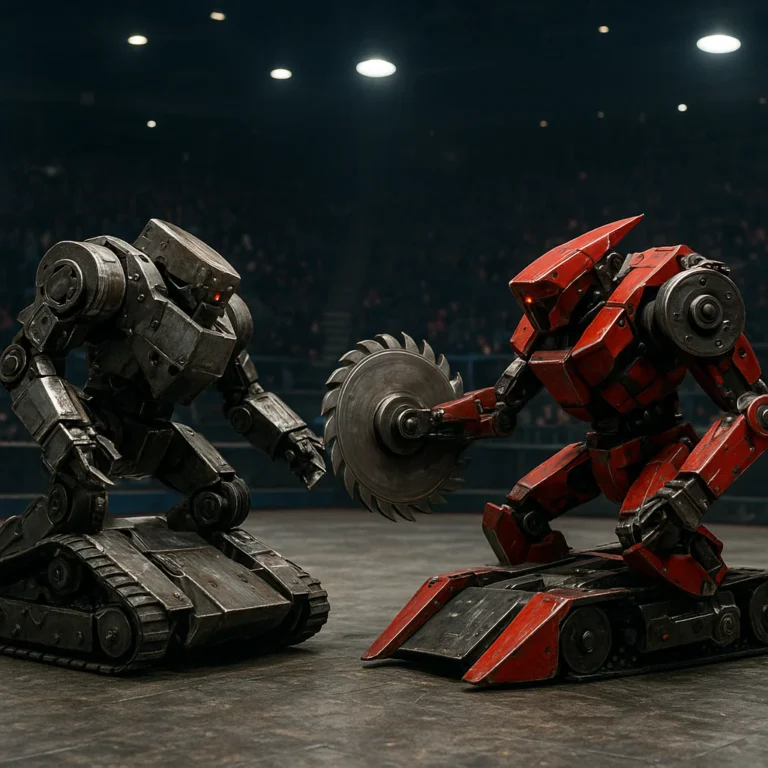
Ever watched a 30-pound robot spin a disc so fast it shatters a steel wall, leaving the crowd in absolute silence before erupting into cheers? That electric moment is the heartbeat of the National Havoc Robot League (NHRL), and contrary to popular belief, you don’t need a million-dollar engineering degree to be the one holding the controller. Many assume the arena is reserved for university teams and professional engineers, but the truth is, the league is actively hunting for the next garage-built champion. From the humble 3lb class to the heavy-hitting 30lb division, the path from your workshop to the Golden Dumpster is paved with curiosity, a little bit of welding, and the right know-how.
In this comprehensive guide, we’re pulling back the curtain on exactly how to join the Robot Wrestling League and compete. We’ll walk you through the step-by-step registration process, break down the critical safety inspections that trip up even seasoned builders, and reveal the budget realities of constructing a championship-worthy bot. You’ll discover why the June 06 event is your golden ticket to the Pro Tour and how to navigate the complex world of weapon restrictions and weight classes. Whether you are a student looking to apply your STEAM skills or a hobbyist ready to turn your passion into a sport, we have the roadmap you need.
Key Takeaways
- Start Small to Scale Big: The 3lb class is the most accessible entry point for beginners, offering a lower cost of entry and a forgiving learning curve compared to the heavy 30lb division.
- Safety is Non-Negotiable: Every robot must pass a rigorous Safety Inspection featuring functional kill switches and shielded weapons; failure here means immediate disqualification.
- The Path to Glory: Winning an NHRL Open is your direct ticket to the Pro Tour and the World Championships where the Golden Dumpster is awarded.
- Community Over Competition: The league thrives on Copertition, where rivals help each other fix bots between matches, making the pit area a hub of collaboration.
- Act Now for 2026: Don’t miss the fifth NHRL Open on June 06, a critical qualifier for the upcoming season’s elite events.
Table of Contents
- ⚡️ Quick Tips and Facts
- 🤖 Background: The Evolution of the Robot Wrestling League
- 📋 1. Understanding the NHRL Competition Structure and Divisions
- 🛠️ 2. Designing Your Battle Bot: Engineering Requirements and Safety Standards
- 📝 3. The Registration Process: How to Apply for the NHRL Season
- explained“>🏆 4. Qualifying Tournaments and Regional Tryouts Explained
- 💰 5. Budgeting for Battle: Costs of Building and Competing
- 🤝 6. Finding a Team, Sponsorships, and Community Support
- 🎥 7. What to Expect at Your First Live Event: From Pit to Arena
- 🏅 Current World Champions and Top Contenders to Watch
- 📅 8. Upcoming Season Schedule and Event Dates
- 🔧 Quick Tips and Facts for Aspiring Competitors
- 🏁 Conclusion: Your Path to the Arena Starts Now
- 🔗 Recommended Links
- ❓ FAQ: Frequently Asked Questions About Joing the League
- 📚 Reference Links
⚡️ Quick Tips and Facts
Before you start welding your first chassis, let’s cut through the noise with the absolute essentials. If you’re asking “How can I join the Robot Wrestling League and compete?”, here is your cheat sheet:
- The Big Three: The National Havoc Robot League (NHRL) currently focuses on three primary weight classes: 3lb, 12lb, and 30lb. These are the gateways to the Golden Dumpster trophy.
- The Golden Ticket: Winning an NHRL Open doesn’t just give you braging rights; it earns you a slot in the Pro Tour and the World Championships.
- Safety First: Your robot must pass a rigorous Safety Inspection before it ever sees the arena. No exceptions. If your bot has loose parts or unshielded electronics, it’s going home.
- Community is King: This isn’t just about destruction; it’s about STEAM (Science, Technology, Engineering, Arts, and Mathematics). The league actively seeks diverse builders, from high school students to seasoned engineers.
- Watch Before You Build: The entire season streams LIVE and FREE on DAZN. You can’t win if you don’t know the rules of engagement!
Did you know? The current 30lb World Champion is KaZaA Lite, a bot that has dominated the arena with its relentless aggression. But how did it get there? We’ll break down the path from the scrapyard to the championship later in this guide.
🤖 Background: The Evolution of the Robot Wrestling League

The journey from a garage experiment to a global spectacle is a story of innovation and resilience. As we’ve chronicled in our deep dive into 🤖 Robot Wrestling Evolution: From Scrapyard to AI (2026), the sport has transformed from backyard brawls into a highly regulated, engineering-heavy competition.
The National Havoc Robot League (NHRL) was founded to bridge the gap between amateur hobbyists and professional engineering. Unlike the massive industrial robots of the FIRST® Robotics Competition (FRC), which focus on cooperative gameplay and specific annual themes, the NHRL is pure, unadulterated combat.
- The Shift to Accessibility: Early combat robotics often required massive budgets and industrial workshops. The NHRL democratized this by standardizing the 3lb, 12lb, and 30lb classes, making it possible for a solo builder with a modest budget to compete against a university team.
- From Local to Global: What started as local “battle bot” nights has evolved into a Pro Tour with live broadcasts. The league emphasizes Copertition (a blend of competition and cooperation), where builders help each other fix their bots between matches, even if they are about to destroy each other in the ring.
- The Golden Dumpster: The ultimate prize isn’t just a trophy; it’s the Golden Dumpster, a symbol of the chaotic, scrap-metal origins of the sport.
If you are wondering how the sport differs from other robotics competitions, the key is the fredom of design. While FRC teams use a “Kit of Parts,” NHRL competitors design their bots from the ground up, limited only by weight, safety, and the rules of the arena.
📋 1. Understanding the NHRL Competition Structure and Divisions
To join the league, you must first understand the battlefield. The NHRL is structured around specific Weight Classes, each with its own unique physics and strategy.
The Three Pillars of Competition
The league currently operates three main divisions. Choosing the right one is your first strategic decision.
| Weight Class | Target Audience | Arena Dynamics | Key Challenge |
|---|---|---|---|
| 3lb | Beginners, Students, Solo Builders | Fast-paced, high frequency | Precision and speed; one mistake can end the match. |
| 12lb | Intermediate Builders, Small Teams | Balanced aggression and defense | Durability vs. Weapon power; the “sweet spot” of the league. |
| 30lb | Professional Teams, Heavy Engineering | High impact, slow-motion destruction | Structural integrity; surviving a direct hit from a spinning weapon. |
The Tournament Format
- NHRL Open: These are the qualifying events. Think of them as the “tryouts.” Winners here get a shot at the Pro Tour.
- Pro Tour: The elite circuit. Only the best from the Opens compete here.
- World Championships: The grand finale where the Golden Dumpster is awarded.
Curious about the judging? It’s not just about who breaks the other bot first. Judges score based on Damage, Agression, and Control. A bot that spins wildly but does no damage will lose to a bot that lands precise, disabling blows.
🛠️ 2. Designing Your Battle Bot: Engineering Requirements and Safety Standards
You can’t just weld two pieces of metal together and hope for the best. The NHRL has strict Engineering Requirements and Safety Standards that every competitor must meet.
Core Design Principles
- Weight Compliance: Your bot must weigh exactly within the limit (e.g., 3.0 lbs for the 3lb class) at the time of inspection. Being even 0.01 lbs over can disqualify you.
- Weapon Safety: Weapons must be retractable or shielded when not in use. No exposed spinning blades that could fly off and hit a spectator.
- Electronics Protection: All batteries and electronics must be securely mounted and protected from impact. A loose LiPo battery is a fire hazard and an immediate disqualification.
Recommended Components
While you can build from scratch, many successful builders start with proven components.
- Motors: Faulhaber and Maxon are industry standards for precision, while BaneBots and Faulhaber are popular for high-torque applications.
- Batteries: Zippy and Turnigy LiPo batteries are widely used, but always check the discharge rate (C-rating) for your weapon motor.
- Chassis Materials: Polycarbonate (Lexan) is the gold standard for 3lb and 12lb classes due to its shock absorption. 7075-T6 Aluminum is preferred for 30lb bots for its strength-to-weight ratio.
Pro Tip: Don’t forget the kill switch. Every bot must have a functioning external kill switch that cuts power to the weapon immediately. This is non-negotiable.
👉 Shop Battle Bot Components on:
- Motors & Drivetrains: Amazon Search: Combat Robot Motors | BaneBots Official
- Batteries & Chargers: Amazon Search: LiPo Batteries for RC | Turnigy Official
- Chassis Materials: McMaster-Carr Search: Polycarbonate Sheets | Amazon Search: Aluminum Plate 7075
📝 3. The Registration Process: How to Apply for the NHRL Season
So, you’ve built your bot. Now, how do you get it into the arena? The process is digital, streamlined, but requires attention to detail.
Step-by-Step Registration
- Visit the Registration Hub: Go to the official NHRL registration portal at https://nhrl.fillout.com/reghub.
- Create an Account: You’ll need to create a builder profile. This is your identity in the league.
- Select Your Event: Choose the upcoming NHRL Open you wish to attend. Remember, the next major opportunity is the fifth NHRL Open of the 2026 season on June 06.
- Submit Bot Details: You must provide:
- Bot name and class (3lb, 12lb, or 30lb).
- A detailed description of your weapon system.
- Photos of your bot from multiple angles.
- Proof of insurance (often required for larger events).
- Pay the Entry Fee: Fees vary by event but cover arena time, judging, and streaming costs.
- Wait for Confirmation: The NHRL team will review your submission. If your bot design looks unsafe or non-compliant, they will ask for modifications before granting approval.
Why is this step so critical? The NHRL prides itself on safety. If your bot design looks like it could damage the arena or endanger the audience, it won’t get approved. Read the rules twice!
🏆 4. Qualifying Tournaments and Regional Tryouts Explained
You can’t just show up on the day of the World Championships. You need to earn your stripes.
The Path to the Pro Tour
- Local Opens: These are your entry points. They are often held in regional hubs. Winning here gets you a “ticket” to the Pro Tour.
- Regional Qualifiers: Some areas have specific qualifiers that feed into the national circuit.
- The “Golden Dumpster” Run: The ultimate goal of these tournaments is to qualify for the end-of-year World Championships.
What Happens at a Tryout?
- Scrutinering: Your bot is weighed and inspected.
- Practice Matches: You get a chance to test your bot in the arena against other competitors.
- The Bracket: If you pass inspection, you enter the elimination bracket. It’s single-elimination, so one loss and you’re out (unless you get a lucky second chance in the losers’ bracket).
Insider Secret: Many top competitors, like the builders of Pinevictus (3lb Champion), use these regional events to test new weapon configurations before the big leagues. Don’t be afraid to experiment!
💰 5. Budgeting for Battle: Costs of Building and Competing
Let’s be real: Robot Wrestling is an expensive hobby. As one veteran builder noted, “If you take it very seriously, you’ll have no issue spending far more!”
Estimated Cost Breakdown
While prices fluctuate, here is a realistic look at what you might spend:
| Component | 3lb Class Estimate | 12lb Class Estimate | 30lb Class Estimate |
|---|---|---|---|
| Chassis & Armor | $150 – $30 | $30 – $60 | $60 – $1,20 |
| Motors & ESCs | $10 – $250 | $20 – $50 | $40 – $90 |
| Weapon System | $10 – $30 | $20 – $60 | $50 – $1,50 |
| Batteries & Charger | $10 – $20 | $150 – $30 | $250 – $50 |
| Spare Parts (Crucial!) | $10 | $20 | $40 |
| Travel & Entry Fees | $20 – $50 | $40 – $80 | $80 – $1,50 |
| Total Estimated Cost | $750 – $1,650 | $1,450 – $3,30 | $2,950 – $6,0+ |
Hidden Costs
- Transport: You need a vehicle capable of hauling heavy equipment.
- Tools: Welders, CNC machines, or 3D printers (if you don’t have access to a makerspace).
- Repairs: You will break your bot. Budget for a “spare parts” fund.
Can you do it cheaper? Yes! Many beginners start with 3lb bots using 3D printed parts and off-the-shelf RC components. It’s the most accessible entry point.
🤝 6. Finding a Team, Sponsorships, and Community Support
You don’t have to go it alone. The Robot Wrestling community is incredibly supportive.
Building Your Team
- Local Makerspaces: Check out your local Fab Lab or Makerspace. They often have the tools you need and people who know how to use them.
- Online Communities: Join the Facebook groups and Discord servers dedicated to combat robotics. These are goldmines for advice and team recruitment.
- School Programs: If you are a student, look into FIRST Robotics or local engineering clubs. They often have mentorship programs that can help you transition to combat robotics.
Securing Sponsorships
Sponsors love the STEAM angle of the NHRL.
- Local Businesses: Approach local machine shops, electronics stores, or engineering firms.
- Online Crowdfunding: Platforms like Kickstarter or GoFundMe can help fund your build if you have a compelling story.
- NHRL Partnerships: The league itself often partners with brands to support emerging talent. Keep an eye on the Partnerships & Sponsorships section of the NHRL website.
Why join a team? Beyond the cost sharing, a team brings diverse skills. You might be a great driver, but you need someone who can design the chassis and another who can handle the electronics.
🎥 7. What to Expect at Your First Live Event: From Pit to Arena
So, you’ve registered, built your bot, and traveled to the event. What happens next?
The Pit Area
- Check-in: Arrive early! You’ll need to check in at the pit area, where officials will verify your bot’s weight and safety features.
- The Vibe: The pit area is a chaotic mix of welding sparks, the smell of burnt electronics, and builders frantically soldering wires. It’s a maker’s paradise.
- Networking: This is where you meet your future rivals and allies. Don’t be shy; ask questions!
The Arena
- The Match: Matches are typically 3 minutes long. The arena is a steel cage with obstacles like pits or ramps.
- The Crowd: The energy is electric. The crowd roars when a weapon connects.
- The Aftermath: Whether you win or lose, you’ll likely end up helping the other team fix their bot. That’s the spirit of Copertition.
What if my bot breaks? It happens to everyone. The best builders are the ones who can fix their bot in 10 minutes and get back in the ring.
🏅 Current World Champions and Top Contenders to Watch
To understand what it takes to win, look at the current titans of the league.
- 3lb Class: Pinevictus is the current World Champion. Known for its incredible speed and precision, it’s a masterclass in lightweight engineering.
- 12lb Class: Pramheda holds the crown. This bot is a beast of balance, combining heavy armor with a devastating weapon.
- 30lb Class: KaZaA Lite dominates the heavyweights. Its ability to absorb punishment and deliver crushing blows is unmatched.
Recent Event Winners (May 2):
- 3lb: Clyde
- 12lb: Pyre
- 30lb: Emulsifier
Who will take the throne next? With the June 06 event approaching, the competition is heating up. Will a new challenger rise, or will the current champions defend their titles?
📅 8. Upcoming Season Schedule and Event Dates
Timing is everything. Missing a registration deadline means waiting another year.
Key Dates for the 2026 Season
- May 2: Recent Open Event (Winers: Clyde, Pyre, Emulsifier).
- June 06: Fifth NHRL Open of the 2026 Season. This is your next chance to compete!
- KO Show: Runs from 10 am to 5 pm Eastern.
- Prime Time: Returns at 7 pm Eastern for the main events.
How to Stay Updated
- DAZN: All events are streamed LIVE and FREE on DAZN. You can watch on your TV, phone, or tablet.
- NHRL Website: Check the official site for the latest schedule updates and rule changes.
- Social Media: Follow the NHRL on Facebook and Twitter for real-time announcements.
Don’t miss out! The June 06 event is a critical qualifier for the Pro Tour. If you’re building a bot, you need to be ready by then.
🔧 Quick Tips and Facts for Aspiring Competitors
Let’s recap the golden rules for success:
- Start Small: If you’re new, start with a 3lb bot. It’s cheaper, easier to build, and the learning curve is more forgiving.
- Test Relentlessly: Don’t wait until the event to test your bot. Run it in your garage, in a park, anywhere safe.
- Document Everything: Keep a log of your builds, failures, and successes. It helps you learn and can be useful for sponsorships.
- Respect the Rules: Read the rulebook cover to cover. Ignorance is not an excuse.
- Have Fun: At the end of the day, this is a sport about creativity and passion. Enjoy the process!
Final thought: The road to the Golden Dumpster is paved with broken gears and burnt wires. But the thrill of seeing your creation dominate the arena? That’s worth every scrap of metal.
🏁 Conclusion: Your Path to the Arena Starts Now

So, how can I join the Robot Wrestling League and compete? The answer is simpler than you think: Build, Register, and Compete.
We started this journey by asking if you could go from a garage tinker to a World Champion. The answer is a resounding yes. Whether you are a student, a professional engineer, or a hobbyist with a dream, the NHRL has a place for you. The 3lb, 12lb, and 30lb classes offer a ladder of progression that rewards skill, creativity, and resilience.
The Verdict:
- Positives: The NHRL offers a unique blend of high-stakes competition and community support. It’s accessible, exciting, and a fantastic way to advance your engineering skills.
- Negatives: It can be expensive, and the learning curve is steep. You will break things, and you will lose matches. But that’s part of the fun!
- Recommendation: If you have a passion for robotics and a desire to compete, start today. Join a local makerspace, grab some tools, and start building. The June 06 event is just around the corner.
Don’t let fear of failure stop you. The Golden Dumpster is waiting for the next champion. Will it be you?
🔗 Recommended Links
Ready to get started? Here are the essential resources and products you’ll need:
- Official NHRL Registration: https://nhrl.fillout.com/reghub
- Watch Live on DAZN: DAZN Sports
- Combat Robot Motors: Amazon Search: Combat Robot Motors
- LiPo Batteries: Amazon Search: LiPo Batteries for RC
- BaneBots Official Store: https://www.banebots.com/
- McMaster-Carr (Chassis Materials): https://www.mcmaster.com/
- Book: “Build Your Own Combat Robot” (Available on Amazon)
❓ FAQ: Frequently Asked Questions About Joing the League

What are the upcoming event dates for the Robot Wrestling League tournaments?
The next major event is the fifth NHRL Open of the 2026 season, scheduled for June 06. This event serves as a qualifier for the Pro Tour and the World Championships. Check the official NHRL website for the full schedule.
Read more about “🤖 Where to Find Robot Wrestling Events in 2026: 17+ Live & Streamed!”
Can beginners participate in the Robot Wrestling League robot battles?
Absolutely! The NHRL encourages builders of all skill levels. The 3lb class is particularly beginner-friendly, offering a lower barrier to entry in terms of cost and complexity. Many champions started as complete novices.
Read more about “🤖 7 Top Robot Wrestling Designs That Dominate the Arena (2026)”
Where can I find the official rules and regulations for the Robot Wrestling League?
The official rulebook is available on the NHRL website under the “Rules” section. It covers everything from weight limits to weapon restrictions. Read it carefully before building your bot.
Read more about “🏋️ ♂️ 7 Robot Wrestling Weight Classes Explained (2026)”
Are there any design guidelines for robots competing in the Robot Wrestling League?
Yes. Robots must adhere to strict safety guidelines, including proper shielding of weapons, secure mounting of batteries, and the presence of a functional kill switch. Weight classes are strictly enforced.
Read more about “🤖 AI in Robot Wrestling: The 2026 Guide to Autonomous Mayhem”
What types of robots are allowed in the Robot Wrestling League battles?
The league accepts a wide variety of designs, including spiners, lifters, flippers, and hitters. However, prohibited weapons include nets, flamethrowers, and lasers. The focus is on mechanical impact and control.
Read more about “🤖 Robot Wrestling Evolution: From Scrapyard to AI (2026)”
How do I register my robot for the Robot Wrestling League competitions?
Registration is done online via the NHRL Registration Hub at https://nhrl.fillout.com/reghub. You’ll need to submit your bot’s details, photos, and pay the entry fee.
Read more about “🤖 Robot Design for Battle: The Ultimate 2026 Guide to Winning”
What are the eligibility requirements to join the Robot Wrestling League?
There are no age restrictions, but minors must have parental consent. You must be able to build a bot that meets the safety and weight requirements of the class you wish to enter.
Read more about “How to Join the Robot Wrestling League and Compete in 2025 🤖⚔️”
How much does it cost to build a robot for the Robot Wrestling League?
Costs vary widely. A basic 3lb bot can be built for under $1,0, while a competitive 30lb bot can cost $3,0 to $6,0+. Don’t forget to budget for travel, entry fees, and spare parts.
Read more about “🤖 RWL Rules Explained: 12 Secrets to Winning in 2026”
What are the specific size and weight limits for Robot Wrestling League competitors?
The league currently features 3lb, 12lb, and 30lb weight classes. Your bot must weigh exactly within these limits at the time of inspection. Size limits are generally determined by the arena dimensions.
Read more about “🔧 9 Key Components of a Successful Robot Wrestling Robot (2026)”
Where can I find the official Robot Wrestling League rulebook and competition guidelines?
The rulebook is available on the NHRL website. It is updated regularly, so always check for the latest version before your event.
What types of weapons are allowed in Robot Wrestling League battles?
Allowed weapons include spinning discs, hamers, flippers, and lifters. Prohibited weapons include nets, flamethrowers, lasers, and any weapon that poses an undue safety risk.
Read more about “🤖 Top 10 Robot Designs Dominating the Arena (2026)”
How do I register my robot design for the upcoming Robot Wrestling League season?
Submit your design details via the NHRL Registration Hub. You’ll need to provide photos and a description of your weapon system for safety review.
Are there any age restrictions for participating in the Robot Wrestling League?
No, there are no specific age restrictions. However, minors must have parental consent and supervision. The league welcomes builders of all ages, from high school students to retirees.
📚 Reference Links
- National Havoc Robot League (NHRL): https://www.nhrl.io/
- FIRST Robotics Competition (FRC): https://www.firstinspires.org/programs/frc/
- DAZN (Live Streaming): https://www.dazn.com/
- Facebook Group: What is the National Havoc Robot League event like? https://www.facebook.com/groups/5631945480/posts/10161580387481/
- BaneBots: https://www.banebots.com/
- McMaster-Carr: https://www.mcmaster.com/