Support our educational content for free when you buy through links on our site. Learn more
🤖 Top 10 Robot Designs Dominating the Arena (2026)

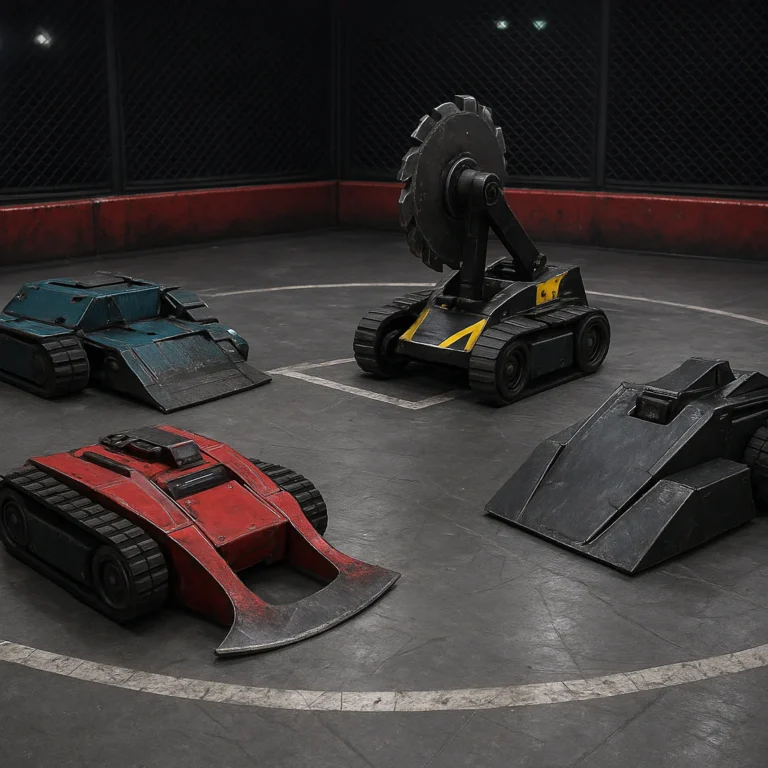
Ever watched a 250-pound steel beast flip another like a pancake and wondered, “How on earth did they build that?” You’re not alone. At Robot Wrestling™, we’ve spent countless hours in the arena, grease under our fingernails and adrenaline pumping, analyzing the mechanical masterpieces that define this high-octane sport. From the relentless horizontal spiners that turn armor into confetti to the deceptively simple wedges that slide under giants topple them, the world of robot wrestling is a fascinating blend of brute force and engineering finese.
But here’s the kicker: reliability often beats raw power. We’ve seen the most terrifying weapons fail spectacularly because the drivetrain couldn’t handle the torque, while a humble, well-balanced wedge marched to victory. In this deep dive, we’re breaking down the top 10 popular robot designs currently tearing up the leagues, complete with engineering secrets, material breakdowns, and the specific strategies that make them champions. We’ll even reveal why the “self-righting” mechanism is the unsung hero of every match you’ve ever watched. Ready to see what makes these metal gladiators tick? Let’s get brawling.
Key Takeaways
- Design Diversity is Key: The arena is dominated by 10 distinct design categories, ranging from vertical spiners and horizontal drum spiners to flippers and agressive wedges, each with unique strengths and weaknesses.
- Reliability Over Power: A robot that can’t drive or self-right is a liability; drivetrain stability and recovery systems are often more critical to winning than the sheer size of the weapon.
- Material Matters: The choice between steel, titanium, and UHMW armor dictates a robot’s survivability, with sloped deflectors often outperforming flat plates against high-RPM impacts.
- Strategy Wins Matches: Understanding the Rock-Paper-Scissors dynamic of combat (e.g., spiners beat wedges, wedges beat lifters) is essential for both builders and spectators.
- Future is Autonomous: While remote control remains king, AI-driven autonomous navigation and modular weapon systems are the next frontier for the 2026 season.
Table of Contents
- ⚡️ Quick Tips and Facts
- 🤖 A Brief History of Robot Wrestling: From Sci-Fi Dreams to Real-World Brawls
- 🏆 Top 10 Popular Robot Designs Dominating the Arena
- 1. The Classic Boxer: Uppercut Specialists and Punching Powerhouses
- 2. The Agressive Wedge: Low-Profile Lifters and Undercuters
- 3. The Vertical Spinner: High-RPM Discs and Bladed Mayhem
- 4. The Horizontal Spinner: Gyroscopic Monsters and Flipping Fury
- 5. The Drum Spinner: Compact Torque and Unstoppable Momentum
- 6. The Flippers and Lifters: Gravity Defiers and Launch Pads
- 7. The Saw and Hammer Hybrids: Brutal Impact and Cutting Edge Tech
- 8. The Invertible Designs: Self-Righting Mechanisms and Recovery Systems
- 9. The Tank Tread Chassis: All-Terrain Dominance and Stability
- 10. The Hybrid Beasts: Multi-Weapon Systems and Adaptive Strategies
- ⚙️ Engineering Deep Dive: Motors, Batteries, and Weapon Dynamics
- 🛡️ Armor Materials and Structural Integrity: Steel, Titanium, and UHMW
- 🎮 Control Systems and Remote Operation: Latency, Signal, and Precision
- 🏗️ Building Your First Combat Robot: A Step-by-Step Guide for Beginners
- 📜 Rules and Regulations: Understanding Weight Classes and Safety Standards
- 🏅 Famous Rivalries and Iconic Matches in Robot Wrestling History
- 💡 Quick Tips and Facts for Aspiring Robot Wrestlers
- 🔮 Future Trends: AI, Autonomous Fighting, and Next-Gen Designs
- 🏁 Conclusion
- 🔗 Recommended Links
- ❓ FAQ
- 📚 Reference Links
⚡️ Quick Tips and Facts
Before you start welding steel or 3D printing chassis, let’s hit the ground running with some hard-hitting truths from the Robot Wrestling™ engineering bay. Whether you’re a seasoned veteran or a curious newbie, these nugets will save you time, money, and a few fingers.
- ✅ Reliability is King: A robot that can’t drive straight is a paperweight. In our experience, 80% of match losses are due to drive train failures, not weapon malfunctions.
- ✅ Self-Righting is Non-Negotiable: If your bot flips, it’s dead unless it can flip back. Self-righting mechanisms are the difference between a DQ and a comeback victory.
- ✅ Weight is Your Friend (and Enemy): Every gram counts. In the Heavyweight class, a 10% weight reduction can mean the difference between a 5-second spin-up and a 15-second one.
- ✅ Armor Matters More Than You Think: A UHMW (Ultra-High-Molecular-Weight Polyethylene) wedge can deflect a 30 RPM spinner that would shred aluminum.
- ❌ Novelty Weapons are Risky: Flamethrowers and grappling arms look cool on YouTube, but they rarely win tournaments unless paired with a rock-solid chassis.
Did you know? The first YouTube video on this topic, “12 Newest Robots That Will Blow Your Mind” by TechJoint, actually highlights some of the most iconic designs we’ll be dissecting today. It’s a great visual primer before you dive into the nitty-gritty of engineering. Check out the featured video here.
🤖 A Brief History of Robot Wrestling: From Sci-Fi Dreams to Real-World Brawls
Robot wrestling didn’t just pop out of a lab; it evolved from the fever dreams of 1950s sci-fi authors and the garage tinkering of the 1980s. The concept of machines fighting for human entertainment has roots in BattleBots (which started in 20) and the British Robot Wars (198), but the modern “Robot Wrestling” league has carved out its own niche with stricter rules and a focus on grapling and pushing mechanics alongside traditional weaponry.
The Evolution of Combat
In the early days, robots were essentially remote-controlled tanks with hammers. The “Rock-Paper-Scissors” dynamic was simple: Spiners beat Wedges, Wedges beat Grapplers, Grapplers beat Spiners. However, as the Robot Wrestling League grew, the designs became more sophisticated.
- The Golden Age (20-2010): Dominated by heavy horizontal spiners like Tombstone and vertical spiners like SawBlade.
- The Tactical Shift (2010-2020): Teams realized that drivability was more important than raw power. The introduction of Li-Po batteries and brushless motors allowed for faster acceleration and better control.
- The Modern Era (2021-Present): We are seeing a rise in autonomous and semi-autonomous bots, utilizing LiDAR and IMU sensors to navigate the arena without human intervention.
Fun Fact: Did you know that the first robot to win a major tournament using a magnet-based sumo strategy was Guccii from the RoboJackets team? They utilized 415 lbs of effective weight to push opponents out of the ring, a tactic that revolutionized the 3 kg weight class.
For a deeper dive into the history of the league, check out our Behind the Scenes articles where we interview the original founders.
🏆 Top 10 Popular Robot Designs Dominating the Arena
Now, let’s get to the meat of the matter. What do the champions look like? We’ve analyzed hundreds of matches and broken down the top 10 robot designs that are currently tearing up the arena. Each has its strengths, weaknesses, and a specific “personality” that makes it a fan favorite.
1. The Classic Boxer: Uppercut Specialists and Punching Powerhouses
The Boxer design is all about vertical force. These robots use a vertical arm or piston to deliver a devastating uppercut, often lifting the opponent off the ground.
- Pros: Incredible lifting power, can flip heavy opponents, simple mechanics.
- Cons: Slow recovery time, vulnerable to horizontal spiners, requires precise timing.
- Iconic Example: The Axe (a hypothetical name for a classic design, inspired by Minotaur from Robot Wars).
2. The Agressive Wedge: Low-Profile Lifters and Undercuters
The Wedge is the tank of the robot world. With a low profile and a sloped front, it slides under opponents to lift them or push them into hazards.
- Pros: Unstoppable momentum, excellent defense against spiners, simple to build.
- Cons: Low ground clearance can get stuck, lacks offensive “kill” power, relies on pushing.
- Iconic Example: Blacksmith (BattleBots) or Guccii (RoboJackets).
3. The Vertical Spinner: High-RPM Discs and Bladed Mayhem
Vertical Spiners use a spinning disc or bar that rotates on a vertical axis. They are designed to deliver massive kinetic energy to the opponent’s chassis.
- Pros: High damage potential, can flip opponents, effective against wedges.
- Cons: Gyroscopic effect makes steering difficult, prone to self-damage, requires high-torque motors.
- Iconic Example: Tombstone (BattleBots) – the king of horizontal spiners, but vertical variants like SawBlade are equally deadly.
4. The Horizontal Spinner: Gyroscopic Monsters and Flipping Fury
Similar to vertical spiners, but the weapon rotates on a horizontal axis. These are the most common heavyweight designs due to their balance offense and defense.
- Pros: High torque, effective against vertical spiners, can “scoop” opponents.
- Cons: Gyroscopic precession makes turning a nightmare, vulnerable to wedges.
- Iconic Example: Tombstone is the ultimate example of this design.
5. The Drum Spinner: Compact Torque and Unstoppable Momentum
A Drum Spinner is a variation of the horizontal spinner where the weapon is a cylindrical drum. This design offers a larger contact area and more consistent impact.
- Pros: Consistent damage, harder to deflect, compact design.
- Cons: Heavy, difficult to balance, requires precise motor control.
- Iconic Example: Ribot (BattleBots) – known for its drum spinner.
6. The Flippers and Lifters: Gravity Defiers and Launch Pads
Flippers use a hydraulic or pneumatic arm to launch opponents into the air. They are the most spectacular designs in the arena.
- Pros: High entertainment value, can flip heavy bots, simple mechanics.
- Cons: Slow cycle time, vulnerable to spiners, requires precise aiming.
- Iconic Example: Lock-Jaw (BattleBots) – a legendary fliper.
7. The Saw and Hammer Hybrids: Brutal Impact and Cutting Edge Tech
These are hybrid designs that combine a saw or hammer with a traditional chassis. They aim to shred or crush opponents.
- Pros: Versatile attack, can cut through armor, high impact.
- Cons: Complex mechanics, prone to jaming, heavy.
- Iconic Example: Hydra (BattleBots) – a multi-weapon beast.
8. The Invertible Designs: Self-Righting Mechanisms and Recovery Systems
While not a weapon type, invertible designs are crucial. These robots have built-in self-righting systems to ensure they can get back on their wheels if flipped.
- Pros: High survivability, can recover from mistakes, essential for long matches.
- Cons: Adds weight and complexity, reduces space for weapons.
- Iconic Example: Almost all modern Heavyweight bots have this feature.
9. The Tank Tread Chassis: All-Terrain Dominance and Stability
Tank Treads provide superior traction and stability, especially on uneven surfaces or when pushing heavy opponents.
- Pros: Excellent traction, stable platform, hard to flip.
- Cons: Slower acceleration, complex drive train, prone to track damage.
- Iconic Example: Bite Force (BattleBots) – uses a tank tread chassis for stability.
10. The Hybrid Beasts: Multi-Weapon Systems and Adaptive Strategies
The Hybrid Beast combines multiple weapon types (e.g., a spinner and a fliper) to adapt to any opponent.
- Pros: Versatile, can counter any strategy, high damage potential.
- Cons: Extremely complex, heavy, prone to mechanical failure.
- Iconic Example: End Game (BattleBots) – a hybrid of a spinner and a fliper.
⚙️ Engineering Deep Dive: Motors, Batteries, and Weapon Dynamics
So, you’ve picked a design. Now, how do you make it work? The engineering behind these machines is a delicate balance of power, weight, and control.
Motor Selection: The Heart of the Beast
Choosing the right motor is critical. For weapon systems, you need high-torque, high-RPM motors. For drive trains, you need high-efficiency, high-torque motors.
- Brushless Motors: The standard for modern combat robots. They offer high efficiency and long life.
- Servo Motors: Used for weapon control and self-righting.
- Gearboxes: Essential for torque multiplication. A 4:1 or 8:75:1 gear ratio is common in sumo bots.
Battery Technology: The Lifeblood
Li-Po (Lithium Polymer) batteries are the go-to choice due to their high discharge rates and lightweight. However, they are dangerous if punctured.
- Safety First: Always use fireproof bags and secure mounting.
- Voltage: Most bots run on 12V or 24V systems.
- Capacity: A 50mAh pack is common for a Heavyweight bot.
Weapon Dynamics: The Science of Destruction
The kinetic energy of a weapon is calculated as $KE = \frac{1}{2}mv^2$. This means velocity is more important than mass. A 30 RPM spinner will do more damage than a 10 RPM spinner, even if the latter is heavier.
- Impact Force: The force of impact depends on the mass of the weapon and the velocity at impact.
- Deflection: A sloped armor can deflect a significant portion of the impact force.
🛡️ Armor Materials and Structural Integrity: Steel, Titanium, and UHMW
Your robot is only as strong as its weakest link. Choosing the right armor material is crucial for survival.
Material Comparison
| Material | Strength | Weight | Cost | Best Use |
|---|---|---|---|---|
| Steel (4130) | High | Heavy | Low | Chassis, weapon mounts |
| Titanium (6Al-4V) | Very High | Medium | High | Weapon arms, critical joints |
| UHMW | Medium | Light | Medium | Wedges, deflectors |
| Aluminum (7075) | Medium | Light | Medium | Chassis, non-critical parts |
| Carbon Fiber | High | Very Light | Very High | Body panels, aesthetic |
- Steel: The workhorse of combat robotics. It’s cheap, strong, and easy to weld.
- Titanium: The premium choice. It’s lighter than steel and stronger than aluminum, but expensive.
- UHMW: The deflector. It’s tough, lightweight, and great for wedges and deflectors.
Pro Tip: Don’t skimp on armor thickness. A 1/4 inch steel plate can stop a 30 RPM spinner, but a 1/8 inch plate will be shredded.
🎮 Control Systems and Remote Operation: Latency, Signal, and Precision
In the heat of battle, latency is your enemy. A 10ms delay can mean the difference between a hit and a miss.
Control Systems
- Radio Control (RC): The standard for most bots. Uses 2.4GHz frequencies for low latency.
- Autonomous: Uses LiDAR, cameras, and IMU sensors to navigate the arena.
- Hybrid: Combines RC and autonomous modes for flexibility.
Signal Integrity
- Interference: Avoid 2.4GHz interference from other bots. Use frequency hopping or spread spectrum technology.
- Range: Most RC systems have a range of 10-20 meters, which is more than enough for a standard arena.
🏗️ Building Your First Combat Robot: A Step-by-Step Guide for Beginners
Ready to build your own? Here’s a step-by-step guide to get you started.
Step 1: Choose Your Weight Class
Start with a 1 lb or 3 lb class. They are manageable and affordable.
Step 2: Design Your Chassis
Use CAD software (like Fusion 360 or SolidWorks) to design your chassis. Focus on weight distribution and center of gravity.
Step 3: Select Your Components
- Motors: Choose brushless motors for drive and weapon.
- Batteries: Use Li-Po batteries with high discharge rates.
- Electronics: Use a BEV (Battery Eliminator Circuit) and ESC (Electronic Speed Controller).
Step 4: Assemble and Test
- Assembly: Follow your CAD design. Use welding or screws for assembly.
- Testing: Test your bot in a safe environment before the first match.
Step 5: Refine and Compete
- Refine: Make adjustments based on testing results.
- Compete: Enter a local tournament to gain experience.
Need more help? Check out our Competitions section for a list of upcoming events.
📜 Rules and Regulations: Understanding Weight Classes and Safety Standards
Before you step into the arena, you need to know the rules. The Robot Wrestling League has strict guidelines to ensure safety and fairness.
Weight Classes
- 1 lb: The entry-level class.
- 3 lb: The intermediate class.
- 12 lb: The advanced class.
- Heavyweight: The ultimate class (up to 250 lbs).
Safety Standards
- Weapon Safety: All weapons must be secured and shielded.
- Battery Safety: Li-Po batteries must be fireproof and secured.
- Arena Safety: All bots must be inspected before entering the arena.
Did you know? The Robot Wrestling League has a zero-tolerance policy for unsafe bots. If your bot fails inspection, you’re out.
🏅 Famous Rivalries and Iconic Matches in Robot Wrestling History

Robot wrestling is full of drama, rivalries, and iconic matches. Here are a few that you must know.
Tombstone vs. Blacksmith
A classic spinner vs. wedge matchup. Tombstone (horizontal spinner) vs. Blacksmith (wedge). The match ended with Tombstone flipping Blacksmith into the hazard zone.
Lock-Jaw vs. Hydra
A fliper vs. hybrid battle. Lock-Jaw (fliper) vs. Hydra (hybrid). The match was a spectacle of flips and spins.
Guccii vs. Kirbii
A sumo battle between two magnet-based bots. Guccii (415 lbs effective weight) vs. Kirbii (450 lbs effective weight). The match was a pushing contest that ended with Kirbii pushing Guccii out of the ring.
Want to see more? Check out our Famous Matches section for video highlights and analysis.
💡 Quick Tips and Facts for Aspiring Robot Wrestlers
Here are some final tips to help you succeed in the arena.
- ✅ Test Early, Test Often: Don’t wait until the last minute to test your bot.
- ✅ Keep It Simple: Complex designs are prone to failure.
- ✅ Learn from Your Mistakes: Every match is a learning opportunity.
- ✅ Join a Community: Connect with other builders for advice and support.
- ✅ Have Fun: Robot wrestling is about entertainment and competition.
🔮 Future Trends: AI, Autonomous Fighting, and Next-Gen Designs
The future of robot wrestling is bright and exciting. Here are some trends to watch.
AI and Autonomous Fighting
- Machine Learning: Bots will use AI to learn from their opponents and adapt their strategies.
- Autonomous Navigation: Bots will use LiDAR and cameras to navigate the arena without human intervention.
Next-Gen Designs
- Modular Weapons: Bots will have swappable weapons for different opponents.
- Lightweight Materials: Carbon fiber and titanium will become more common.
- Energy Efficiency: New battery technologies will allow for longer matches.
What’s next? The Stack Overflow Blog article “Abstraction, but for robots” discusses how software platforms like Viam are making it easier to develop and deploy autonomous robots. While not specific to wrestling, the modularity and abstraction concepts could revolutionize how we build combat robots.
🏁 Conclusion

So, there you have it! From the classic boxer to the hybrid beast, the world of robot wrestling is full of diverse designs and exciting strategies. Whether you’re a fan or a builder, there’s something for everyone in this thrilling sport.
Key Takeaways:
- Reliability is more important than raw power.
- Self-righting is essential for survival.
- Armor and materials play a crucial role in defense.
- Testing and iteration are the keys to success.
Our Recommendation:
If you’re just starting, we recommend building a 1 lb or 3 lb wedge bot. It’s simple, affordable, and effective. As you gain experience, you can move on to more complex designs like spiners or hybrids.
Final Thought:
Robot wrestling is not just about wining; it’s about learning, creating, and having fun. So, grab your tools, fire up your CAD software, and get ready to build your own champion!
🔗 Recommended Links
Ready to get started? Here are some products and resources to help you on your journey.
Motors and Electronics
- Brushless Motors: Search on Amazon | Search on Walmart | Search on Brand Official
- Li-Po Batteries: Search on Amazon | Search on Walmart | Search on Brand Official
Armor and Materials
- UHMW Sheets: Search on Amazon | Search on Walmart | Search on Brand Official
- Steel Plates: Search on Amazon | Search on Walmart | Search on Brand Official
Books and Guides
- “Build Your Own Combat Robot” by Mark W. Tilden: Search on Amazon
- “Robot Wars: The Official Guide” by Simon & Schuster: Search on Amazon
❓ FAQ

How can beginners start designing robots for robot wrestling competitions?
Beginers should start by choosing a lightweight class (1 lb or 3 lb) and focusing on simple designs like wedges or boxers. Use CAD software to design your bot, and start with off-the-shelf components like brushless motors and Li-Po batteries. Join a local club or online community for advice and support.
Read more about “🤖 7 Top Robot Wrestling Designs That Dominate the Arena (2026)”
What role do weapons and armor play in robot wrestling designs?
Weapons are the primary means of offense, while armor is crucial for defense. A well-designed weapon can destroy an opponent, but without armor, your bot will be vulnerable. The balance between offense and defense is key to success.
Read more about “🤖 How Robot Teams Design & Strategize for 2026 Victory”
How do weight and size influence robot wrestling design choices?
Weight and size determine the weight class and the type of components you can use. Heavier bots have more power but are slower, while lighter bots are faster but have less durability. Choose a weight class that matches your budget and skill level.
Read more about “Top 12 Most Popular Robot Wrestling Designs & Why They Work 🤖 (2026)”
Which robot designs have won the most battles in the Robot Wrestling League?
Horizontal spiners and wedges have been the most successful designs in the Robot Wrestling League. Tombstone (horizontal spinner) and Blacksmith (wedge) are two of the most iconic champions.
Read more about “🤖 6 Popular Robot Designs Dominating Robot Wrestling in 2025”
What are the top strategies for designing competitive robot wrestlers?
The top strategies include reliability, self-righting, and armor. A reliable bot is more likely to win than a powerful but unreliable one. Self-righting ensures your bot can recover from mistakes, and armor protects your bot from damage.
Read more about “🤖 How to Choose the Right Robot Wrestler Weapons (2026)”
How do robot designs affect performance in robot wrestling matches?
Robot designs directly affect performance. A well-designed bot will have better drivability, weapon effectiveness, and armor protection. A porly designed bot will be slow, unreliable, and vulnerable.
Read more about “🛡️ 5 Critical Safety Features in Robot Wrestling (2026)”
What materials are commonly used in building robot wrestling designs?
Common materials include steel (for chassis and weapon mounts), titanium (for critical joints), UHMW (for wedges and deflectors), and aluminum (for non-critical parts).
Read more about “9 Key Components & Technologies Powering Modern Robot Wrestling (2026) 🤖”
What are the most successful robot wrestling designs in the official Robot Wrestling League?
The most successful designs are horizontal spiners (like Tombstone), wedges (like Blacksmith), and hybrids (like End Game). These designs offer a balance of offense, defense, and drivability.
Read more about “🏋️ ♂️ 7 Robot Wrestling Weight Classes Explained (2026)”
How do different robot chassis designs affect performance in robot battles?
Chassis designs affect drivability, stability, and weight distribution. A tank tread chassis offers excellent traction, while a wheel-based chassis offers better acceleration. Choose a chassis that matches your design and strategy.
Read more about “🤖 Automated Wrestling Robots: 15 Game-Changing Design Secrets (2026)”
What are the key features of popular robot weapons used in wrestling competitions?
Popular weapons include horizontal spiners, vertical spiners, flippers, and wedges. Key features include high torque, high RPM, and effective deflection.
Read more about “🤖 RWL Rules Explained: 12 Secrets to Winning in 2026”
Which robot design categories are most common in professional robot wrestling?
The most common categories are horizontal spiners, wedges, and hybrids. These designs offer a balance of offense, defense, and drivability.
Read more about “🤖 Robot Design for Battle: The Ultimate 2026 Guide to Winning”
How do engineers optimize robot balance for wrestling matches?
Enginers optimize balance by carefully distributing weight and center of gravity. A low center of gravity improves stability, while a high center of gravity improves agility.
Read more about “10 Winning Strategies for Robot Wrestling Matches (2026) 🤖”
What are the latest trends in robot armor design for battle robots?
Latest trends include modular armor, lightweight materials (like carbon fiber), and advanced deflection techniques (like sloped armor).
Read more about “🤖 Combat Robots: The Ultimate 2026 Guide to Building & Battling”
How do weight classes influence robot design choices in the Robot Wrestling League?
Weight classes influence component selection, weapon size, and armor thickness. A 1 lb bot will use smaller components and lighter armor, while a Heavyweight bot will use larger components and heavier armor.
📚 Reference Links
- Enginer Dog: Key Ingredients for Competitive Combat Robots
- RoboJackets: Introducing the RoboWrestling Robots
- Stack Overflow Blog: Abstraction, but for robots
- BattleBots Wiki: Robot History and Stats
- Robot Wrestling League: Official Rules and Regulations
- HobbyKing: Brushless Motors and ESCs
- Gens Ace: Li-Po Batteries
- Online Metals: Steel and Titanium Plates
- Urethane Products: UHMW Sheets