Support our educational content for free when you buy through links on our site. Learn more
🤖 Robot Fighting: The Ultimate 2026 Guide to Arena Combat & Builds


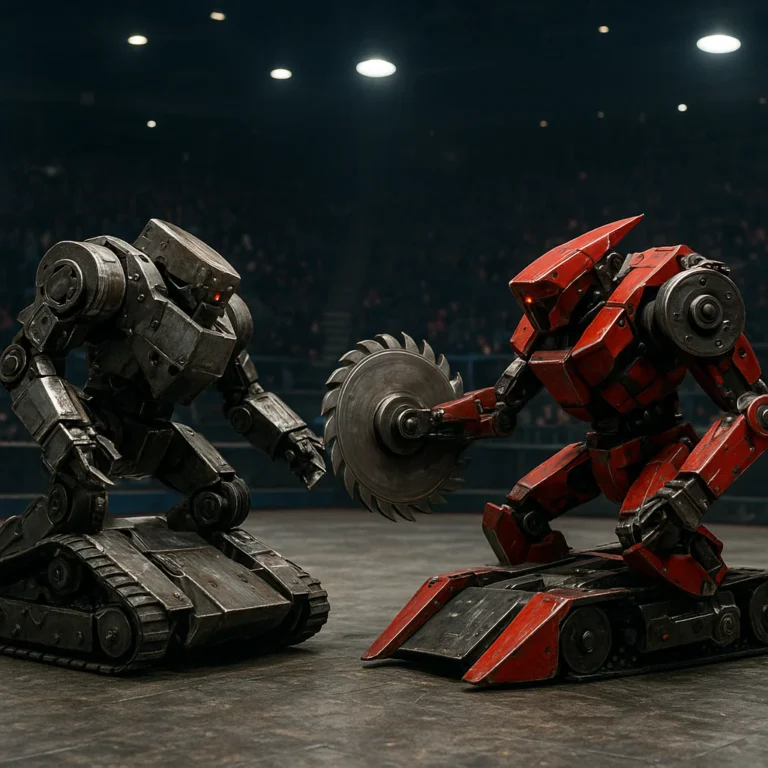
Imagine a 250-pound steel beast spinning a disc at 3,0 RPM, only to be launched into the stratosphere by a humble wedge in a split second. That is the electric, chaotic reality of robot fighting, a sport where engineering meets pure destruction. At Robot Wrestling™, we’ve spent years in the pits, grease under our fingernails, watching everything from tiny 3-gram Antweights to massive Heavyweights tear each other apart. But here’s the twist that often surprises new fans: the most powerful weapon isn’t always the one that wins. In fact, reliability often trumps raw horsepower, as we’ll reveal when we break down the legendary matches that defined the 2026 season.
Whether you are a seasoned engineer looking to refine your chassis design or a fan eager to understand the difference between a vertical spinner and a drum, this guide is your ticket to the arena. We’ve dissected the rules of major leagues like BattleBots and RoboGames, analyzed the physics of kinetic energy, and even walked you through the step-by-step process of building your first combat robot. From the terrifying history of the original Robot Wars to the futuristic potential of AI-driven autonomous bots, we cover every angle of this high-octane world. So, buckle up and grab your safety goggles; by the end of this article, you’ll know exactly how to build a champion or spot the next great battle before the first spark flies.
Key Takeaways
- Weight Classes Matter: Success in robot fighting depends heavily on understanding the physics of your specific weight class, from the agile 3-lb Antweights to the 250-lb Heavyweight titans.
- Weaponry Strategy: There is no single “best” weapon; vertical spiners excel at flipping, horizontal spiners at damage, and wedges at control, but reliability is the ultimate tie-breaker.
- Global Leagues: The scene is dominated by major organizations like BattleBots, Robot Wars, and the National Havoc Robot League, each with unique rules and hazards.
- Build Your Own: You don’t need a million-dollar budget to start; building a competitive Antweight or Betleweight is an affordable entry point for aspiring engineers.
- Safety First: Every successful bot requires a functional kill switch, fireproof battery containment, and strict adherence to arena safety protocols.
Table of Contents
- ⚡️ Quick Tips and Facts
- 🤖 A Brief History of Robot Fighting: From Sci-Fi Dreams to Arena Reality
- 🏆 The Ultimate Guide to Robot Fighting Leagues and Tournaments
- 1. BattleBots: The Titans of the Arena
- 2. Robot Wars: The Original British Invasion
- 3. RoboGames: The Olympic Spirit of Combat
- 4. RoboNation and Other Global Contenders
- ⚙️ Anatomy of a Destroyer: Understanding Robot Fighting Classes and Weights
- 1. The Heavyweights: 250-Pound Behemoths
- 2. The Middleweights: 60-Pound Brawlers
- 3. The Lightweights and Featherweights: Small but Mighty
- 4. The Antweights and Microbots: Tiny Terrors
- 🔧 Weaponry 101: Spiners, Lifters, Flippers, and More
- 1. Horizontal and Vertical Spiners: The Spin Cycle of Doom
- 2. Lifters and Flippers: Gravity is a Weapon
- 3. Crushers and Saws: The Brutal Art of Destruction
- 4. Defensive Designs: Shields, Wedges, and Armor Plating
- 🛠️ Building Your First Combat Robot: A Step-by-Step Engineering Guide
- 1. Sourcing Parts: Motors, Batteries, and Chassis Materials
- 2. Electronics and Control Systems: Radio, ESCs, and Servos
- 3. Fabrication Techniques: Welding, Machining, and 3D Printing
- 4. Safety Protocols: Protecting Yourself and the Arena
- 🎮 How to Watch Robot Fighting: Streaming, TV, and Live Events
- 🏅 Famous Robots and Legendary Battles: The Hall of Fame
- 💡 Quick Tips and Facts for New Fans and Builders
- 🔮 The Future of Robot Fighting: AI, Autonomous Combat, and Beyond
- Conclusion
- Recommended Links
- Reference Links
⚡️ Quick Tips and Facts
Welcome to the arena, folks! Before we dive into the grease, sparks, and shattered polycarbonate, let’s get the essential intel straight from the Robot Wrestling™ engineering bay. Whether you’re a seasoned builder or a fan who just loves watching things explode (safely, of course), these nugets will save you time, money, and maybe a few fingers.
- Weight is King, but Speed is Queen: In the 250 lb Heavyweight class, a slow, heavy spinner can knock out a fast, agile bot in one hit. However, a lightweight bot with a high RPM vertical spinner can outmaneuver a heavy tank. It’s all about the energy-to-weight ratio.
- The “Self-Destruct” Paradox: Did you know that roughly 30% of matches end because a robot breaks its own weapon or drive train? As we’ll see later, reliability is often more important than raw power.
- Battery Safety First: Never use LiPo batteries without a fireproof bag or container. A punctured LiPo doesn’t just die; it becomes a rocket. We’ve seen arenas lit up by accidental battery fires, and it’s not pretty.
- The “Kill Switch” is Non-Negotiable: Every competition robot must have a functional kill switch (usually a 2.4GHz receiver with a failsafe) that cuts power immediately if the signal is lost. This is the golden rule of robot combat.
- Judging Criteria: If a match goes the full time limit, judges don’t just look at who hit harder. They score based on Agression, Damage, and Control. A bot that pushes the opponent into a wall but never lands a hit might still lose to a bot that lands one solid, damaging blow.
For a deeper dive into how the officials decide who takes home the trophy, check out our guide on 🏆 How Is a Winner Determined in Robot Wrestling?.
🤖 A Brief History of Robot Fighting: From Sci-Fi Dreams to Arena Reality

The idea of machines fighting machines isn’t new; it’s been a staple of science fiction since the early 20th century. But turning The Iron Giant into a reality required a leap from imagination to engineering.
The modern era of robot combat arguably began in 194 in San Francisco. Marc Thorpe, a graphic designer and former Star Wars toy collector, organized the first Robot Wars event. It was a chaotic, low-tech affair held in a warehouse, featuring robots built from lawnmower parts and scrap metal. The crowd went wild, and the seed was planted.
Fast forward to the late 90s, and the US saw the birth of BattleBots, which eventually became a global phenomenon. The show moved from Comedy Central to ABC, then to Discovery and Science Channel, bringing high-definition destruction to living rooms worldwide. Meanwhile, across the pond, the UK’s Robot Wars (produced by Mentorn) became a cultural icon, introducing the world to the terrifying House Robots like Matilda and Shunt.
“Robot combat is a type of robot competition in which custom-built machines fight using various methods to incapacitate each other.” — Wikipedia
The evolution hasn’t stopped. Today, we have the National Havoc Robot League (NHRL), which boasts a massive prize pool and a focus on rapid-fire, high-energy bouts. We’ve also seen the rise of RoboGames, often called the “Olympics of Robot Combat,” which features dozens of weight classes and disciplines beyond just fighting.
The journey from a garage project to a televised spectacle has been driven by one thing: the human desire to see our creations battle it out. As we explore the leagues and the bots, you’ll see how this passion has refined the engineering to a razor’s edge.
🏆 The Ultimate Guide to Robot Fighting Leagues and Tournaments
Not all robot fights are created equal. The rules, the arenas, and the stakes vary wildly depending on the league. Here is your comprehensive guide to the major players in the game.
1. BattleBots: The Titans of the Arena
BattleBots is the undisputed heavyweight champion of robot combat television. Known for its 250 lb limit, it features the most advanced engineering and the most dramatic storylines.
- The Arena: A steel-walled arena with hazards like the “Sawblade,” “Pit,” and “Flames.”
- The Format: A mix of round-robin group stages and single-elimination playoffs.
- The Vibe: High production value, celebrity commentators, and a focus on the “builder stories” behind the bots.
- Recent Highlights: The Destruct-A-Thon in Las Vegas brought daily action to fans, featuring bots like Witch Doctor and Kraken.
2. Robot Wars: The Original British Invasion
While the US version has had its ups and downs, the original Robot Wars (UK) remains a legend.
- The House Robots: Unlike BattleBots, where the arena is static, Robot Wars featured mechanical house robots that could attack any bot, adding a layer of chaos.
- The Hazards: Spinning saws, crushing pits, and electrified floors made the arena itself a weapon.
- Current Status: While the TV show has had hiatuses, the spirit lives on in the Fighting Robots Association (FRA) and various UK-based events.
3. RoboGames: The Olympic Spirit of Combat
If BattleBots is the Super Bowl, RoboGames is the Olympics.
- Scope: It covers everything from sumo wrestling to humanoid walking robots, but the combat division is massive.
- Diversity: You’ll find everything from Antweights (3 lbs) to Heavyweights (250 lbs), plus specialized categories like “Sumo” and “Firefighting.”
- Community: It’s less about TV drama and more about the global community of builders sharing knowledge and competing in a friendly (but fierce) environment.
4. RoboNation and Other Global Contenders
RoboNation (formerly ROBOlympics) is another major international event that emphasizes the educational and competitive aspects of robotics.
- Global Reach: Events are held in various countries, fostering international competition.
- Inovation: This is often where you see the most experimental designs, like walking robots or autonomous combat bots, before they hit the mainstream leagues.
For more on the history of these leagues, visit our History of Robot Wrestling category.
⚙️ Anatomy of a Destroyer: Understanding Robot Fighting Classes and Weights
Why do we have so many weight classes? Simple: Physics. A 250 lb bot with a 50 RPM spinner has a different kinetic energy profile than a 3 lb bot with a 10,0 RPM spinner. To ensure fair play, competitions are strictly divided by weight.
1. The Heavyweights: 250-Pound Behemoths
- Weight Limit: 250 lbs (13 kg).
- Characteristics: These are the tanks of the arena. They use thick steel, titanium, or polycarbonate armor. Their weapons are massive, often requiring high-torque motors and heavy-duty batteries.
- Pros: Incredible durability, massive impact force.
- Cons: Slow acceleration, high cost (often $10k+ to build), and difficult to transport.
- Famous Bots: Bite Force, Tombstone, SawBlaze.
2. The Middleweights: 60-Pound Brawlers
- Weight Limit: 60 lbs (27 kg).
- Characteristics: A sweet spot between power and agility. These bots are fast enough to dodge but heavy enough to deliver a crushing blow.
- Pros: Good balance of speed and power, more affordable than heavyweights.
- Cons: Still require significant engineering to survive a hit from a spinner.
- Famous Bots: Minotaur, HyperShock.
3. The Lightweights and Featherweights: Small but Mighty
- Weight Limit: 30 lbs (14 kg) for Featherweights, 60 lbs for Lightweights (depending on the league).
- Characteristics: These bots are incredibly fast. A 30 lb bot can spin a weapon at RPMs that would destroy a 250 lb bot’s electronics if it hit them.
- Pros: High speed, lower cost, easier to repair.
- Cons: Fragile armor, easily pushed out of the arena.
4. The Antweights and Microbots: Tiny Terrors
- Weight Limit: 3 lbs (Antweight) down to 1 lb (Micro).
- Characteristics: The “betle” of the robot world. These are often built by hobbyists and students. The weapons are small but spin at insane speeds.
- Pros: Extremely affordable, fast, and fun to watch.
- Cons: One bad hit can destroy the entire robot.
- Famous Bots: Son of Whyachi (Antweight), Little Sister.
| Class | Weight Limit | Typical Weapon RPM | Cost to Build | Durability |
|---|---|---|---|---|
| Heavyweight | 250 lbs | 20-40 | $10,0+ | High |
| Middleweight | 60 lbs | 40-80 | $3,0 – $6,0 | Medium |
| Featherweight | 30 lbs | 80-1,50 | $1,0 – $3,0 | Low |
| Antweight | 3 lbs | 2,0-5,0+ | $20 – $80 | Very Low |
🔧 Weaponry 101: Spiners, Lifters, Flippers, and More
The heart of any combat robot is its weapon. But which one is the best? The answer depends on your strategy.
1. Horizontal and Vertical Spiners: The Spin Cycle of Doom
- Vertical Spiners: The weapon spins on a horizontal axis (like a discus). They are excellent for lifting and flipping opponents. Bite Force and End Game are champions of this style.
- Horizontal Spiners: The weapon spins on a vertical axis (like a buzzsaw). They deliver massive impact damage and are great for shredding armor. Tombstone and Carbide are legends here.
- Drum Spiners: A hybrid that combines the lifting power of a vertical spinner with the impact of a horizontal one. Minotaur is a prime example.
- The Risk: Spiners are unstable. If you miss, you might spin yourself into the wall.
2. Lifters and Flippers: Gravity is a Weapon
- Flippers: Use pneumatic or electric power to launch opponents into the air. If they hit the “pit” or the arena ceiling, it’s a knockout. Chaos 2 and Eruption are masters of this.
- Lifters: Designed to lift the opponent’s wheels off the ground, rendering them immobile. Biohazard is a classic lifter.
- Pros: High control, less risk of self-destruction.
- Cons: Requires precise timing and can be countered by low-profile bots.
3. Crushers and Saws: The Brutal Art of Destruction
- Crushers: Hydraulic arms that squeeze or pierce the opponent. Razer is the most famous crusher, known for its ability to bend steel.
- Saws: A saw blade that spins to cut through armor. SawBlaze (2023 Champion) uses a “hammer saw” that pivots, combining the power of a hammer with the cutting ability of a saw.
- Pros: Devastating damage potential.
- Cons: Slow, heavy, and prone to jaming.
4. Defensive Designs: Shields, Wedges, and Armor Plating
- Wedges: The simplest and most effective defense. A low-angle wedge slides under the opponent, lifting their wheels and pushing them. Tornado and Roadblock are wedge specialists.
- Shields: Some bots have active shields or heavy armor plating to absorb hits.
- Strategy: A good wedge bot can neutralize a spinner by getting underneath it, but a bad wedge bot can be easily flipped by a vertical spinner.
🛠️ Building Your First Combat Robot: A Step-by-Step Engineering Guide
So, you want to build a robot? Buckle up. It’s a journey of failure, learning, and eventual victory.
1. Sourcing Parts: Motors, Batteries, and Chassis Materials
- Motors: For drive trains, look at Maxon or Faulhaber for high-quality, or BaneBots for affordable options. For weapons, you need high-RPM motors like Falcon 50 or Kraken.
- Batteries: LiPo (Lithium Polymer) is the standard. Always use a BEC (Battery Eliminator Circuit) to regulate voltage.
- Chassis: Polycarbonate (Lexan) is great for absorbing impact. Steel (1/4″ or 1/2″) is for armor. Aluminum (6061-T6) is a good balance of weight and strength.
- Where to buy: Check out BaneBots for motors and wheels, or Polu for electronics.
2. Electronics and Control Systems: Radio, ESCs, and Servos
- Radio: Use a 2.4GHz system like Futaba or Spektrum. Never use 27MHz or 49MHz; they are prone to interference.
- ESCs (Electronic Speed Controllers): Must be rated for the current draw of your motors. Castle Creations and Hobbywing are top brands.
- Servos: For weapon control, use high-torque servos like Hi-Tech or Futaba.
- Safety: Always include a kill switch on your receiver.
3. Fabrication Techniques: Welding, Machining, and 3D Printing
- Welding: TIG welding is best for steel frames.
- Machining: A CNC machine is ideal for precise parts, but a drill press and hand tools can work for beginners.
- 3D Printing: Great for protyping and non-structural parts. Use ABS or Nylon for durability.
- Tip: Start with a kit or a design from a community like the SPARC guidelines.
4. Safety Protocols: Protecting Yourself and the Arena
- Eye Protection: Always wear safety glasses.
- Fire Safety: Have a fire extinguisher (Class D for metal fires) nearby.
- Testing: Test your robot in a controlled environment before entering a competition.
- Rules: Read the SPARC or FRA rulebook thoroughly.
🎮 How to Watch Robot Fighting: Streaming, TV, and Live Events
You don’t need to build a robot to enjoy the fight. Here’s how to catch the action.
- Streaming: BattleBots streams exclusively on YouTube for free, with premium content on their website. The Destruct-A-Thon is a must-watch for daily action.
- TV: Check local listings for Discovery Channel or Science Channel for reruns of BattleBots.
- Live Events: The National Havoc Robot League and RoboGames host live events. Tickets often start around $45.
- Mobile Games: If you want to fight from your couch, try Mechangelion or Real Steel for a virtual experience.
For the latest event announcements, visit our Event Announcements page.
🏅 Famous Robots and Legendary Battles: The Hall of Fame
Every sport has its legends. In robot combat, these are the bots that defined the era.
- Tombstone: The “King of the Heavyweights.” Known for its massive horizontal spinner and one-hit knockouts. It has won multiple championships and is a fan favorite.
- Bite Force: The “King of the Vertical Spiners.” Known for its speed and ability to flip opponents. It has won multiple championships.
- SawBlaze: The 2023 champion, known for its unique “hammer saw” design that combines power and cutting ability.
- Chaos 2: The UK legend, known for its fliper and its ability to survive against all odds.
- Carbide: The UK champion, known for its horizontal spinner and aggressive driving.
“Oh, it’s moving it all! Holy smokes!” — Commentator reaction to Tombstone’s attack on Radioactive
In a classic match, Tombstone faced Radioactive. Tombstone’s spinner was spinning at full speed, and it launched a series of attacks that broke Radioactive’s armor. The match ended with Radioactive severely damaged, and Tombstone taking the victory. This match is a perfect example of the power of a well-designed spinner.
💡 Quick Tips and Facts for New Fans and Builders
- Don’t underestimate the wedge: A simple wedge can beat a complex spinner if used correctly.
- Reliability is key: A bot that doesn’t break is better than a bot that hits hard but breaks.
- Join a community: The robot combat community is incredibly supportive. Join forums like BattleBots Forum or SPARC to learn from others.
- Start small: Build an Antweight or Beetleweight first. It’s cheaper and easier to fix.
- Watch the replays: Analyze matches to see what works and what doesn’t.
🔮 The Future of Robot Fighting: AI, Autonomous Combat, and Beyond
Where is robot combat going? The future is exciting.
- Autonomous Robots: While most robots are remote-controlled, there is a growing interest in autonomous combat. Imagine a bot that can analyze its opponent and adjust its strategy in real-time.
- AI Integration: AI could be used to optimize weapon designs or predict opponent moves.
- New Materials: Advances in carbon fiber and graphene could lead to lighter, stronger robots.
- New Weapons: We might see new types of weapons, like lasers (within safety limits) or electromagnetic pulses.
The line between science fiction and reality is blurring. As we move forward, the only limit is our imagination.
Conclusion

Robot fighting is more than just machines smashing into each other; it’s a testament to human ingenuity, engineering prowess, and the sheer joy of competition. From the humble beginnings of Marc Thorpe’s warehouse to the glitz and glamour of the BattleBots arena, the sport has evolved into a global phenomenon.
Whether you’re a builder looking to construct your first Antweight or a fan eager to witness the next great battle, there’s a place for you in this world. The key to success lies in balancing power, speed, and reliability. Remember, the best robot isn’t always the one with the biggest weapon; it’s the one that can survive the longest and deliver the final blow.
As we’ve seen, the future holds even more excitement with the potential for autonomous combat and AI-driven strategies. The arena is evolving, and so are the bots. So, what are you waiting for? Grab your tools, fire up your CAD software, and get ready to build your own champion. The next great battle is just around the corner!
Recommended Links
Ready to get started? Here are some essential resources and products to kickstart your robot fighting journey.
- Motors and Drivetrains:
BaneBots: Search for Motors on Amazon | BaneBots Official Site
Maxon Motor: Search for Maxon Motors on Amazon | Maxon Official Site - Batteries and Power:
Gens Ace LiPo Batteries: Search for LiPo Batteries on Amazon | Gens Ace Official Site - Electronics and Control:
Castle Creations ESCs: Search for Castle Creations ESC on Amazon | Castle Creations Official Site
Futaba Radios: Search for Futaba Radio on Amazon | Futaba Official Site - Books and Guides:
“Building Robot Combatants” by Mark Rober: Search on Amazon
“The Art of Robot Combat” by various authors: Search on Amazon
FAQ
What are the most popular robot fighting competitions worldwide?
The most popular competitions include BattleBots (USA), Robot Wars (UK), RoboGames, and the National Havoc Robot League (NHRL). Each has its unique format and weight classes, but they all share the core spirit of combat.
Read more about “Ultimate Robot Battle Tournament Guide (2026) 🤖🔥”
Where can I watch live robot fighting events?
Live events are often held at conventions, arenas, and dedicated venues. Check the official websites of BattleBots, NHRL, and RoboGames for schedules. Many events also stream live on YouTube or their official platforms.
Read more about “🤖 Where to Find Robot Wrestling Events in 2026: 17+ Live & Streamed!”
What materials are commonly used in robot battle designs?
Common materials include polycarbonate (for impact absorption), steel (for armor and frames), aluminum (for lightweight strength), and carbon fiber (for high-performance parts).
Read more about “🤖 AI Combat Robots: The 2026 Future of Autonomous Warfare”
What are the best robot designs for winning robot fights?
There is no single “best” design. Success depends on the strategy. Vertical spiners are great for flipping, horizontal spiners for damage, wedges for control, and flippers for knockouts. The key is to choose a design that suits your skills and the competition rules.
Read more about “🤖 RWL Rules Explained: 12 Secrets to Winning in 2026”
What safety measures are taken during robot battles?
Safety is paramount. Arenas are surrounded by bulletproof screens, robots must have kill switches, and operators must wear safety gear. Batteries are tested for safety, and fire extinguishers are always on hand.
Read more about “🤖 Combat Robots: The Ultimate 2026 Guide to Building & Battling”
How do robots compete in robot fighting battles?
Robots are controlled remotely via 2.4GHz radio systems. They compete in a timed match, aiming to incapacitate the opponent by damage, pushing them out of the arena, or flipping them. If no knockout occurs, judges decide the winner based on aggression, damage, and control.
Read more about “🤖 6 Epic Robo Wars Tournaments You Can’t Miss (2026)”
Who are the top competitors in the official Robot Wrestling League?
The top competitors vary by season, but names like Tombstone, Bite Force, SawBlaze, and Minotaur have consistently performed well. Check our Famous Matches section for the latest updates.
Read more about “🏆 How Is a Winner Determined in Robot Wrestling? (2026)”
What are the latest robot designs in the Robot Wrestling League?
Recent trends include hybrid weapons (like the hammer saw on SawBlaze), modular designs for quick repairs, and advanced materials like carbon fiber. The focus is on balancing power and reliability.
Read more about “🤖 How to Join the Robot Wrestling League & Compete (2026)”
How do robot battles work in the official Robot Wrestling League?
Battles are typically 3 minutes long, with a 30-second overtime if needed. Robots are deployed into the arena, and the fight begins. The goal is to incapacitate the opponent. If no knockout occurs, judges score the match.
Read more about “🤖 Top 10 Robot Designs Dominating the Arena (2026)”
Who are the top contenders in the current Robot Wrestling League season?
Top contenders change every season, but keep an eye on teams like Team Tombstone, Team Bite Force, and Team SawBlaze. Follow our Competitions section for the latest news.
What rules govern robot fighting matches in the league?
Rules vary by league, but common rules include weight limits, weapon restrictions (no explosives, no radio jaming), and safety requirements (kill switches, fire safety). Always check the specific rulebook of the league you’re entering.
Read more about “🤖 AI in Robot Wrestling: The 2026 Guide to Autonomous Mayhem”
Where can I watch live Robot Wrestling League battles?
Live battles are often streamed on YouTube, Discovery Channel, or the league’s official website. Check the Event Announcements section for upcoming dates.
Read more about “🤖 Robot Wrestling Evolution: From Scrapyard to AI (2026)”
How are robot designs customized for the Robot Wrestling League?
Designs are customized based on the weight class, weapon type, and strategy. Builders often use CAD software to simulate battles and optimize their designs. They also test prototypes in controlled environments before competing.
Read more about “Ultimate Robot Battle Arena Guide: 12 Must-Know Secrets for 2025 🤖”
What safety measures are in place during robot fighting events?
Safety measures include bulletproof screens, fire extinguishers, safety gear for operators, and kill switches on all robots. Batteries are tested for safety, and the arena is designed to contain debris.
Read more about “🤖 Robot Combat League: 12 Legends & The 2026 Comeback”
Reference Links
- BattleBots Official Website: https://battlebots.com
- National Havoc Robot League (NHRL): https://nhrl.com
- RoboGames: https://robogames.net
- Fighting Robots Association (FRA): https://fightingrobots.org
- SPARC (Standardized Procedures for the Advancement of Robot Combat): https://www.sparcrobotics.org
- Wikipedia: Robot Combat: https://en.wikipedia.org/wiki/Robot_combat
- BaneBots: https://www.banebots.com
- Castle Creations: https://www.castlecreations.com
- Futaba: https://www.futaba-rc.com